
WIREFRAME NEWS Daily Brief - Thursday, May 28, 2026
The structure behind the story

The Pentagon just handed nearly $10 billion to a company whose CEO made sure to cozy up to the president, while the military continues killing people on the open ocean with no oversight. Meanwhile, the administration is negotiating to unfreeze billions for Iran while its allies target the president’s daughter. Thursday in America.
Are we autocracy now? The Treasury is proposing this new denomination.
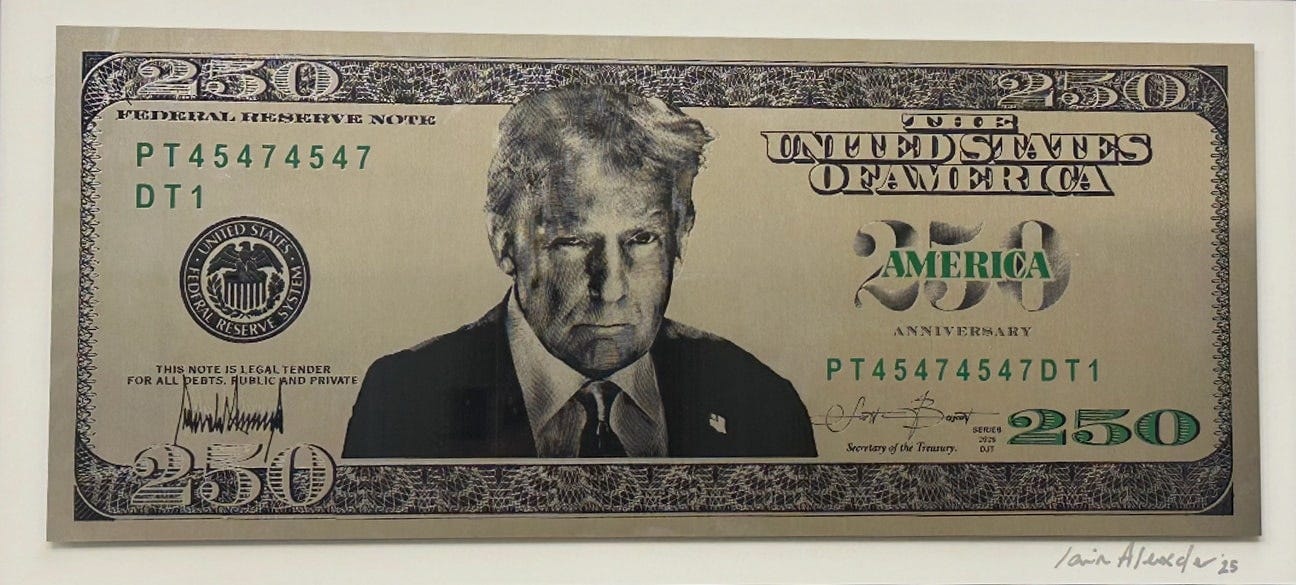
There’s a tell in which countries put living leaders on their money. It’s not tradition. It’s not aesthetics. It’s a power move.
Democracies almost universally prohibit it. The US by statute, most others by convention, because putting a living face on the currency is a claim. It says: this person and this state are the same thing. The monarch on the British pound is different in kind; that’s institutional continuity, not personal glorification. But Saddam on the dinar, Gaddafi on the note, the Central Asian autocrats who made their own faces legal tender, that’s personality cult made literal. You can’t buy bread without acknowledging who owns the country. The currency becomes a daily loyalty oath at scale.
Which is why the Trump Treasury’s proposal to put his face on a $250 bill should stop you cold. Not because it’s unprecedented globally, it isn’t. Because of where it’s unprecedented. The United States has a law against this. Explicitly. A living person on American currency has been prohibited since 1866, passed specifically to prevent exactly this kind of consolidation signal. That law would have to be changed, waived, or ignored. And the people proposing this know that. The legal barrier isn’t a bug they overlooked, it’s the point they’re making by pushing anyway.
The people who used Saddam’s dinars weren’t thinking about state power every time they made change. That’s how it works. Normalization is the mechanism. When the ruler’s face is everywhere, on money, on walls, on screens, it stops being a statement and starts being weather.
We’re being asked to make it weather.
Dell’s $9.7 Billion Pentagon Payday
What Happened
Dell Technologies won a $9.7 billion Pentagon contract to consolidate the military’s software licensing across the enterprise. The deal comes after Dell CEO Michael Dell cultivated personal access to Trump, including meetings at Mar-a-Lago and a seat on administration advisory boards.
What It Means
This is the access-to-contracts pipeline made explicit. The Pentagon framed this as cost-cutting and ending “license sprawl,” but the timing and relationship are impossible to separate. Defense procurement has always been political, but the personal cultivation model—CEO to president, meeting to contract—is becoming the standard operating procedure.
Why It Matters
A $9.7 billion contract awarded to a company whose leader invested heavily in presidential access sets the market price for that access. Every tech CEO watching this learns the same lesson: the ROI on Mar-a-Lago dinners is measured in billions.
The Pacific Drug War’s Body Count
What Happened
U.S. military forces killed two more people in a strike on what officials called a drug-smuggling vessel in the Pacific Ocean. The death toll from this campaign now approaches 200, with strikes occurring in international waters under minimal oversight or public accounting.
What It Means
The military is conducting lethal operations against “alleged” drug boats with body counts that would dominate news cycles if they occurred on land or involved traditional combat. The designation of targets as drug vessels provides legal cover while the actual verification process remains opaque.
Why It Matters
This is executive branch killing authority operating outside the war powers framework, with deaths accumulating into the hundreds while generating almost no political debate. The precedent being established, military strikes based on drug interdiction authority, has no obvious limiting principle.
Iran Wants Its Billions Back
What Happened
Iran is demanding the unfreezing of billions in seized assets as a precondition for any deal with the Trump administration. Trump has reportedly asked Arab and Muslim leaders to normalize relations with Israel if an Iran agreement is reached, linking multiple diplomatic tracks.
What It Means
The administration is simultaneously negotiating the release of frozen Iranian billions while expanding the Abraham Accords framework and doing this while an Iran-linked commander has reportedly targeted Ivanka Trump. The internal White House tensions, including reported clashes with Vance over Iran policy, suggest no coherent strategy exists.
Why It Matters
Unfreezing billions in Iranian assets would be the largest such transfer since the 2016 deal that Trump himself campaigned against. The policy reversal, combined with the security threats to the president’s family, reveals an administration negotiating from a position it doesn’t understand.
What to Watch
- Dell contract terms: The full procurement documents should reveal whether competitive bidding occurred or if this was a directed award. FOIA requests already filed.
- Pacific strike authorization: Congressional testimony on the legal basis for these strikes is scheduled for next week. Watch whether any member asks about the 200 death toll.
- Iran frozen assets: Treasury will need to issue licenses for any unfreezing. The specific amounts and mechanisms will reveal whether this is symbolic or structural.
- Palantir London fallout: After losing the UK police contract, watch whether Palantir pivots U.S. resources to backfill. Their Q1 numbers show 85% revenue growth—the money has to come from somewhere.
This is Wireframe News—where $9.7 billion buys you a seat at the table and 200 deaths barely buys you a headline.