
Why we shouldn't want a New Gilded Age Part 3
The Post War Era was the only time since the industrial revolution that those below the top 10% were able to take real part in the growth of the American economy.

For this multi part series I will be using the Postwar Era as the example of what was a more equitable sharing of the nations wealth. Using that period has issues, social/cultural especially, but this series is not looking at those social/cultural issues, nor is it trying to obfuscate the suffering of those social groups. It’s being used only as a reference point for comparison of concentrations of wealth since the industrial revolution.
In the first part of this series I showed why we should not be looking at the Gilded Age as our nations North Star. The second part was the gutting of the middle class and how the wealthy in many cases are the welfare recipients of our nation and how they achieve that.
In this part, we examine the 1958 tax structure at its peak. We simulate how that structure would have impacted tax revenue, the national debt, and the distribution of wealth if it had remained largely intact through to today.
Previously in the Series:
Why We Shouldn't Want a New Gilded Age – Part 1: Explained why the Gilded Age, marked by extreme wealth inequality, is the wrong model for the future.
Gutting of the American Middle Class - Part 2: Showed how tax policy shifts gutted the middle class and made the ultra-wealthy the true welfare recipients of public investment.
Part 3: 1958 Tax Structure Analysis
Postwar political leaders engineered a tax code that deliberately constrained extreme wealth accumulation. It wasn’t accidental, it was a firewall against another Gilded Age, and it worked.
Using the peak of this tax code (1958), let’s look at how things would have played out differently. What if we had kept that tax code or slowed the caps from being added what would have happened?
If the U.S. had kept the 1958 federal tax structure, characterized by highly progressive rates. And while the 1958 code included marginal rates as high as 91% for top earners. While effective tax rates were significantly lower due to deductions, the structure ensured that excess accumulation was checked.
Now I’m not naive to believe we can go back to the 1958 tax code, there is no political will to do so. After Citizen’s United, both American major political parties only have one group to appease, the wealthy. But this isn’t about feasibility—it’s about showing what could have been.
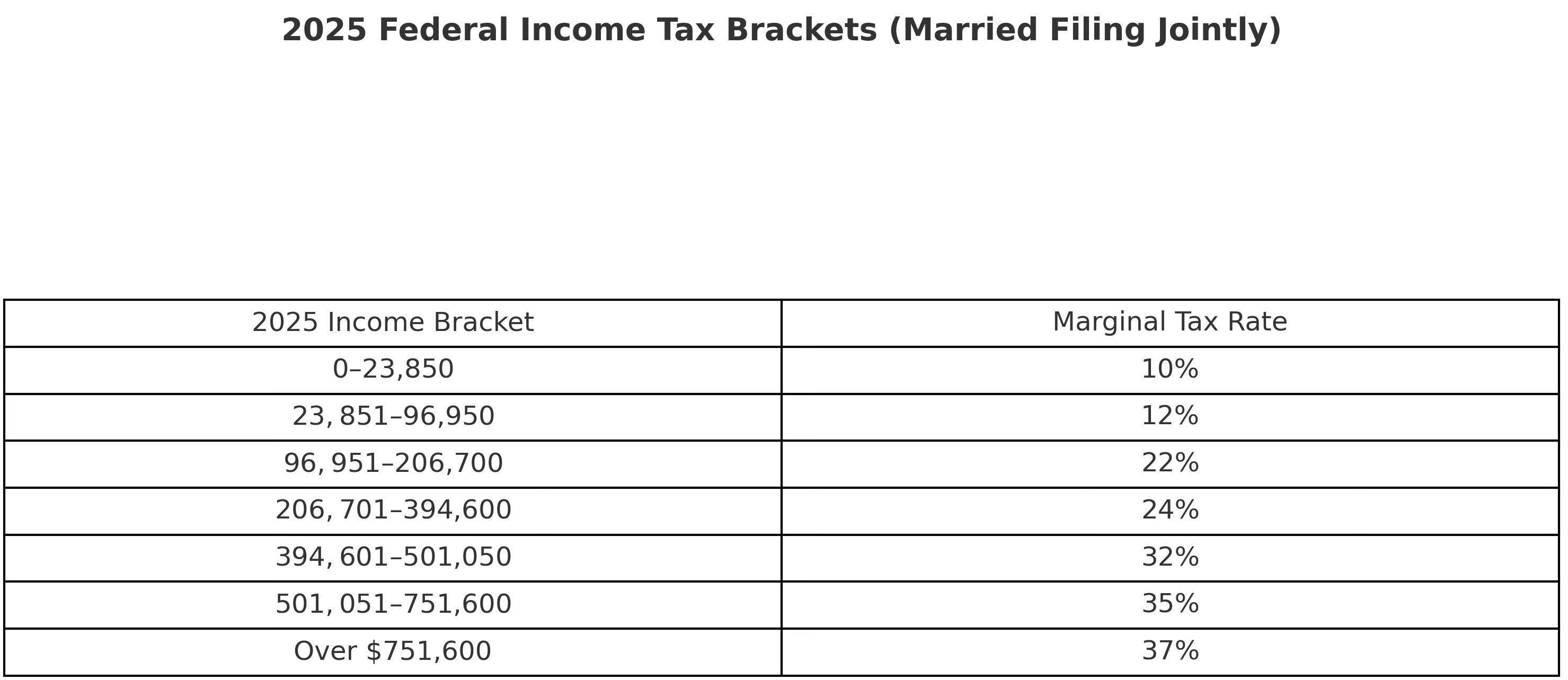
Below is the current tax brackets for 2024:
If the U.S. had kept the 1958 federal tax structure (highly progressive, top marginal rates up to 91%) adjusted for inflation, the current married tax chart would like this:
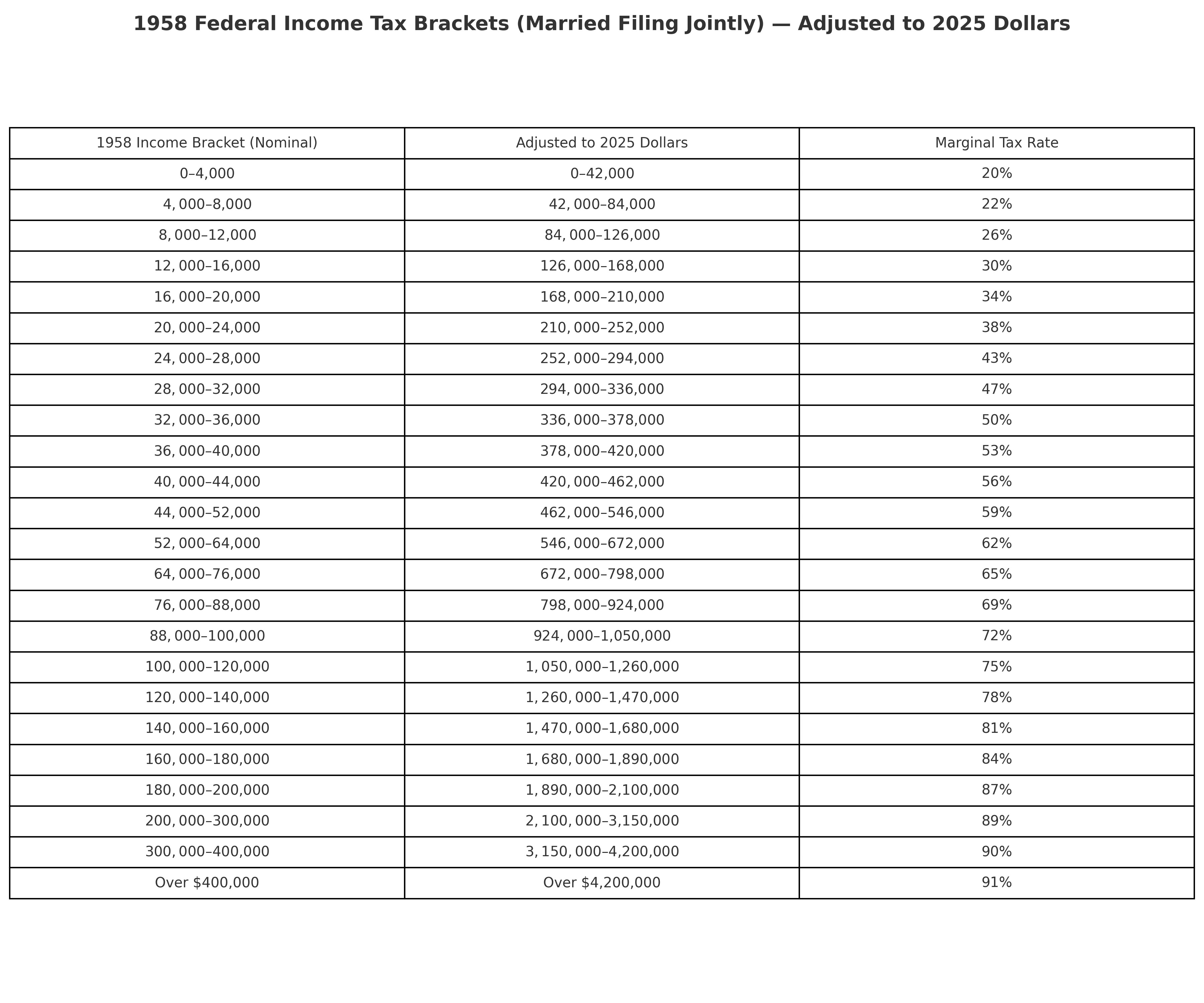
Important Reminder: These are marginal rates, not effective tax rates. Most middle-income earners paid far less than the top rate.
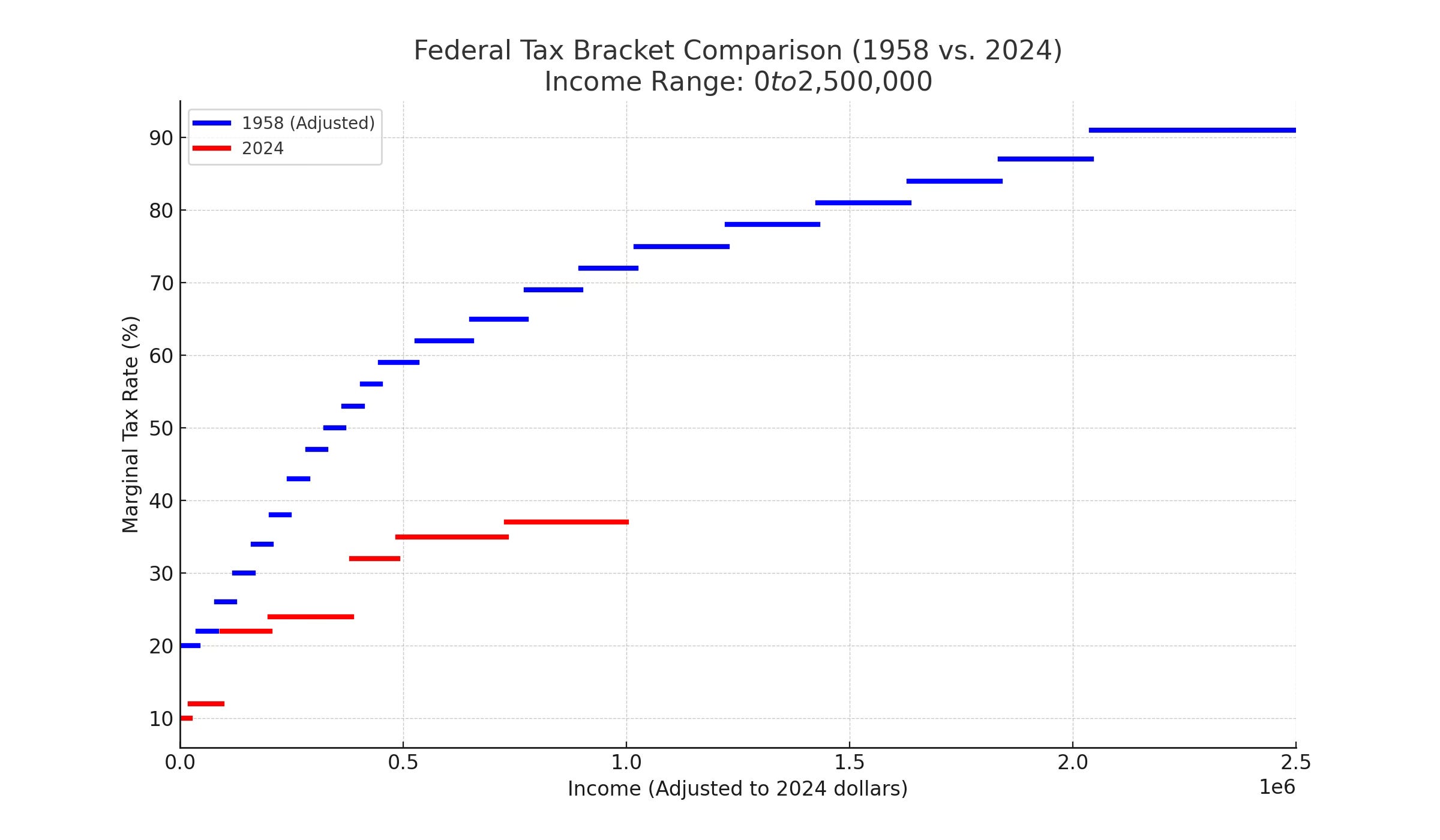
You can see just how oddly stepped the current brackets are vs almost a smooth curve in the 1958 brackets (chart above). The new brackets have come from decades of erosion in the progressive tax rates.
Estimated Revenue using the 1958 Tax Structure
Individual Income Taxes will approximately generate $2.4 trillion, accounting for about 49% of the tax revenue for 2024. Applying a simplified approximation of the 1958 tax structure to today's income distribution yields:
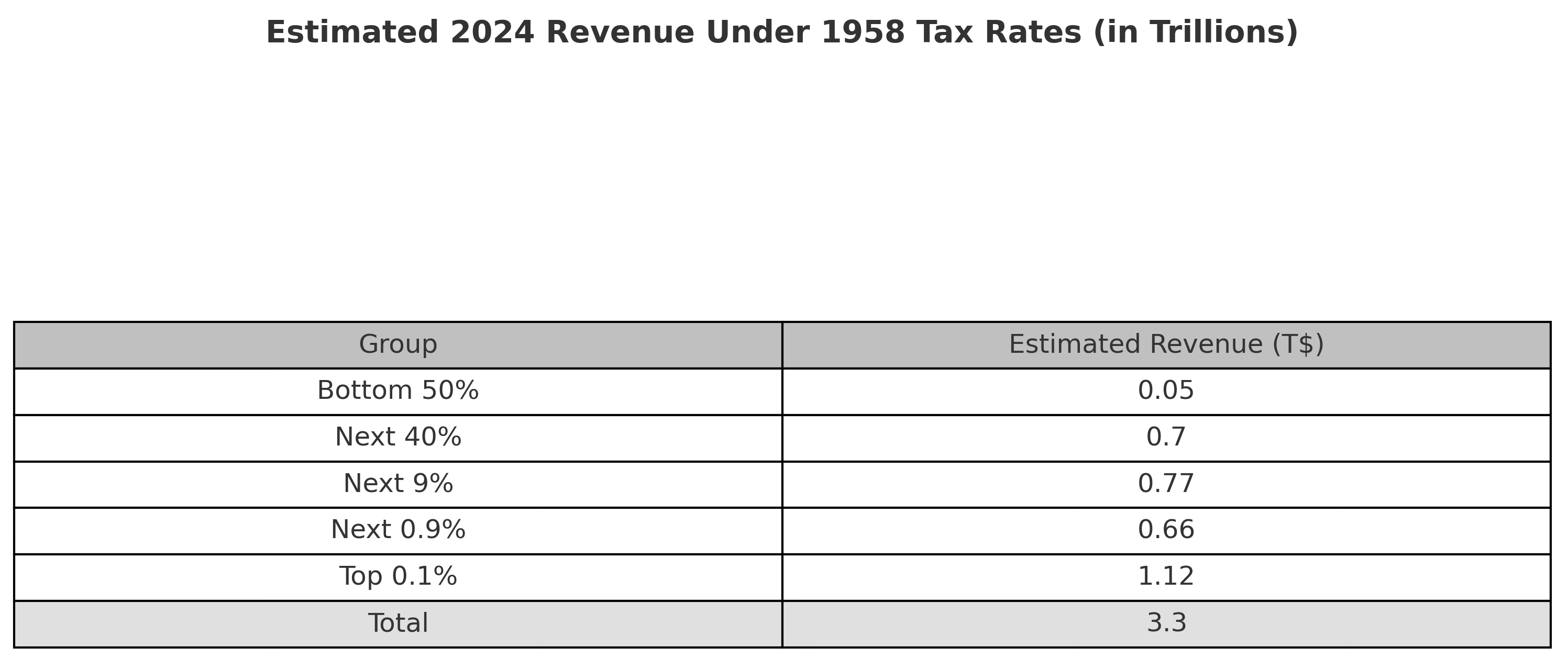
This highlights the extraordinary revenue-generating capacity of this mid-century tax policy and what impact it would have had to tax revenue or our national wealth fund. That’s a ~50% revenue boost—without raising taxes on most Americans.
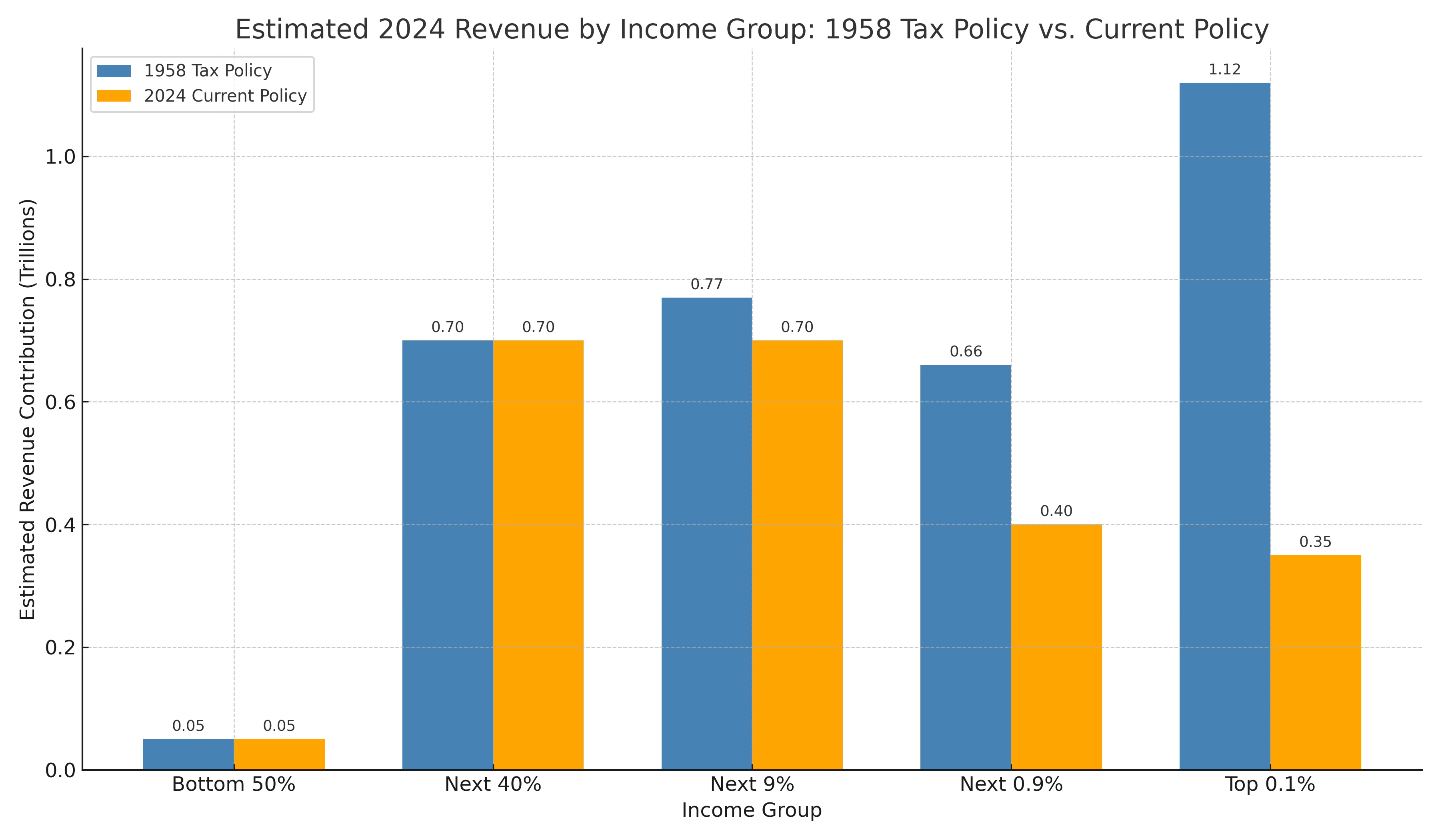
Wealth Distribution:
Top 0.1%: Still wealthy, but gains would have grown linearly, not exponentially.
Next 0.9%: Would have had stronger, steadier returns under a balanced tax system.
Next 9%: Would have paid more than under today's system, but also benefited from robust public goods.
Bottom 40%: Significantly better off due to public investment and stronger wage floors.
Bottom 50%: Drastically improved wealth share; avoided the slide seen post-Reagan.
Simulating if the 1958 tax structure remained in place
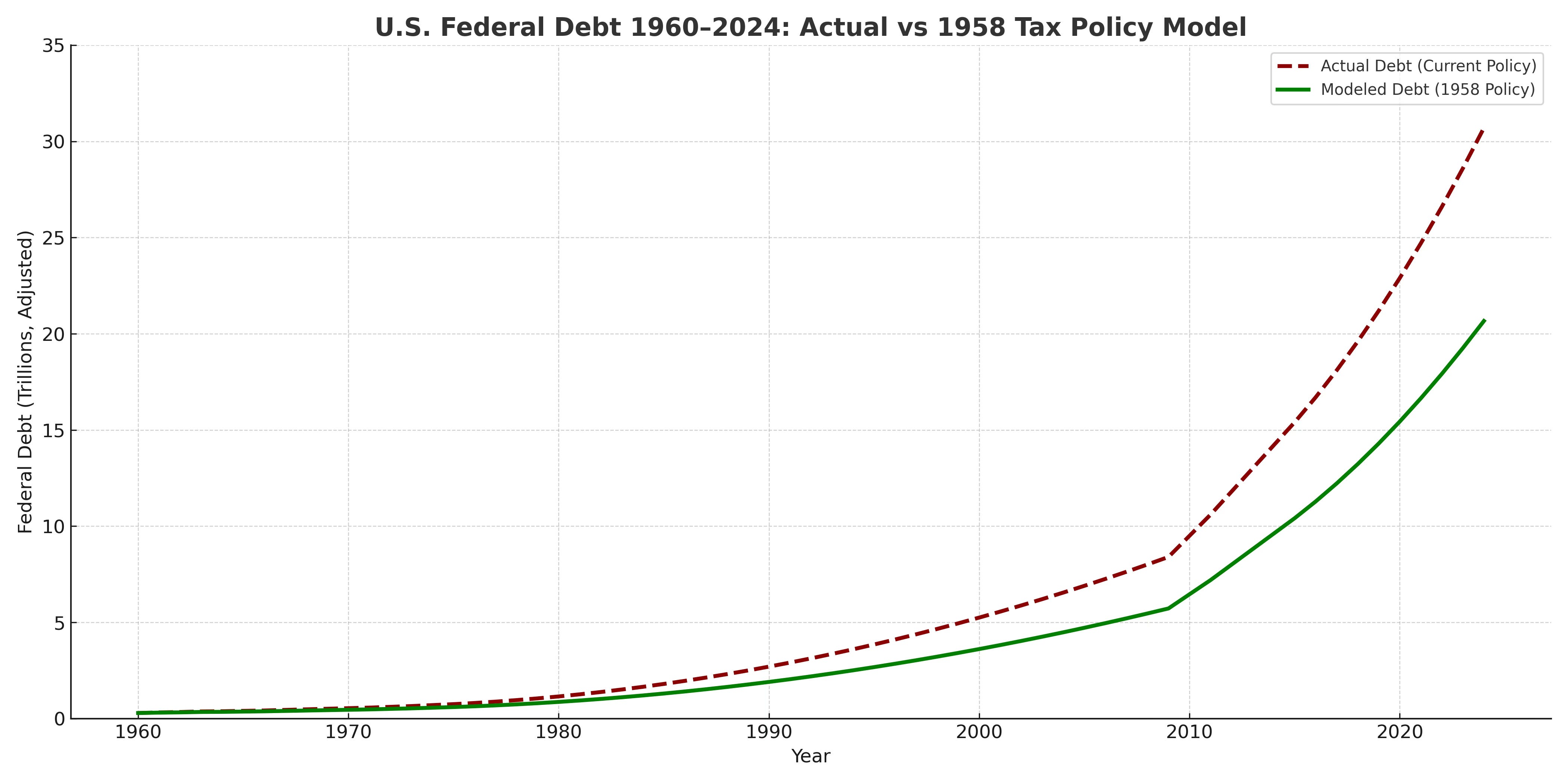
If the 1958 tax structure had remained (even partially), the U.S. would not be currently facing the enormous deficits and national debt we currently have. It would have created substantially more fiscal space for infrastructure, healthcare, education, and social services. It would have been a much more fair economic environment, fostering sustained growth, and ensuring broad prosperity across all income classes. Supporting all Americans vs improving the lives of only a few.
Here’s what would have happened to our debt:
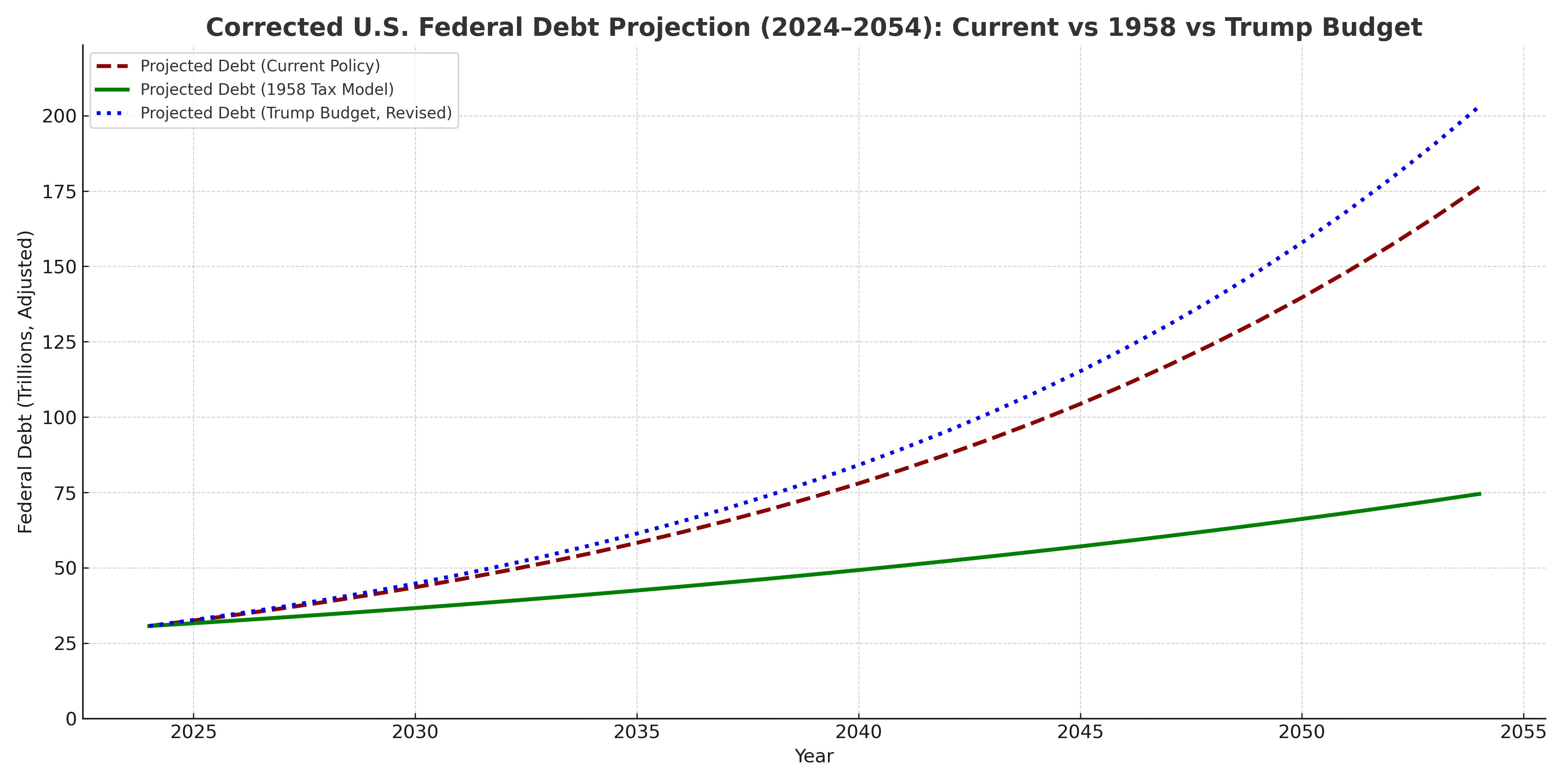
Now let’s see how much this would add to our federal debt out going forward adding in the Trump Budget Proposal:
Now let’s look at impact to Wealth Share per group:
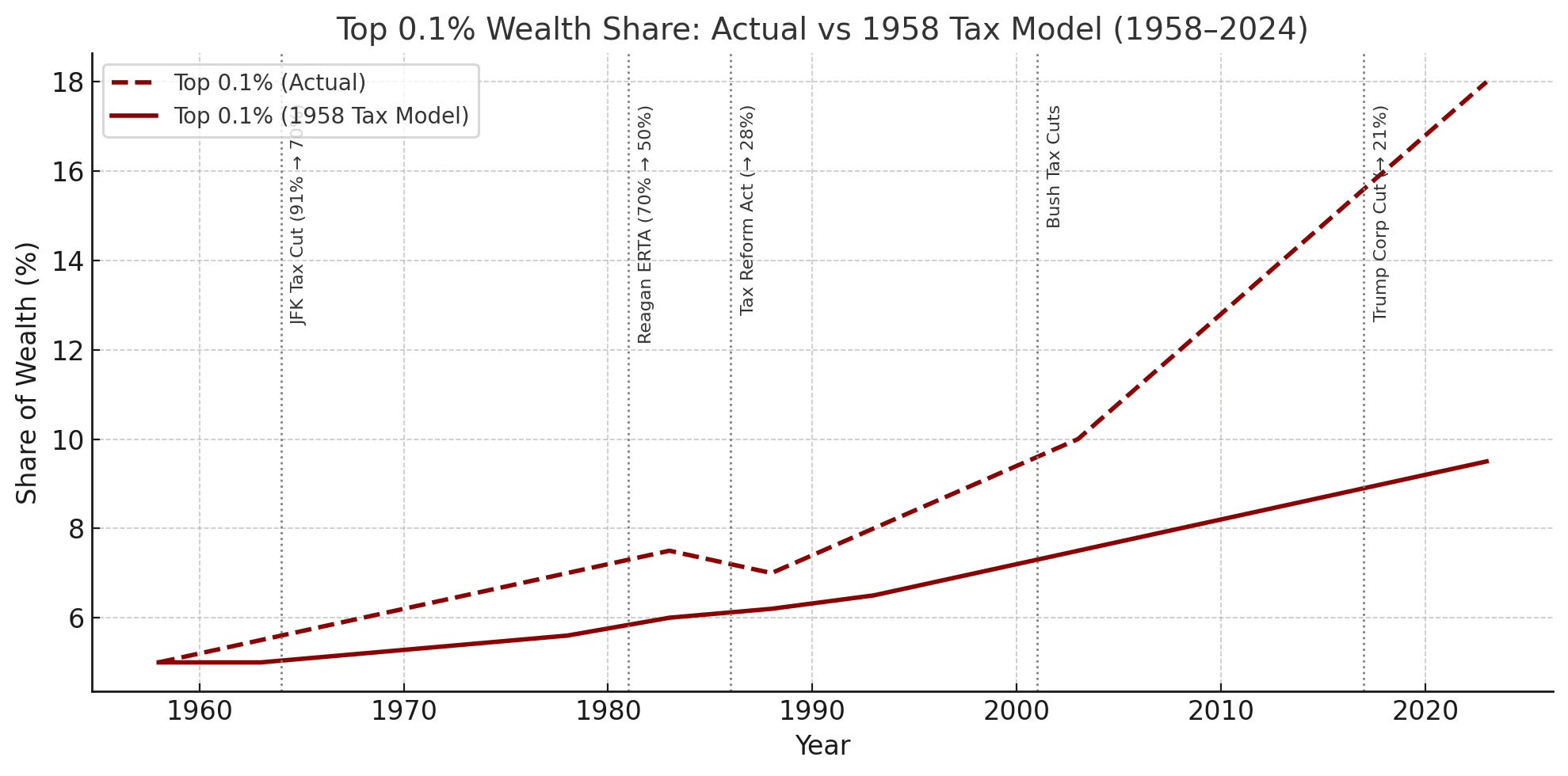
You can see there that the 1958 policy would have more linearly added wealth the to top .1% vs the exp curve we have.
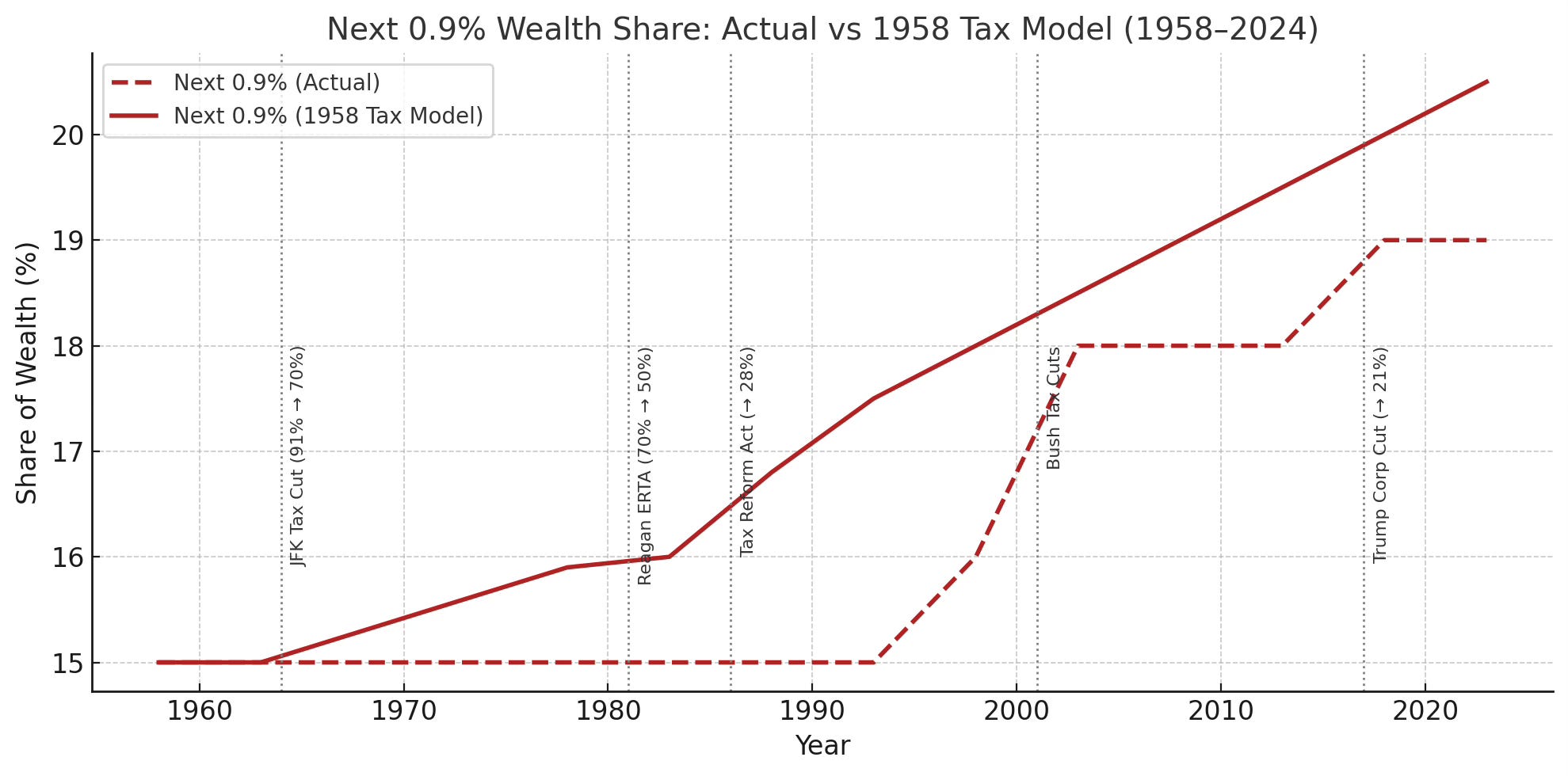
You can see here that next part of the 1% (the .9%) really did not gain as well and would have done better with the 1958 policy.
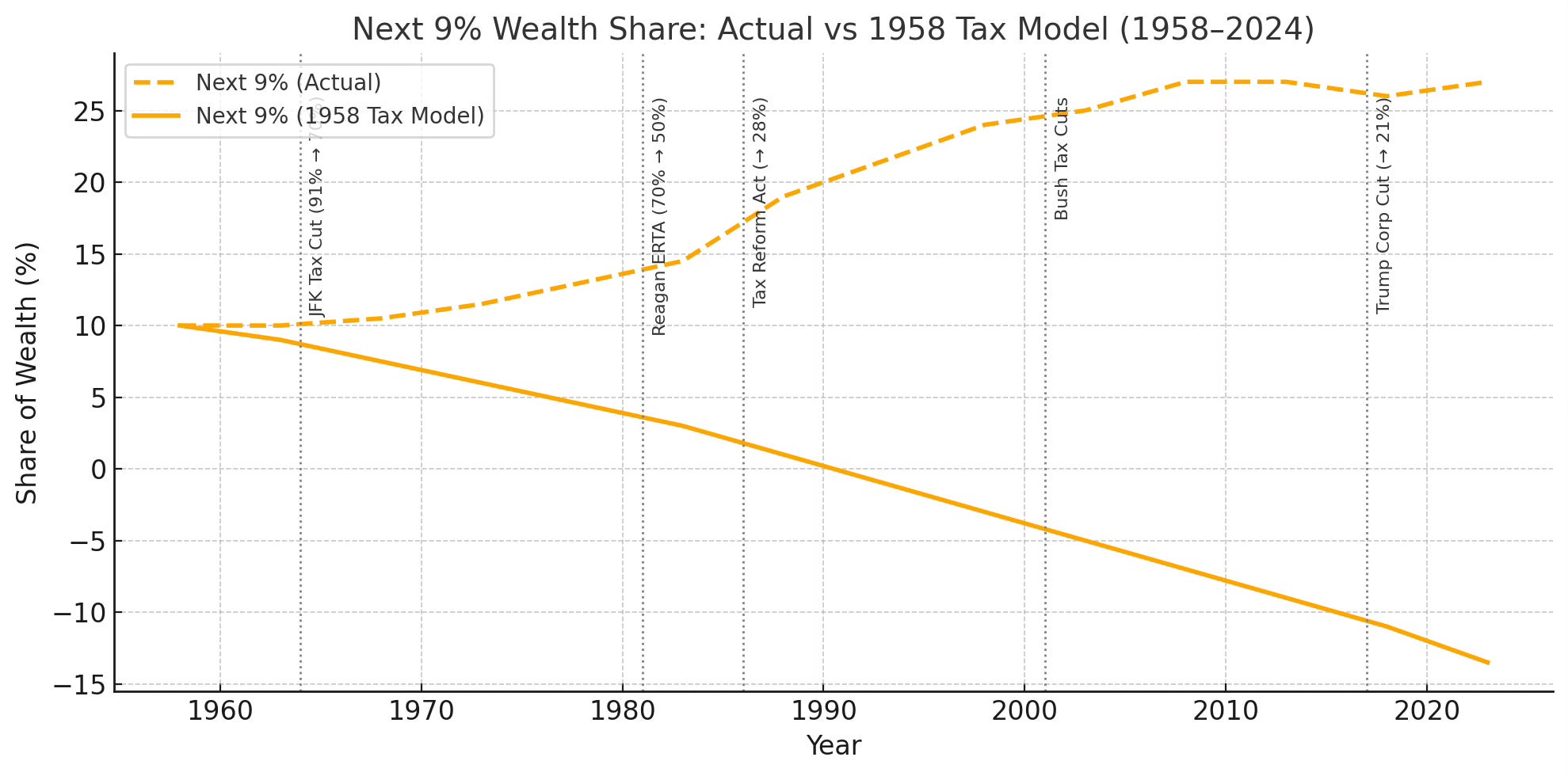
The 9% would be where most of the rest of the distribution downwards would have come from in the 1958 policy. These are folks with net worths ~$4.5 million – $5.5 million or incomes in the ~190,000-$500,00 range.
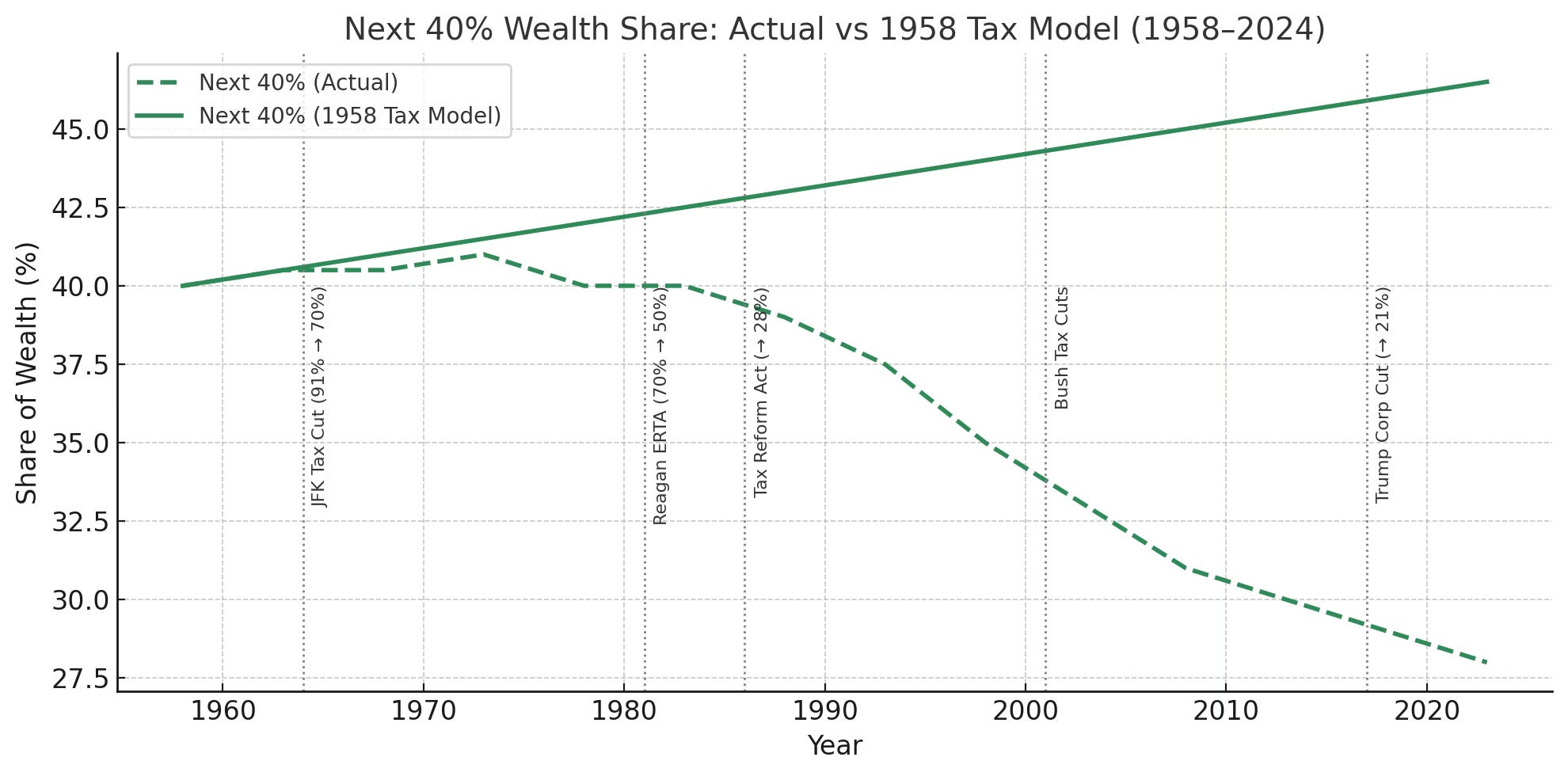
Here you can see that the bottom 40% would have done much better. They have been steadily losing ground with a big dip after Regan. So much for trickle down economics.
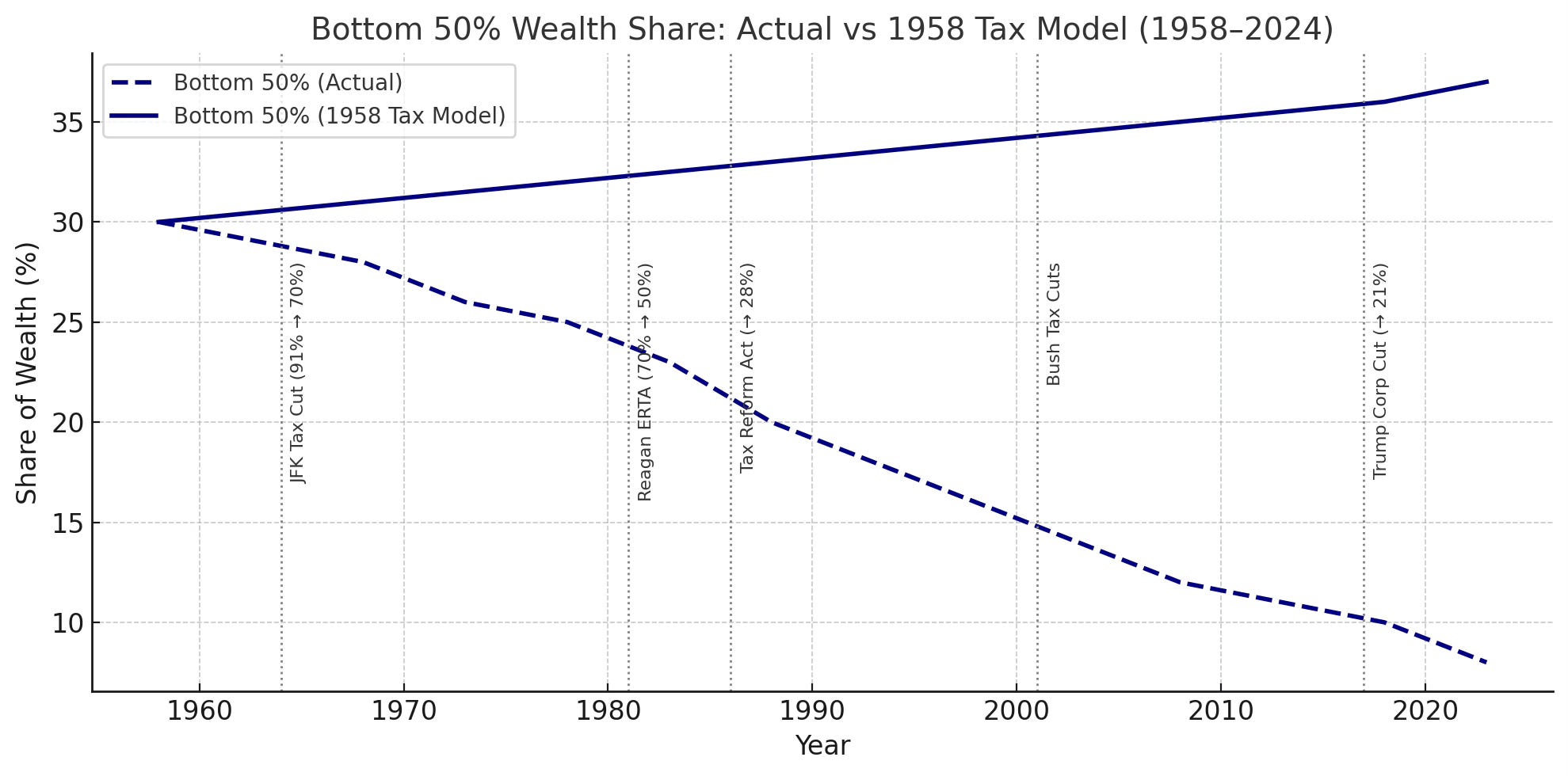
The bottom 50% could have done so much better under the 1958 policy, just look at loss all the way from 1958 to now.
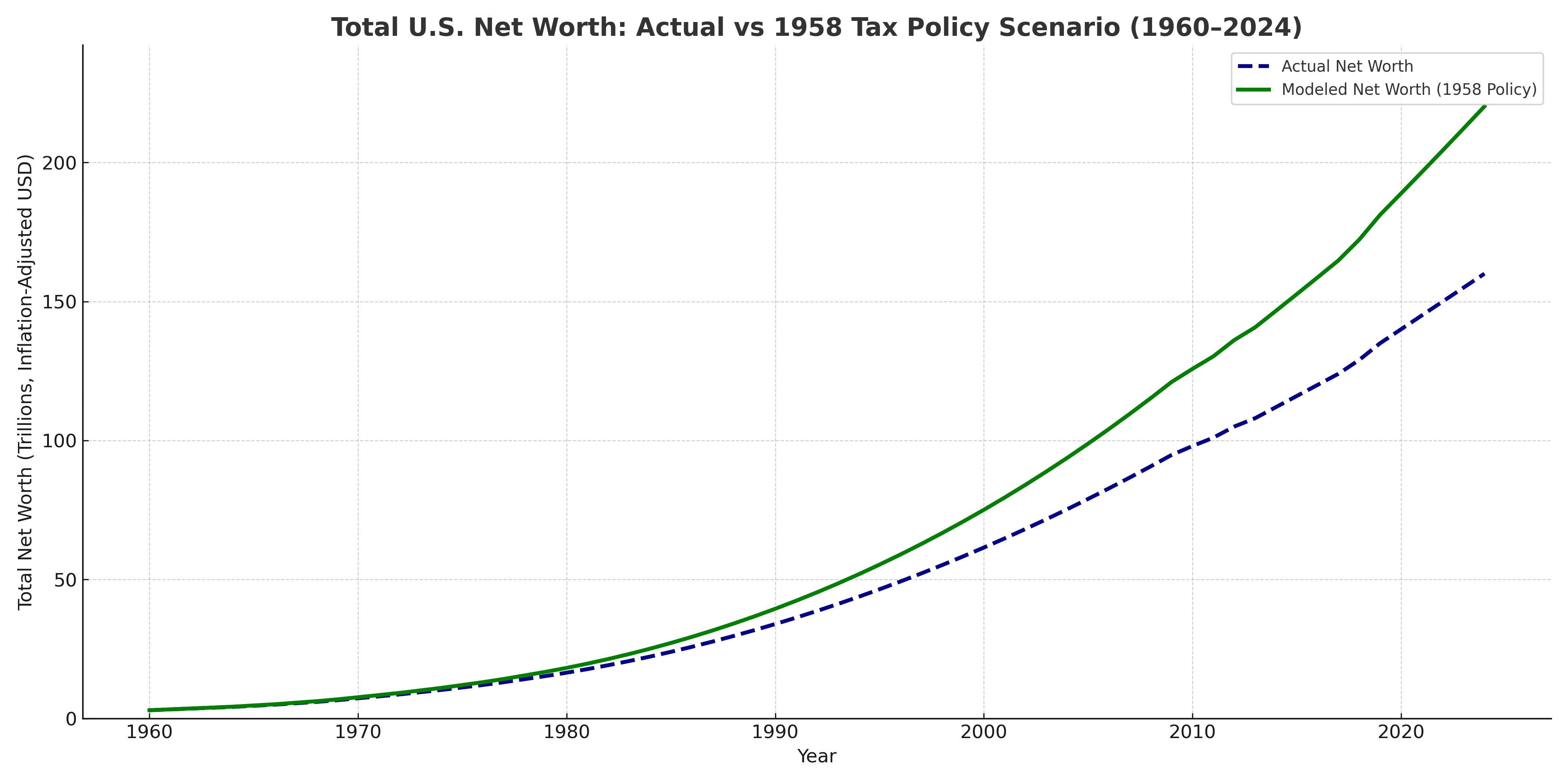
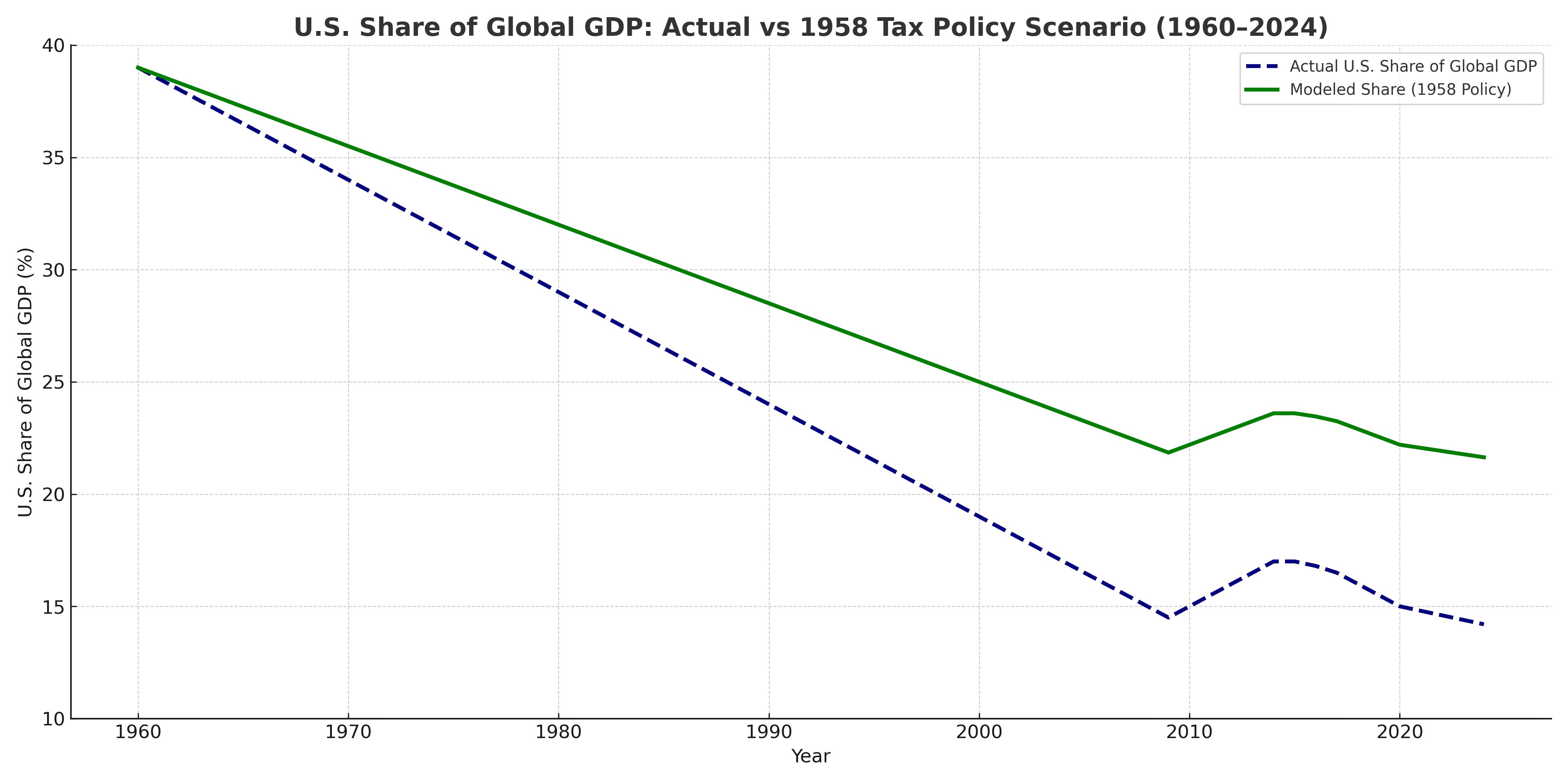
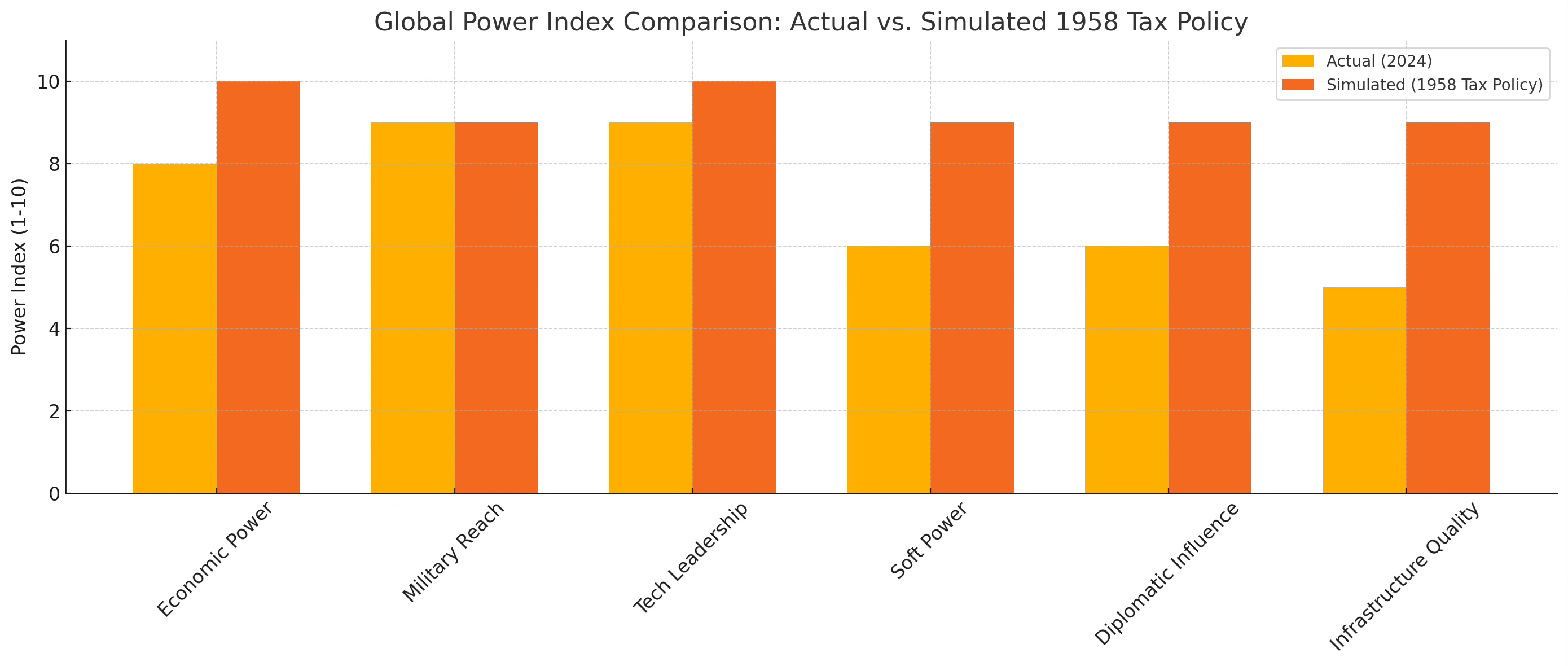
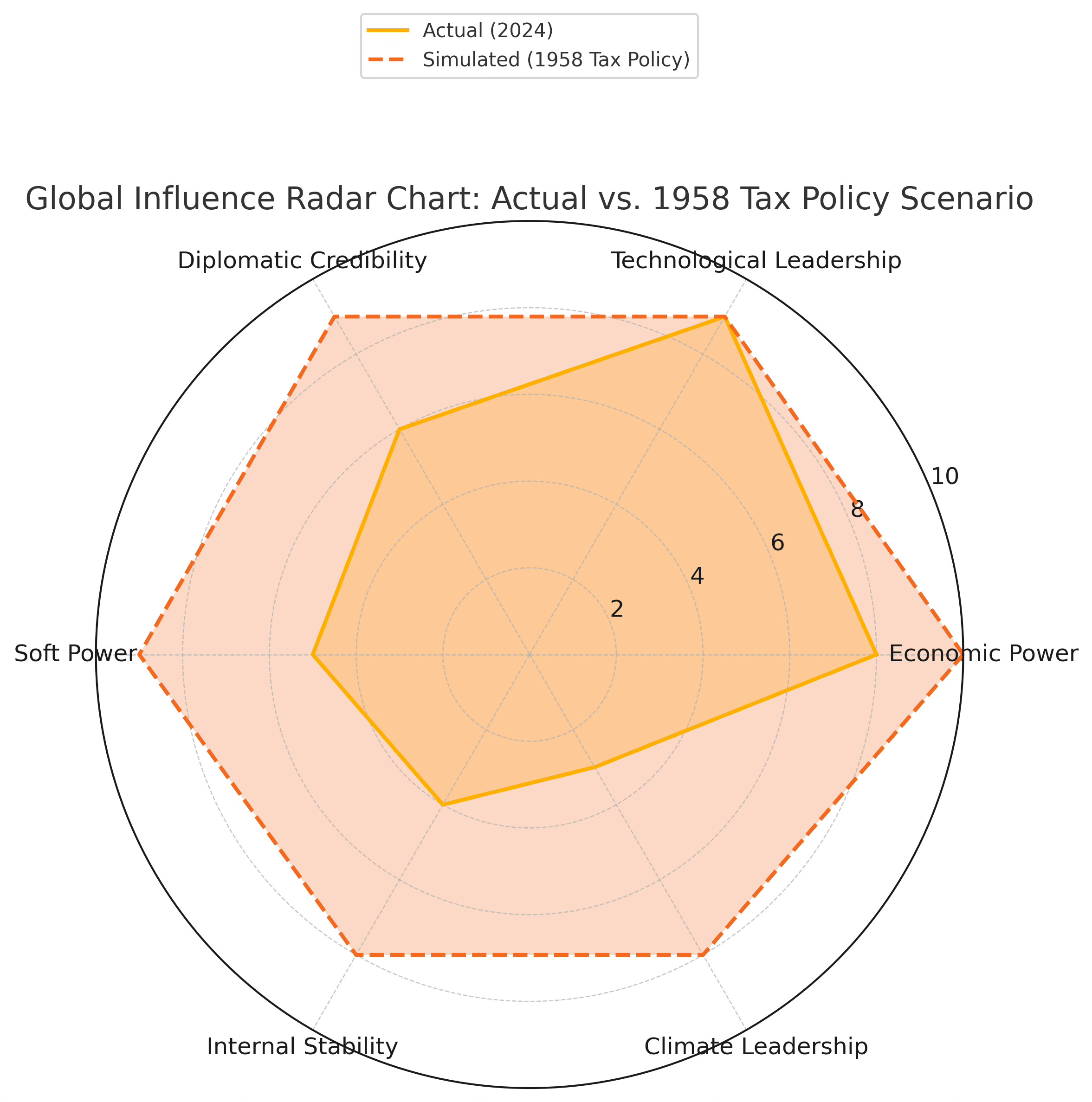
Summary: How would have America done in the world keeping 1958 policy?
When looking at the impact if we had kept these policies in place, the obvious question is, how would it have played out for the country?
Key Takeaways
1. Revenue Transformation Reinstating a modernized version of the 1958 tax code could add over $1 trillion annually. This revenue boost doesn’t require taxing the bottom 90% more.
2. Fair Burden on the Ultra-Wealthy Under the 1958 model, the top 0.1% would pay 3–4x more than they do now—contributing around one-third of total income tax revenue.
3. Restoring Progressivity The post-1960s tax code has systematically shifted burden downward. Steep upper brackets would reverse that, ensuring those with more contribute more.
4. Rebuilding the Commons Greater federal revenue means stronger public goods: infrastructure, healthcare, education, and innovation.
Conclusion
If the U.S. had kept the 1958 framework, we would likely be a wealthier, more equal, and more respected nation. This simulation challenges the myth that tax cuts and trickle-down policies created American greatness. In truth, they may have undermined it.
Coming Next: In Part 4, we’ll propose a modern, fair tax structure designed to rebuild the middle class, invest in the future, and pay down the debt without repeating the mistakes of the past.
The data being used here is provided by OpenAI using multiple models and references.