
Why we shouldn't want a New Gilded Age Part 1
The Gilded Age sounds nice, but only for the very few. The new conservative budget proposal would not only bring that back, but would bring on class warfare

For this multi part series I will be using the Postwar Era as the example of what was a more equitable sharing of the nations wealth. Using that period has issues, social/cultural especially, but this series is not looking at those social/cultural issues, nor is it trying to obfuscate the suffering of those social group. It’s being used only as a reference point for comparison of concentrations of wealth since the industrial revolution.
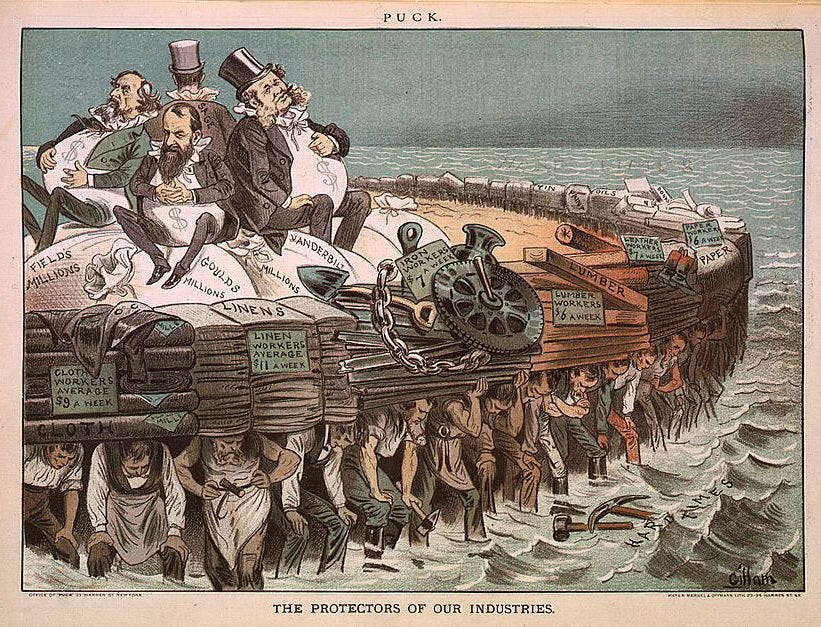
Part 1: The Gilded Age was not covered in gold for all
In the Gilded Age, wealth was heavily concentrated, with the top 1% holding approximately 40% of the nation's wealth. The Postwar Era saw a more equitable distribution, with the top 1%'s share decreasing to around 20%, and the Bottom 50% experiencing an increase in their share. The Modern Era has witnessed a resurgence in wealth concentration, with the top 1%'s share returning to about 40%, but with a very extreme concentration in the top .1%.
Here is an animated chart showing wealth distribution since 1900 projected to 2030 in 6 year increments. The top .1% and next top .9% are broken out to show just how much money is the fewest number of hands.
The US had policies in place after WW2 though that created the growth of the middle class. We can look through the lens of the postwar tax code to see how that played out up through Regan, where Trickle Down Economics supercharged the concentration of wealth aimed at the top.
That Postwar tax code could be viewed as making sure the upper classes had to invest in the rest of society vs just hold for themselves, grow a nation. It was somewhat intentional, we as a nation did not want to repeat the Gilded Age. A social contract between the classes was put in place which has been lost.
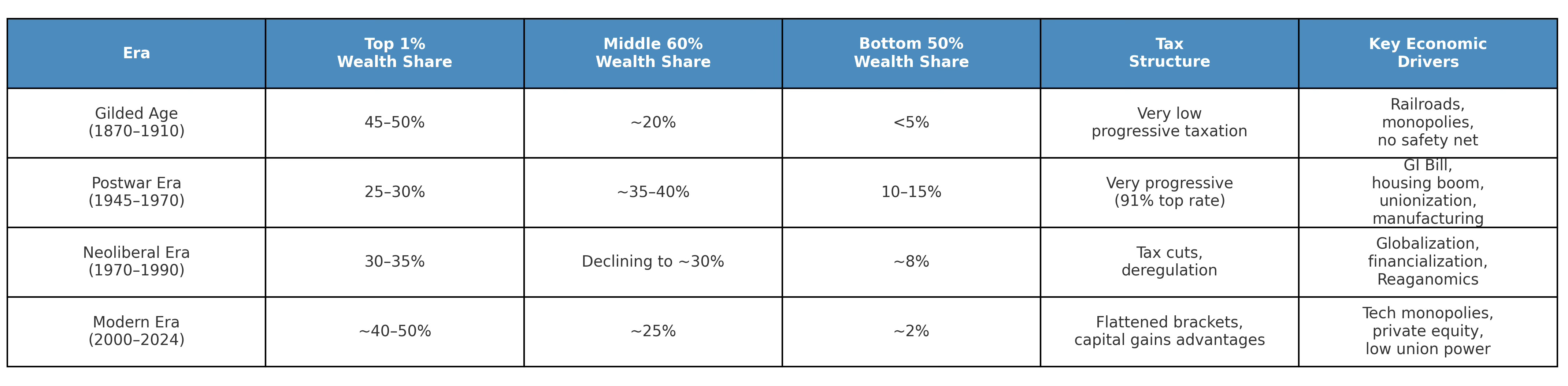
The Postwar tax code in essence, was a very progressive scale stating what was a reasonable amount of wealth for the top. This did not prevent those at the top from gaining wealth, but spread it out reaching down farther into the lower classes. Anything above $2 million in todays dollars needed to be pushed down into the working classes, either by business expansion, increased income for workers or redistribution by tax, it left it open to those in these high brackets to choose.
So what’s a reasonable amount for the top? Here is a table comparing wealth in today's dollars per capita. $400 million in the Gilded Age did a lot, just remember all of the estates and toys of the the tycoons, once we got to $1 billion we were well past the Gilded Age, now we have individuals in the $100’s of billions, why would we want to make it worse?
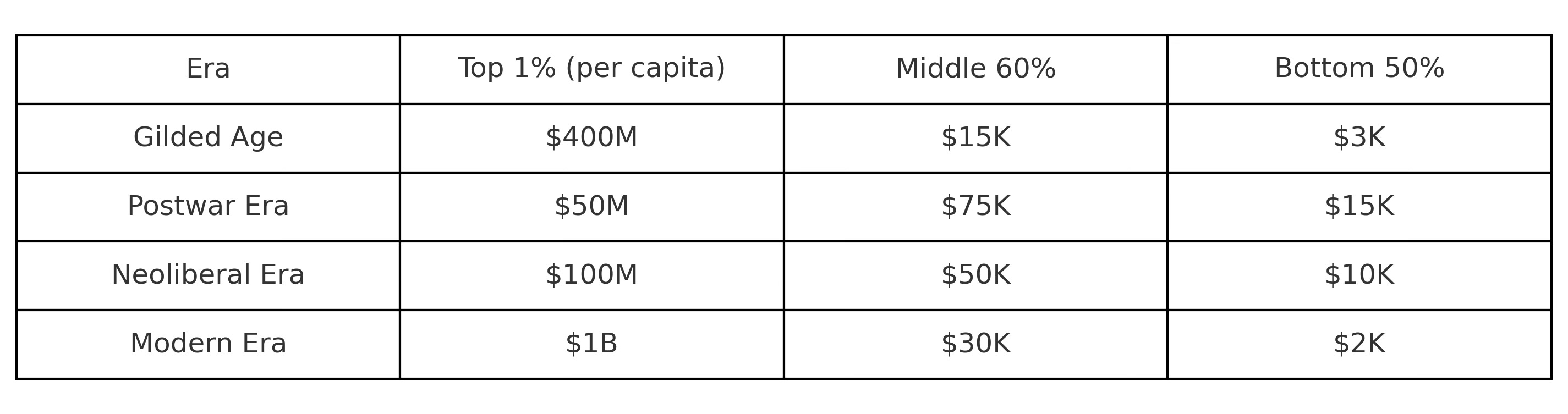
Note: These are approximations based on inflation-adjusted values and IRS/Federal Reserve data on net worth and income distribution.
Or another way to look at this:
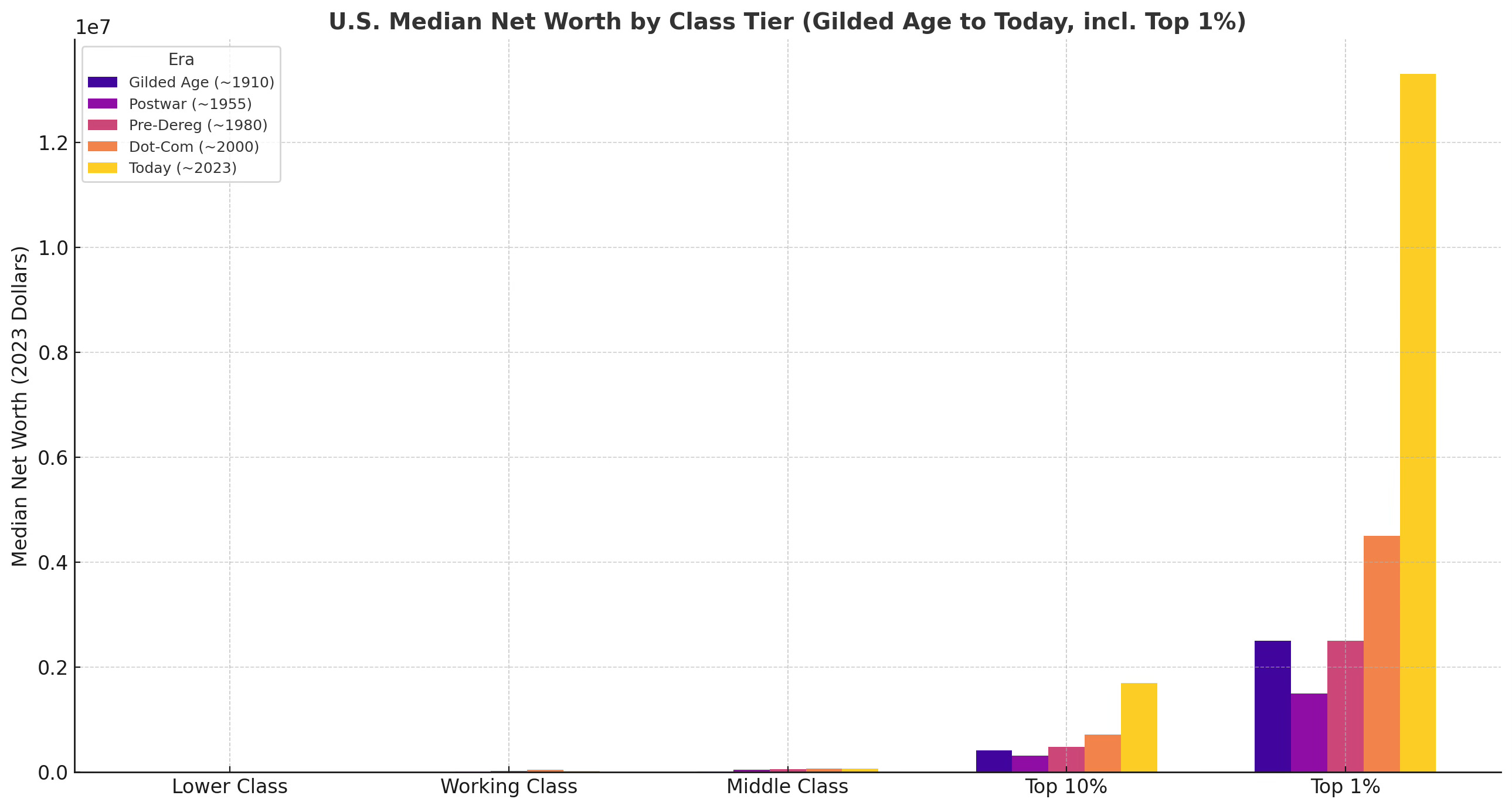
1970 to Trickle Down
If the Postwar brackets were left in place, we wouldn’t have seen this crazy expansion of the 1% set in motion once tax rates started to drop in the 1960’s, then accelerated by Trickle Down Economics.
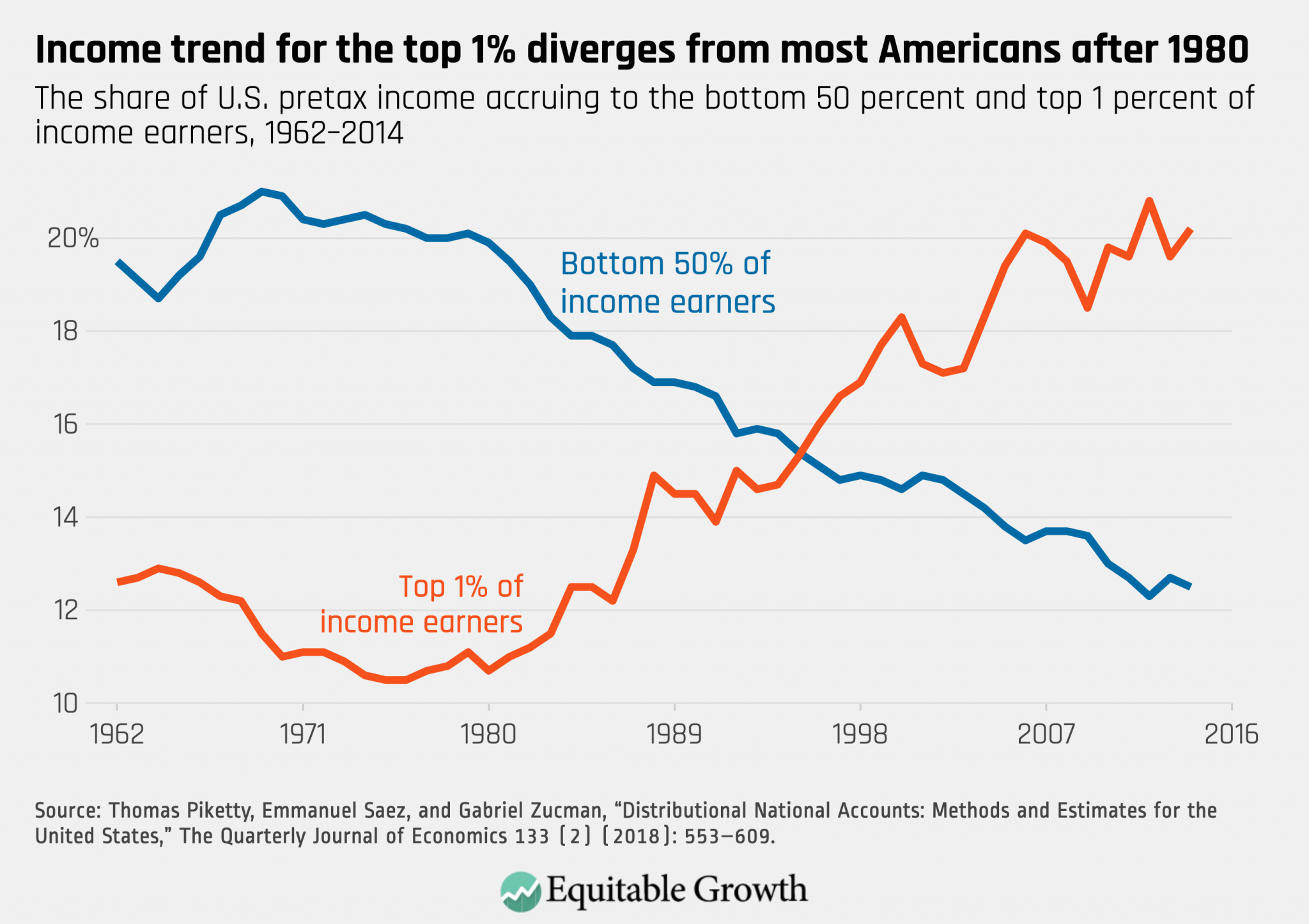
You can see from the graph above, once Trickle Down Economics was put in place, the speed at which the bottom earners lost vs how fast the top 1% gained is staggering.
Now lets look at it as growth per income group:
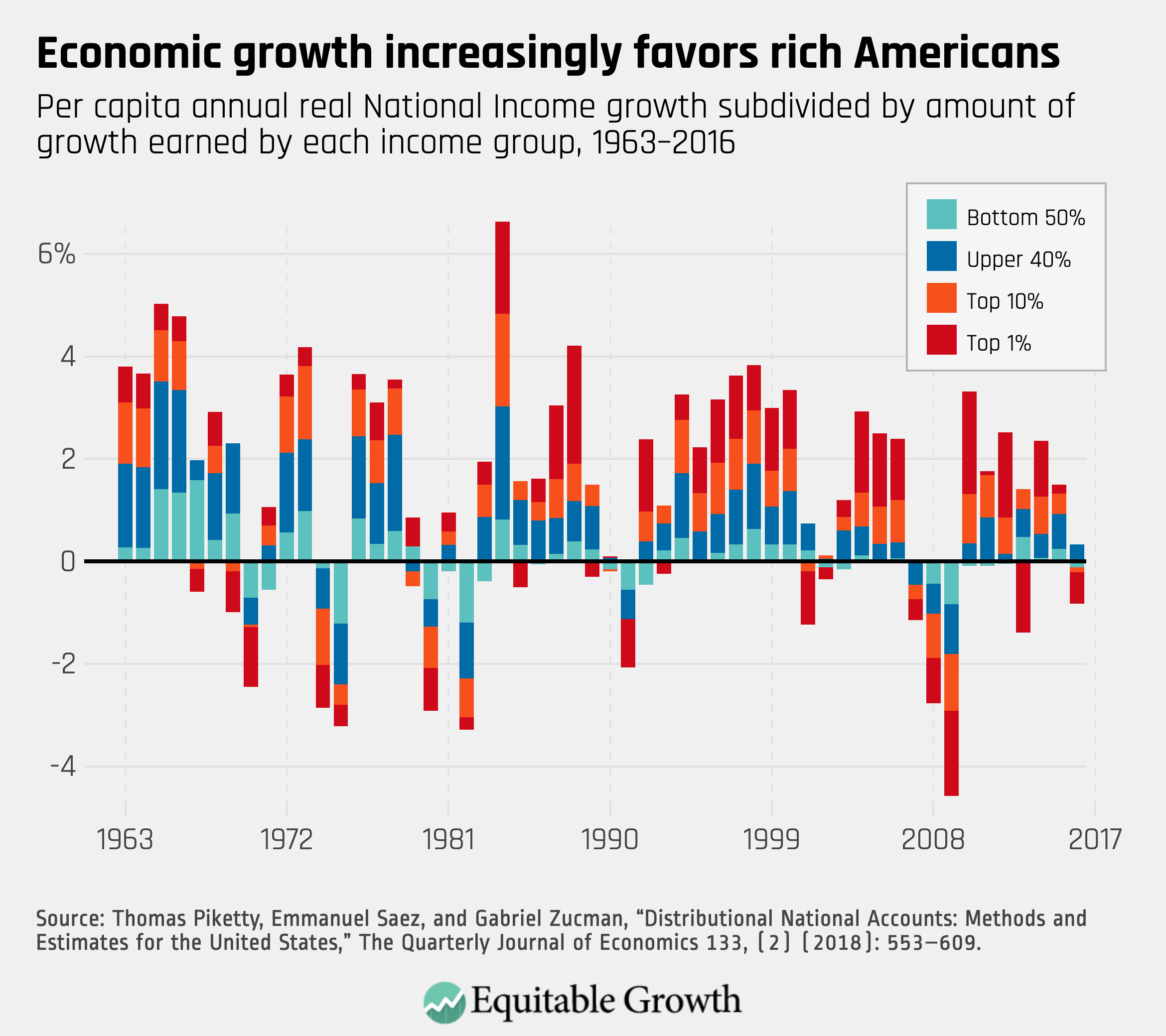
Look closely after 1981, see how fast the growth of wealth only stays in the top earners. Before that the working classes truly were part of the wealth growth of the nation. The swap to the 10% was deliberate, Trickle Down Economics was just a cash grab upward, the wealth as job creators was born again.
Then around 2010, once Citizen’s United was signed into law, the top 1% leaped and the .01% just exploded. Once money was viewed as speech, well they just bought the speech that expand their wealth leaving most behind. Just look at the red parts from 2010 forward in the graph above.
Post Pandemic
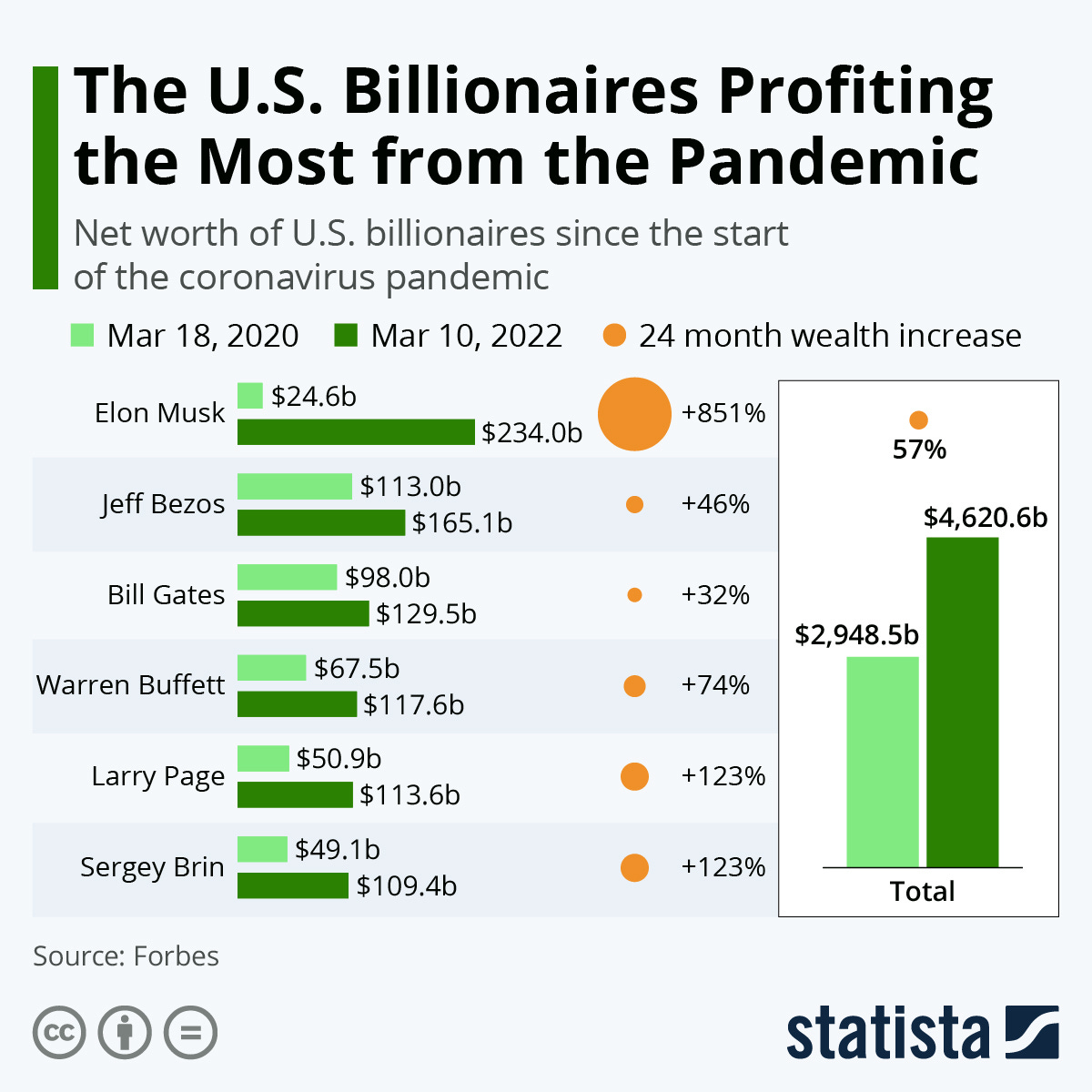
Since the Pandemic we have seen even a smaller set of people get extremely wealthy, just like the Gilded Age, that funny little .1%. It’s gotten to the point where everyday people can’t seem to understand the gap, it’s too large, it’s hard to wrap your head around.
Given the current push to give tax breaks and create new loopholes in the current 2025 budget proposal, this will only continue to expand. So when conservatives talk about the New American Gilded Age, why do people think that’s a good idea? How would it help most Americans?
The Gilded Age vs faux Gilded Promise
The American Gilded Age was marked by rapid industrialization, economic growth, and extraordinary wealth accumulation, but also by deep social inequality, political corruption, and labor unrest. So the idea that our President and leading political party is promoting this is a real stake through the heart of the working classes. It’s also mind boggling to me that people cheer for this from the working classes, it’s like cheering to be eaten by the wolf.
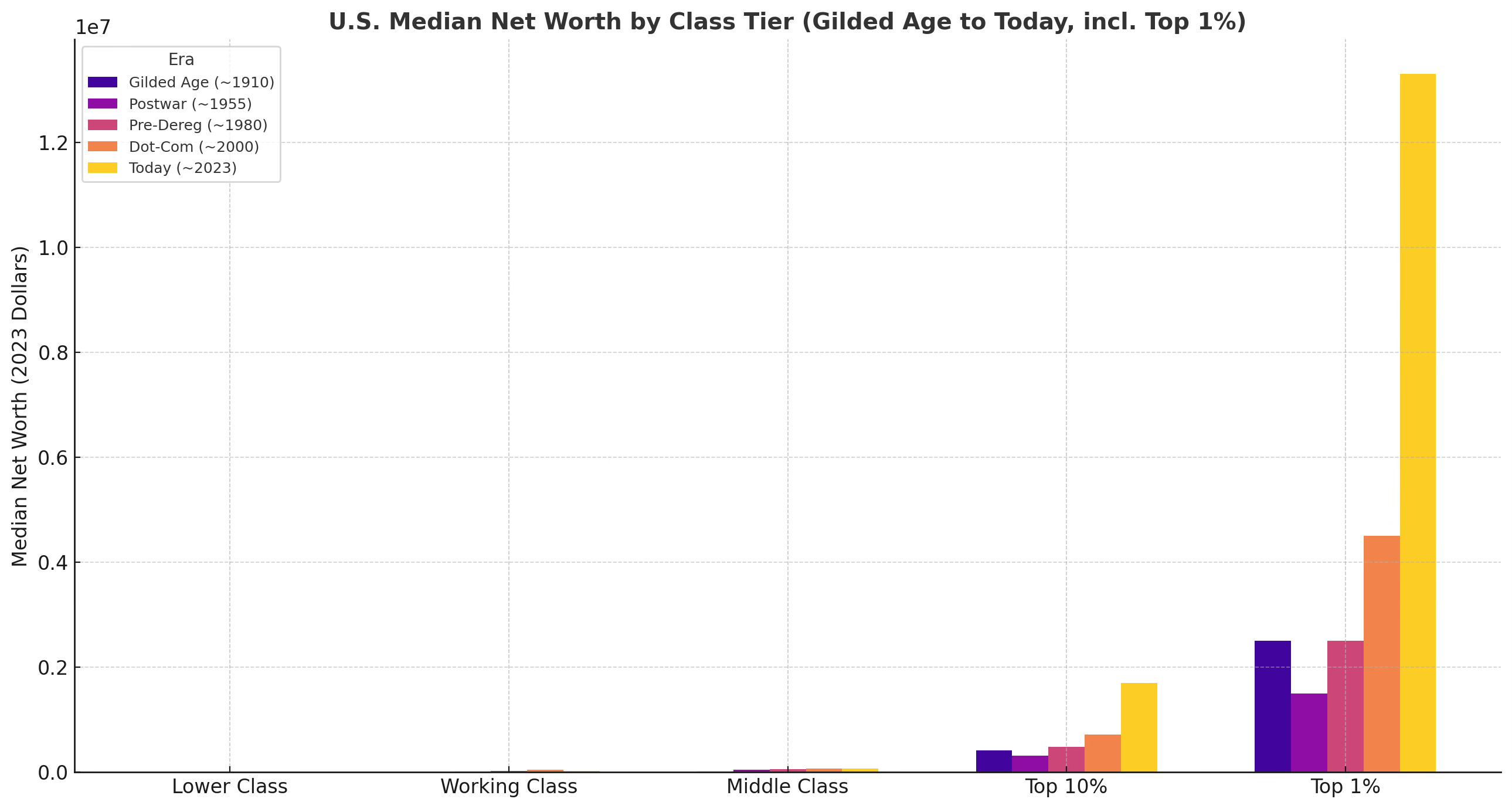
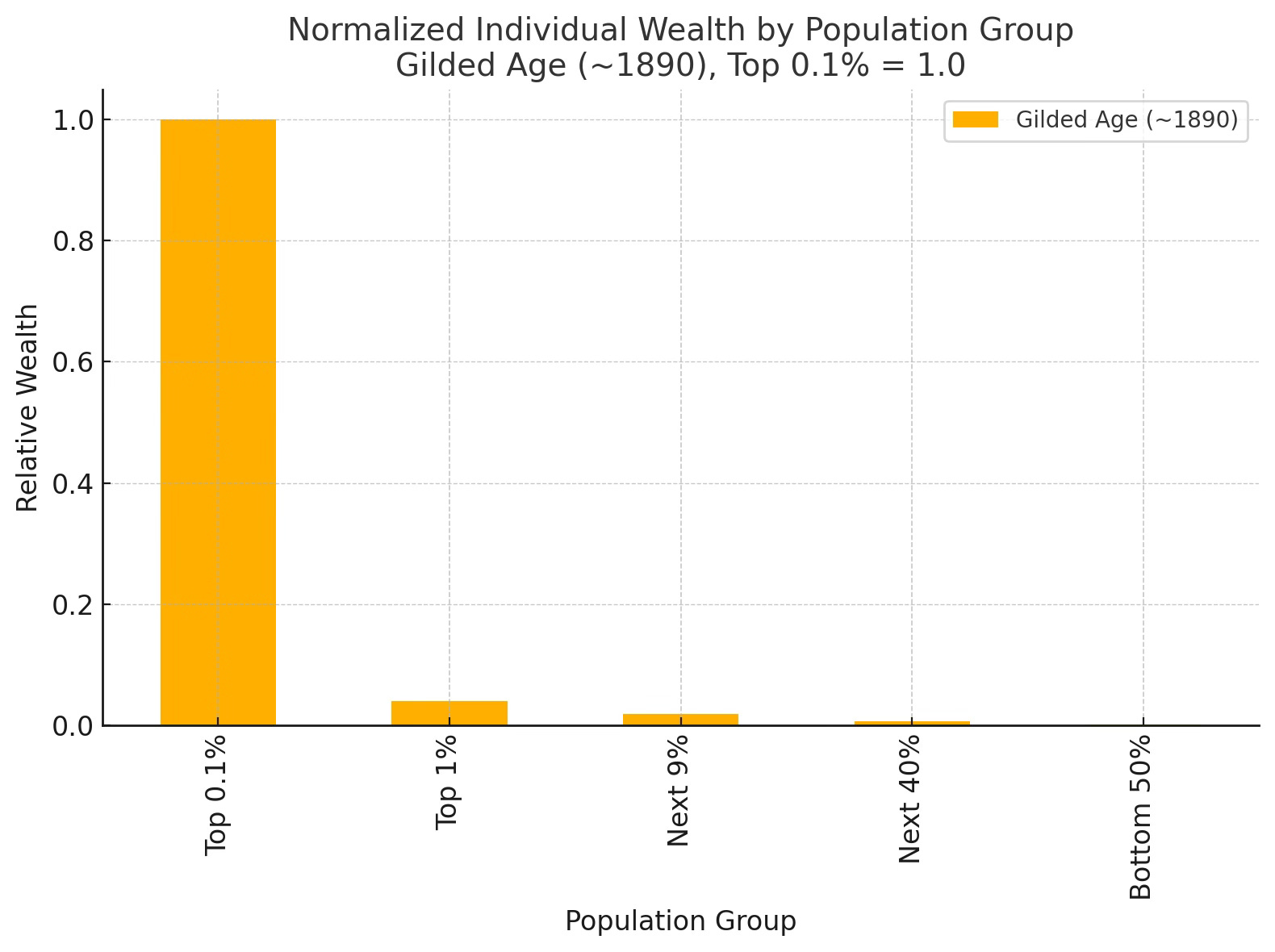
Almost all of the nations wealth during the Gilded Age was in the fewest number of hands, most living well below the poverty line. The chart below gives you that comparison in relative wealth based on economic group.
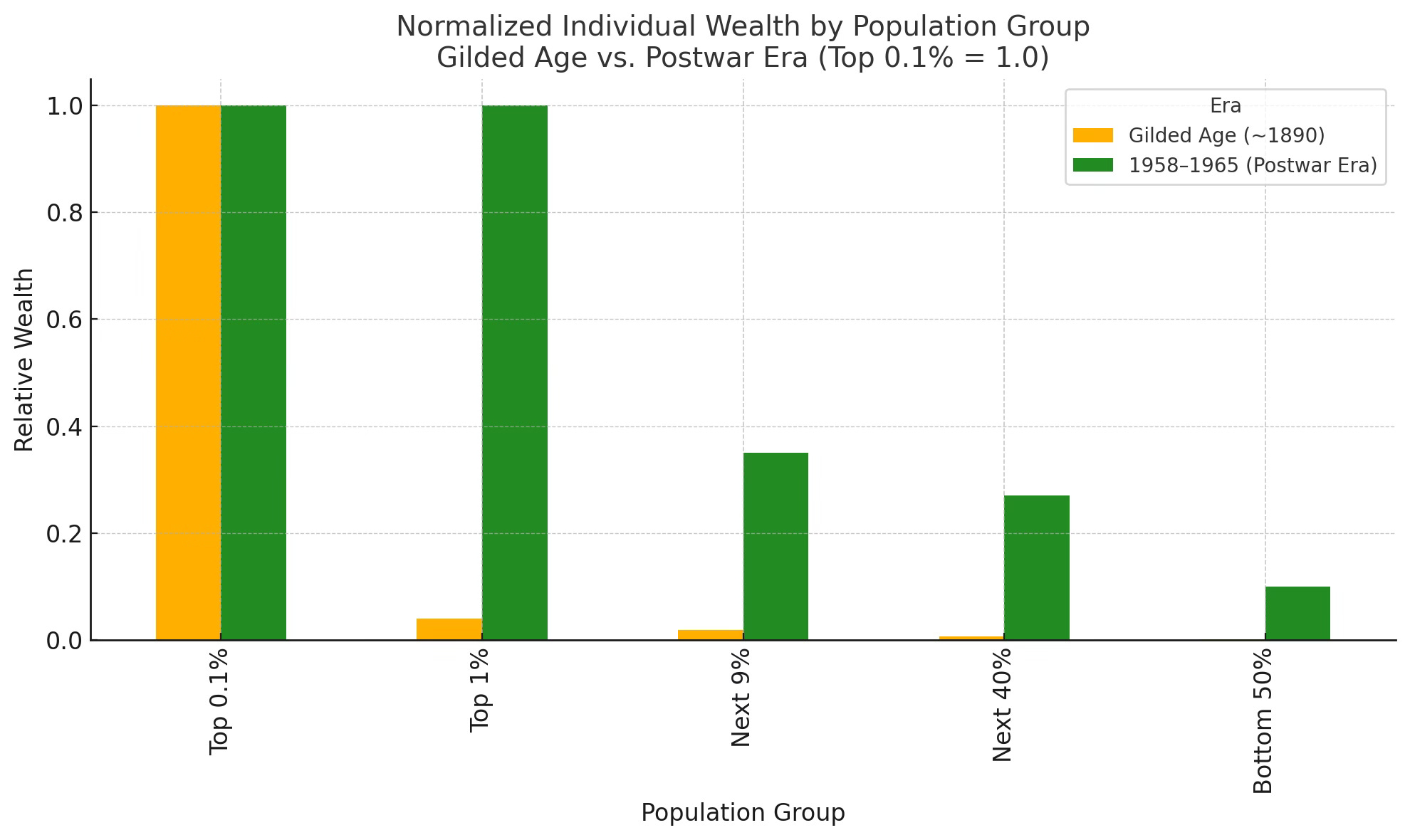
Adding in the Postwar Era you can see that the share of the nations wealth spread out, the top were still plenty wealthy, but the bottom 90% now had a share in it. This ability for the working classes to spend created the next period of economic growth.
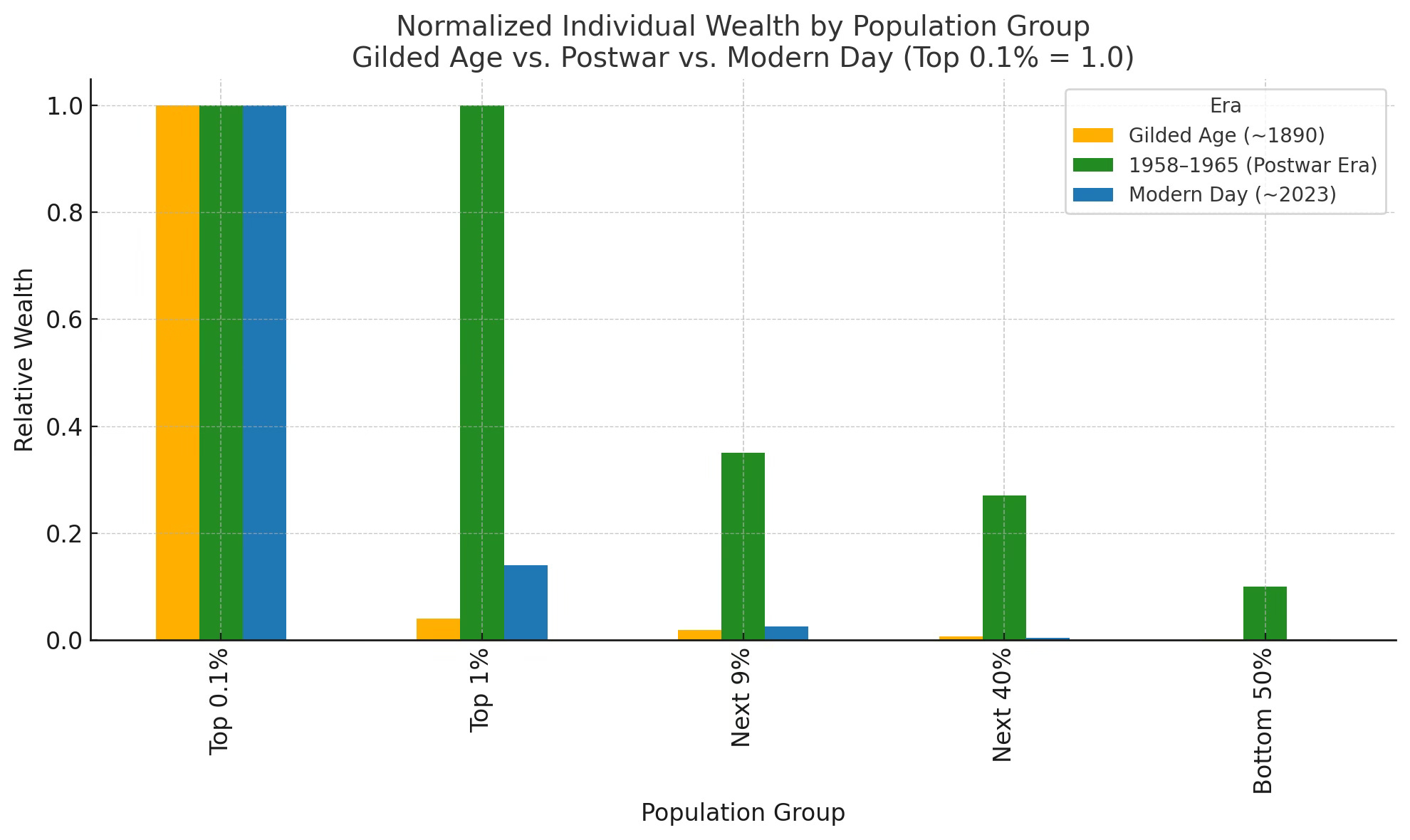
Let add today, the drop in participation outside the top .1% is staggering, better than the Gilded Age, but still a huge lose for everyone outside the top .1%
If we take the current budget proposal, with the New American Gilded Age, wealth would yet again move to the top and less for everyone else. Gets really hard to see how the bottom 90% could even survive, especially after adding in tariffs.
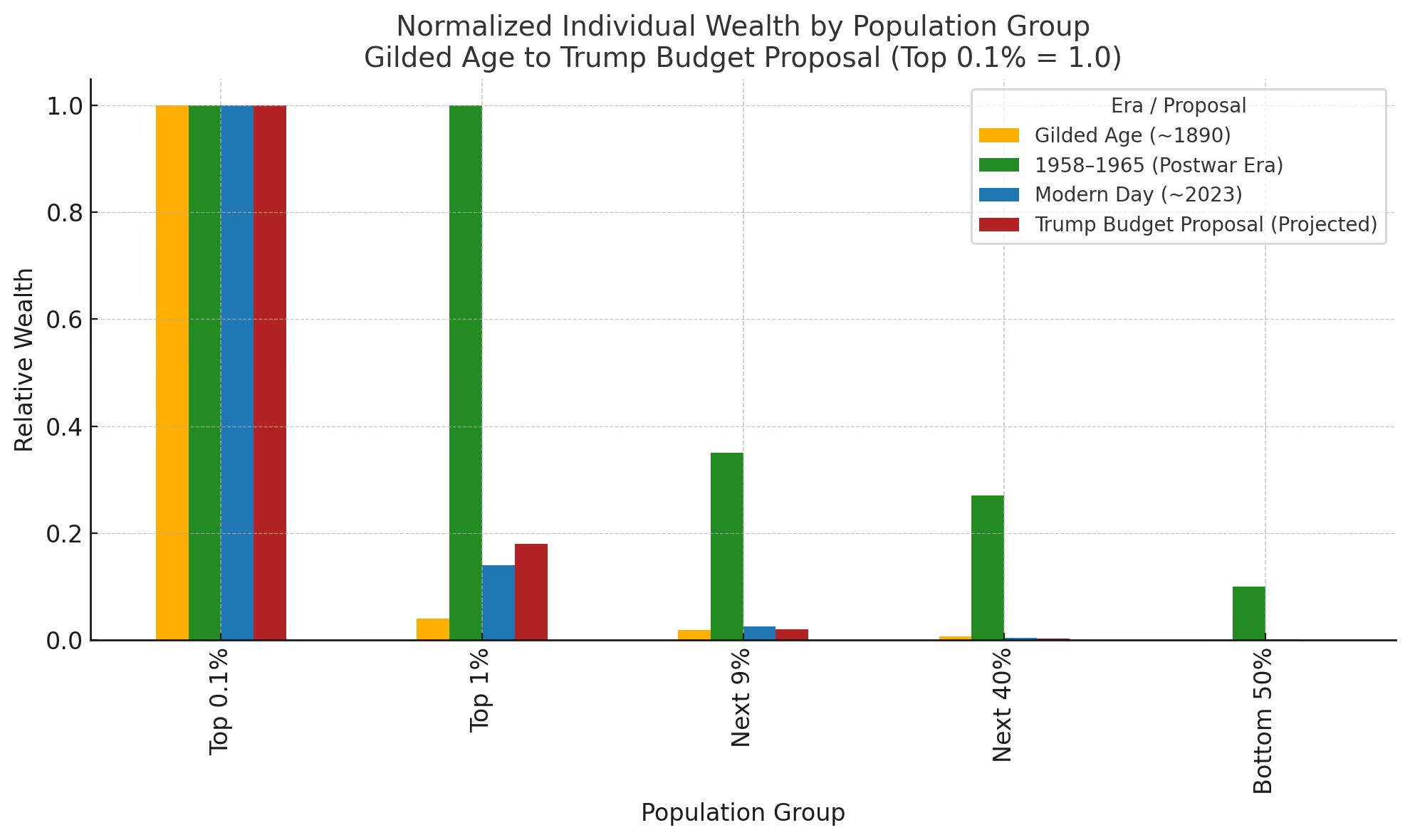
For this comparison I’ve been using a normalized scale to illustrate just how few hands that wealth was really in, it really shows just how massive the wealth inequality gaps really are.
So let’s look at using a log scale instead, so it’s bit easier to read and talk about.
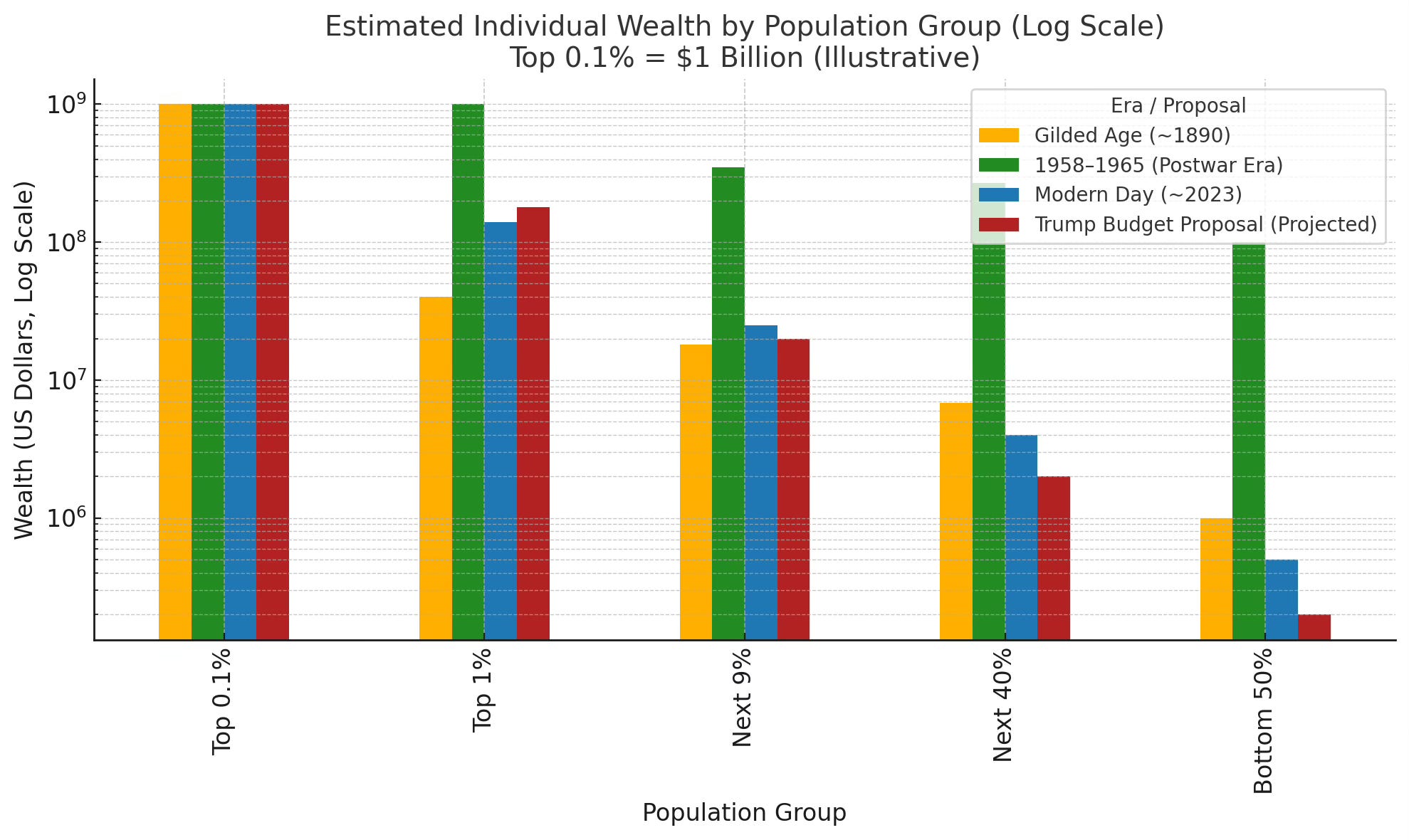
No surprises here, we were already well past the wealth inequality of the Gilded Age, so why make it worse?
The US economy needs more population participation, not less.
Now let’s look at this one other way before we move on. Let’s normalize the wealth distribution and look at it by population group. Being a consumption nation, the more everyone can buy, the better for our GDP. So it’s fair to say we want the broadest participation in the economy by as many people as possible. Buying everyday things when you're in the upper 10%, easy, not so when you are in the bottom 50%. We generate more economic activity when those in 50% of the population can also buy more than just the basics.
Let’s see how that plays out through these time periods based on population group.
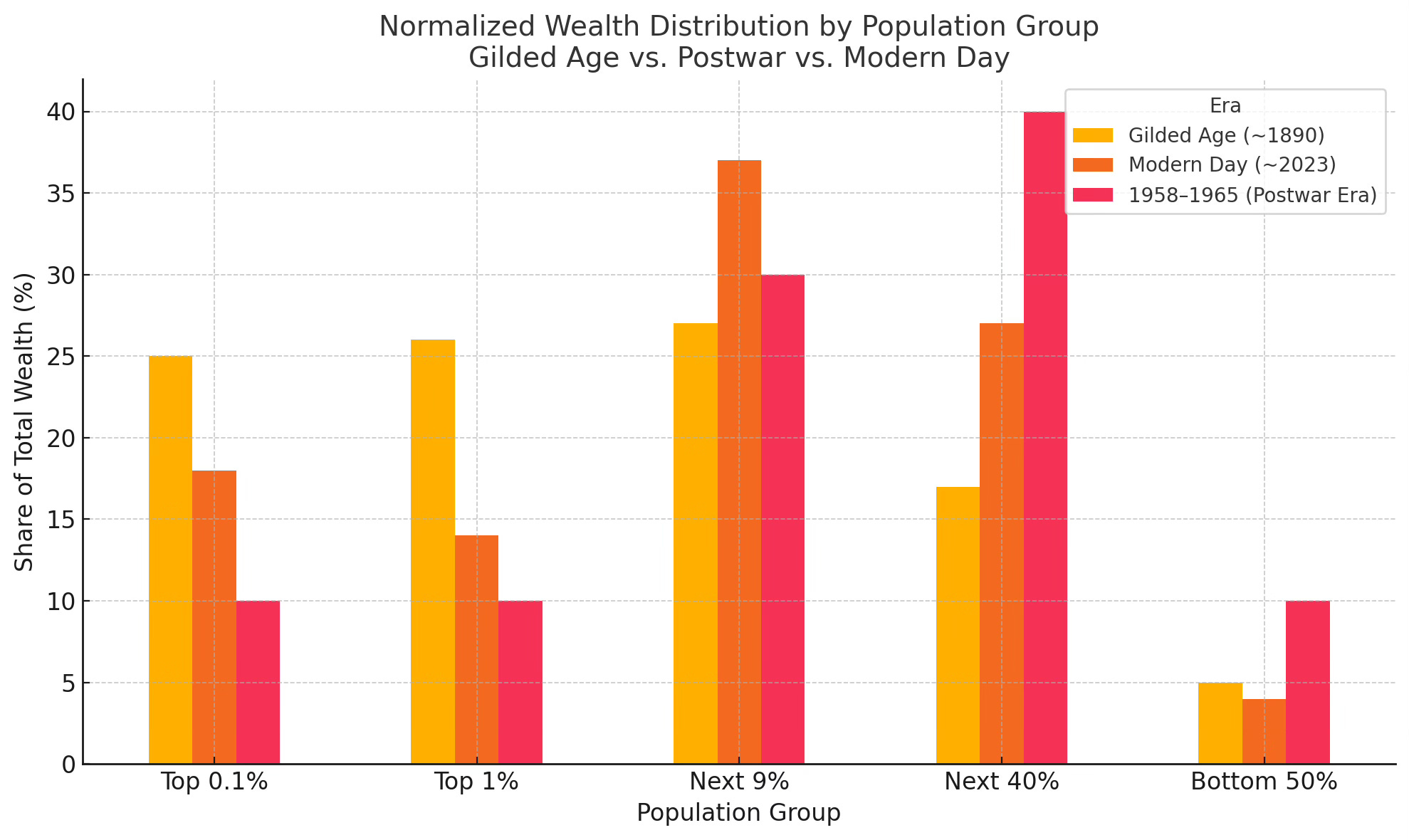
During the Gilded Age the peak of the bellcurve sat over the top 10%, the same is true during the modern times just slipped to the lower part of the top 10%. The Postwar Era on the other hand, the peak was over the 40%, shifting wealth to the lower classes where there are the most people creating the driver for growth in the American Economy. The bottom did better here as well, but plenty of room for improvement.
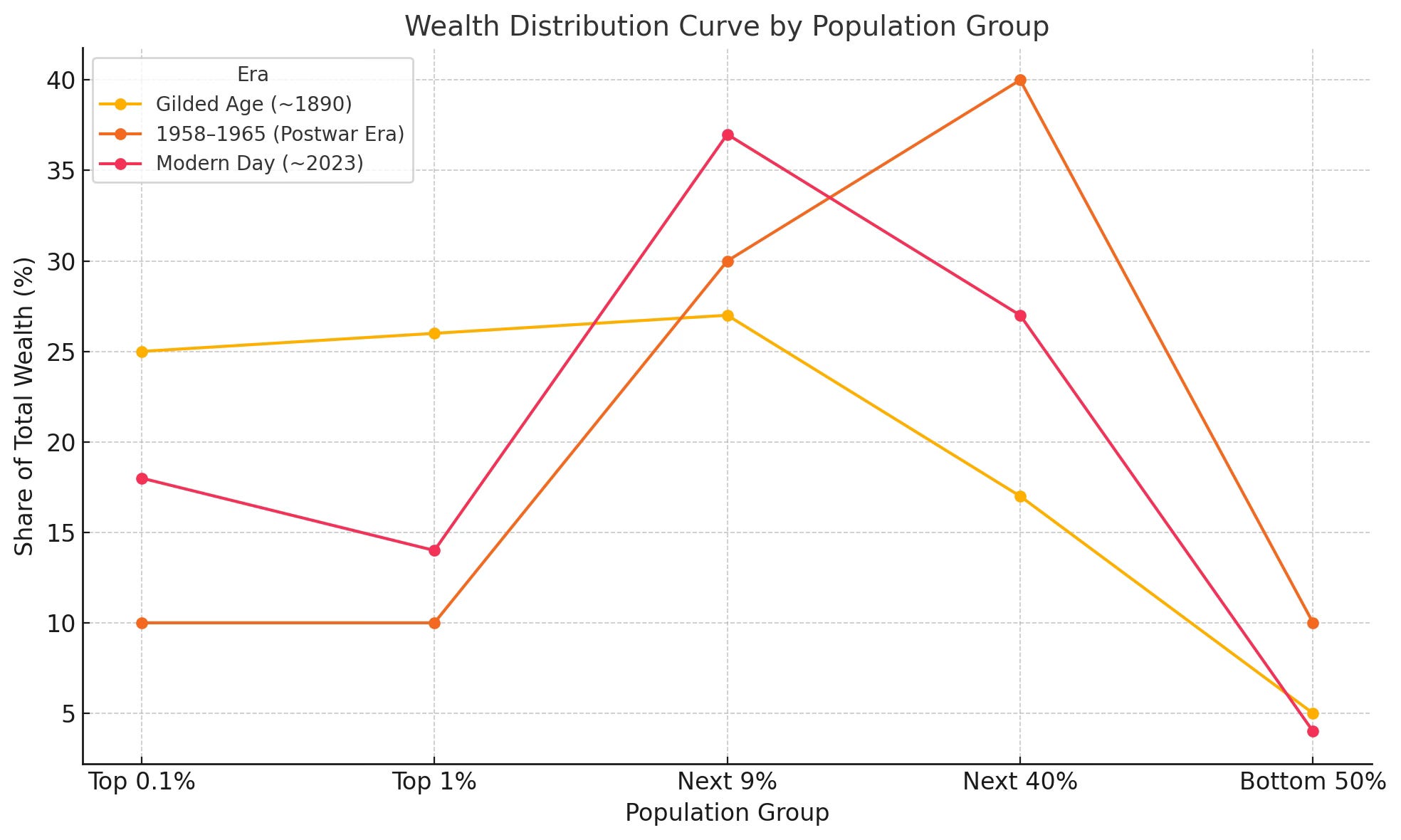
Demand creates need, need creates jobs. By keeping wealth broad in the population, spending demand created better wealth for most.
Summary
The Gilded Age should not be what we are looking for, the best distribution of wealth for the nation was during the Postwar Era, we should look there on how to level the playing field for all. It was the best time for the American Middle class, it had clear reasons on why it worked, most of which have been stripped away by the wealthy using the terms of why it worked again them, example “redistribution”, “unions”, “estate taxes”. Citizens United helped them control that narrative and the parties to the point that average Americans can no longer have a chance to live the promise of a middle class life.
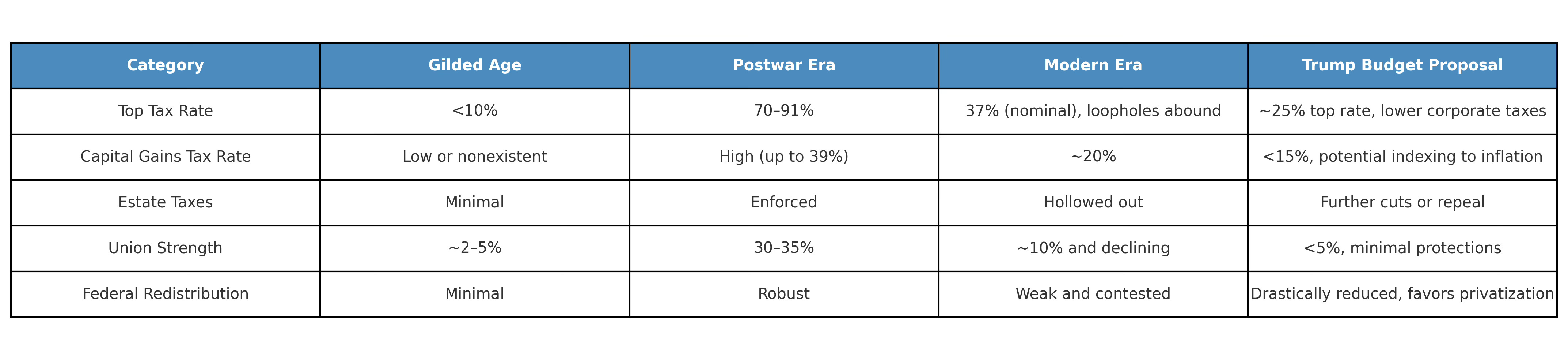
When the conservative crowd claps for the idea of America’s New Gilded Age, just remember, 90% of the population of the country is not going to participate in it, they are going to be hurt by it. The new budget proposal will only make things worse for those outside the top 10%.
So are you in the top 10%? If not, why support this? And if you are in the top 10%, history tells us to worry, so let’s fix it before we have a French Revolution.
Part 2 can be found here.
The data being used here provided by ChatGPT using multiple models and references.