
The Efficiency Lie: How Musk's DOGE Became a Trojan Horse for Digital Authoritarianism
$180 billion in "savings" or $1 billion in real surveillance contracts? While Americans argued about government waste and immigration, Silicon Valley rewired the entire federal data infrastructure.

Read previous story here: Our Tech Overlords, Minority Report is Here
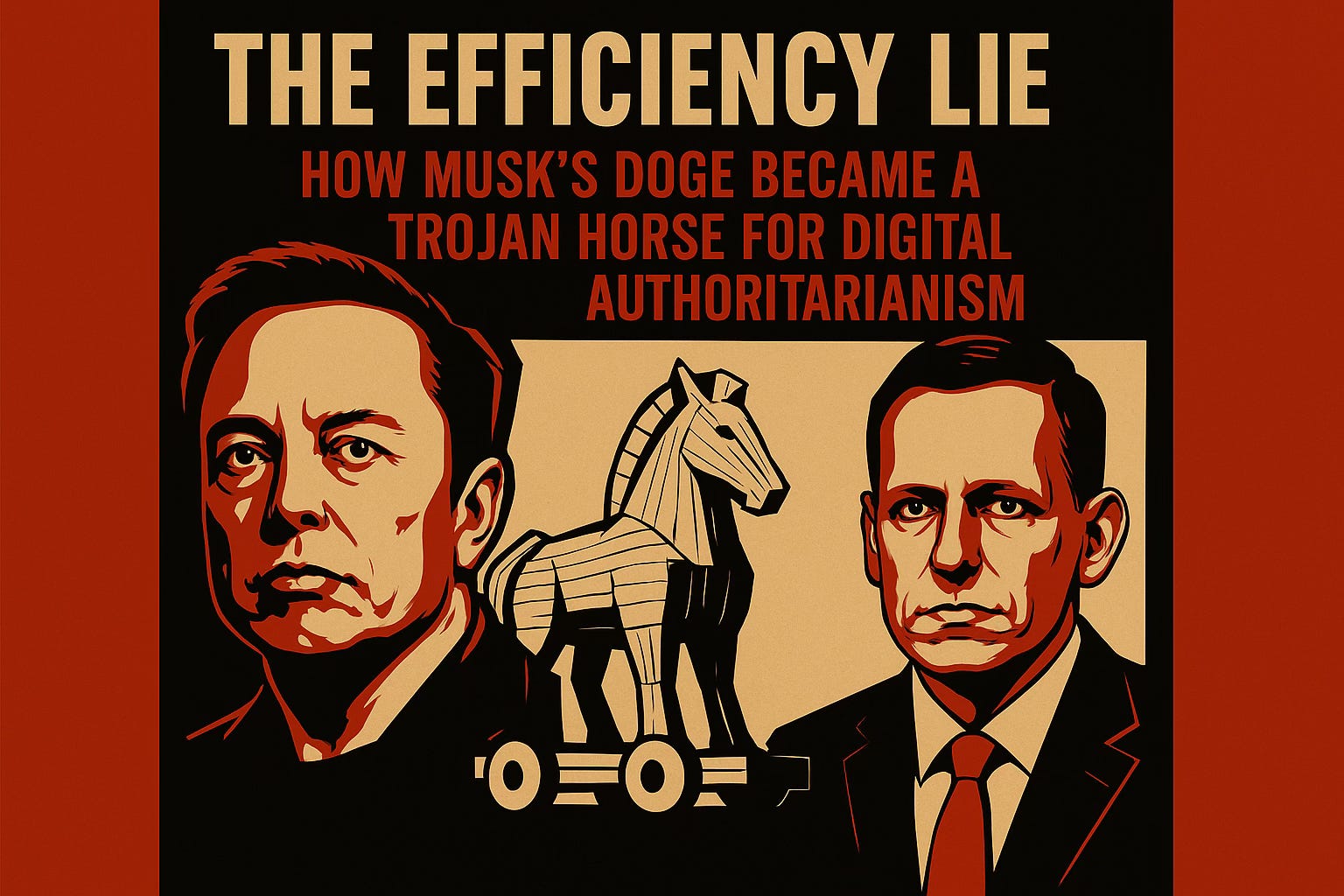
Previously on “Our Tech Overlords”...
DOGE used “efficiency” as a cover to build integrated surveillance systems
Palantir’s platform quietly connected IRS, ICE, HHS, VA, and DoD databases
Most Americans still think this was about cutting government waste and dealing with immigration enforcement
Now ICE knows when you're in your car, at your lawyer's office, or boarding a bus. Not through traditional fieldwork, but because DOGE rewired the government’s data systems into a real-time surveillance engine.
Most wanted to see the public scoreboard showing billions in savings and think "finally, someone's cutting waste." But anyone who has been tracking the money flows and contract databases, the numbers tell us completely different story.
Let’s walk through what DOGE actually built while everyone was distracted by the efficiency theater.
The Public Performance vs. Private Contracts
DOGE's website shows impressive stats:
Claims: $180 billion in total savings
Reality: NPR found these numbers "don't add up"
Claims: 11,042 terminated contracts
Reality: Most were already scheduled to expire
Meanwhile, here's what was actually being spent:
New Palantir Contracts Signed:
$30 million: ICE real-time immigrant tracking
$795 million: DoD Maven AI expansion
$500+ million: Cross-agency data platform development
And then there are the unknown, hidden in black budget spending
That's not efficiency, its largest expansion of surveillance spending in American history, hidden behind questionable savings calculations.
The Real ROI: Trading Democracy for Data Control
Let's talk return on investment, Silicon Valley style. We have become so numb to sharing our privacy with corporations, we are sleeping walking to combined controls of a private enterprise and our government.
Traditional Government Efficiency Investment:
Input: Process improvements, staff training, system upgrades
Output: Faster services, lower costs, better citizen experience
ROI: Public value creation
DOGE's Actual Investment:
Input: $1+ billion in surveillance infrastructure
Output: The future ability of Real-time tracking of every American
ROI: Total information dominance for whoever controls the system
From a business perspective, it's brilliant. From a constitutional perspective, it's terrifying.
The Network Effect of Surveillance
Here's a concrete example of how this works in practice.
If you have done any of the following, you’re in the system:
Applied for a government benefit (HHS processes your application)
Filed taxes (IRS analyzes your financial patterns)
Traveled internationally (CBP scans your biometrics)
Got a security clearance (DoD runs background checks)
Used veterans benefits (VA tracks your service record)
Before 2025, these were separate systems with separate databases. Getting a complete picture of any individual required legal processes, warrants, and inter-agency cooperation.
Now? Palantir's Foundry platform connects all of these in real-time. In the near future one search could pull up your complete federal profile: financial, medical, travel, employment, social connections, behavioral patterns.
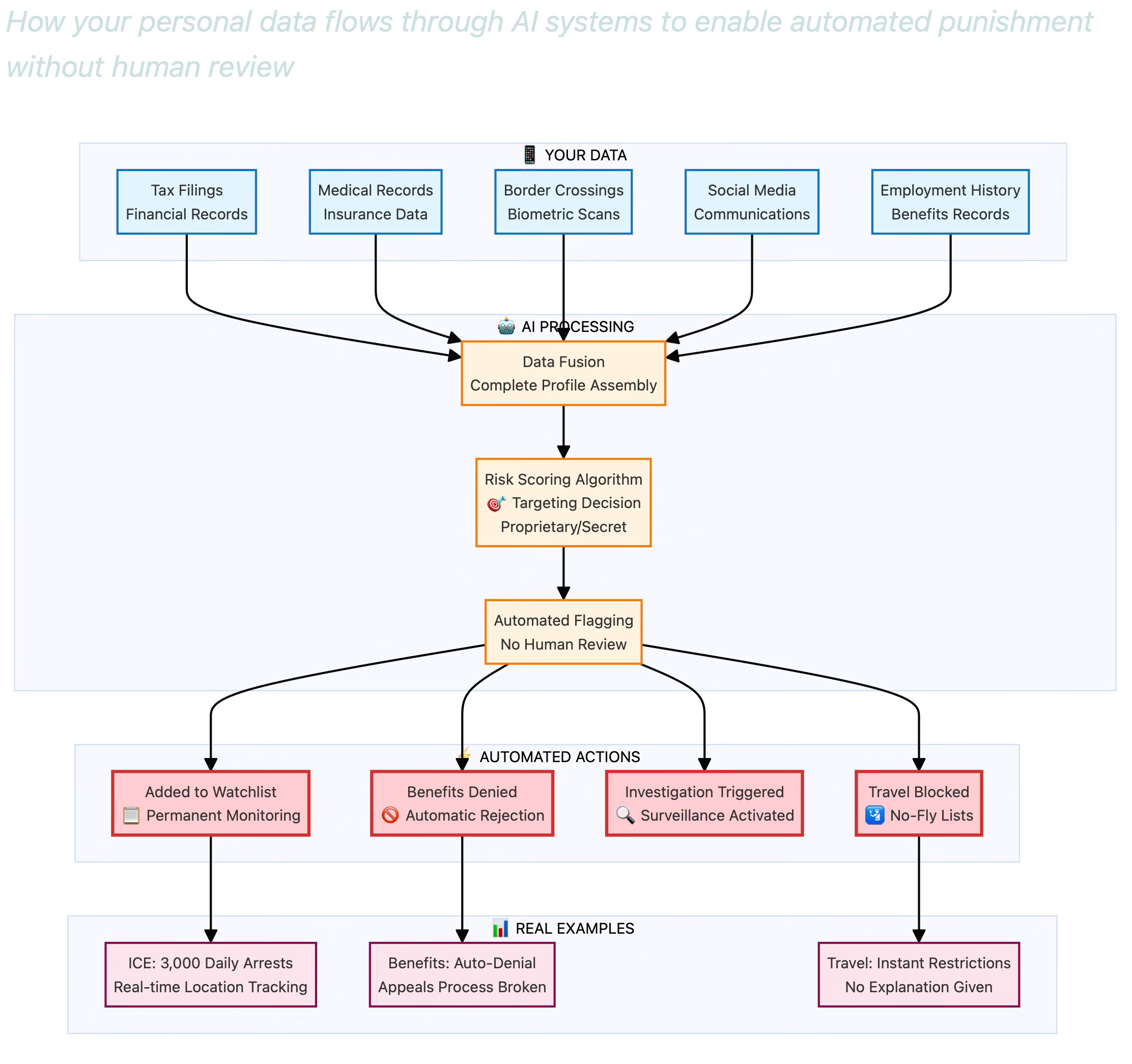
Where are the 2nd Amendment folks in this fight? They didn’t like the idea of government lists.
The 30-Day Problem: Speed Over Scrutiny
DOGE is operating on 30-day development cycles. Why the rush? Because they knew that if Congress or civil liberties groups understood what was being built, they'd face serious opposition. It's like any startup trying to achieve product-market fit before competitors notice. Except in this case, the "market" is social control and the "competitors" are constitutional protections.
By the time any oversight can get caught up, the infrastructure is already live and integrated into daily government operations. Once embedded, very difficult to remove.
The Palantir Monopoly: One Company, High Level of Control
This is where the business model gets really interesting. Palantir didn't just get government contracts, they are becoming the government's central nervous system.
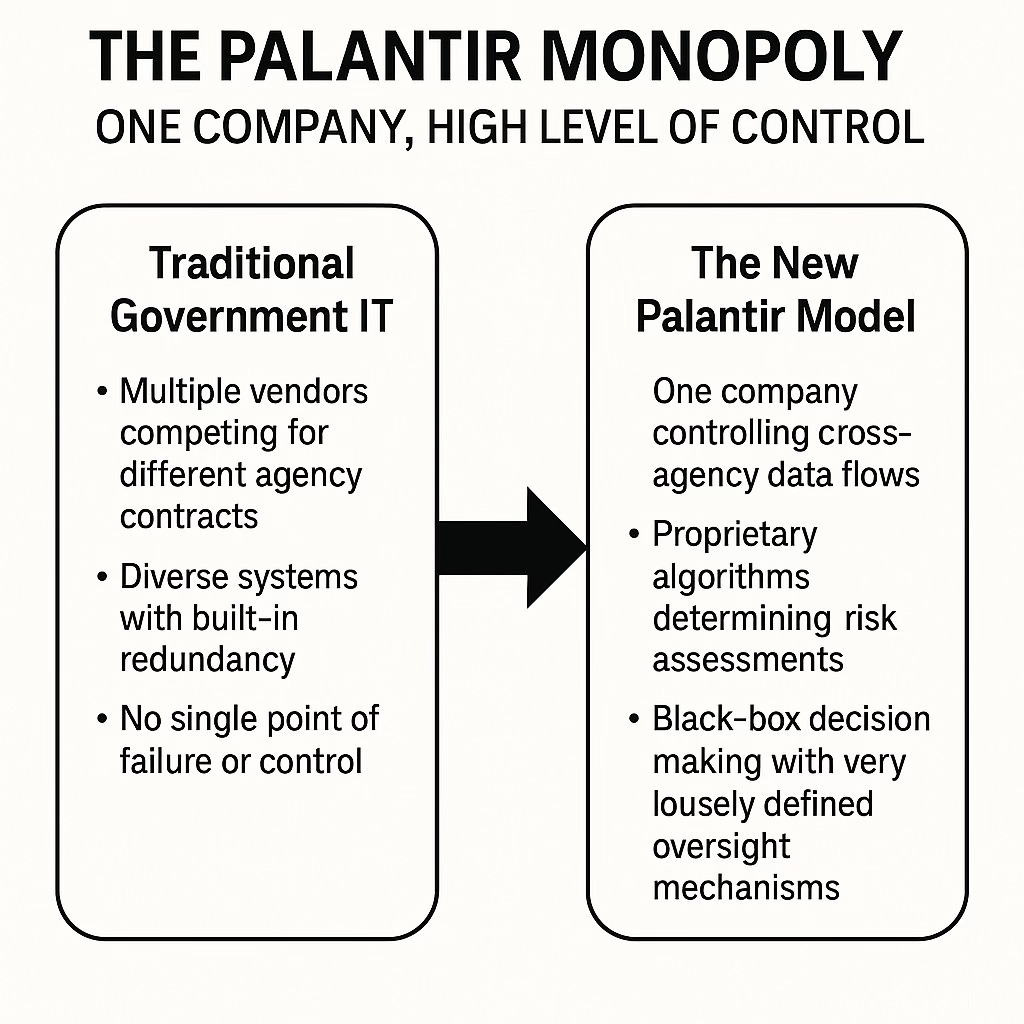
From a security perspective, this is insane. All of the same concerns about Musk’s companies for space and defense, too much under one banner. We are handing a single private company the ability to monitor and analyze every American's interaction with their government.
The Trump-Musk Breakup: Who Really Controls the Kill Switch?
Here's where the story gets even more terrifying. While Americans were debating government efficiency and removing “illegal criminals”, we were witnessing what might be the most dangerous corporate power grab in history. And now that Trump and Musk are having a public breakup, we're about to find out who actually controls the system.
The Current Crisis:
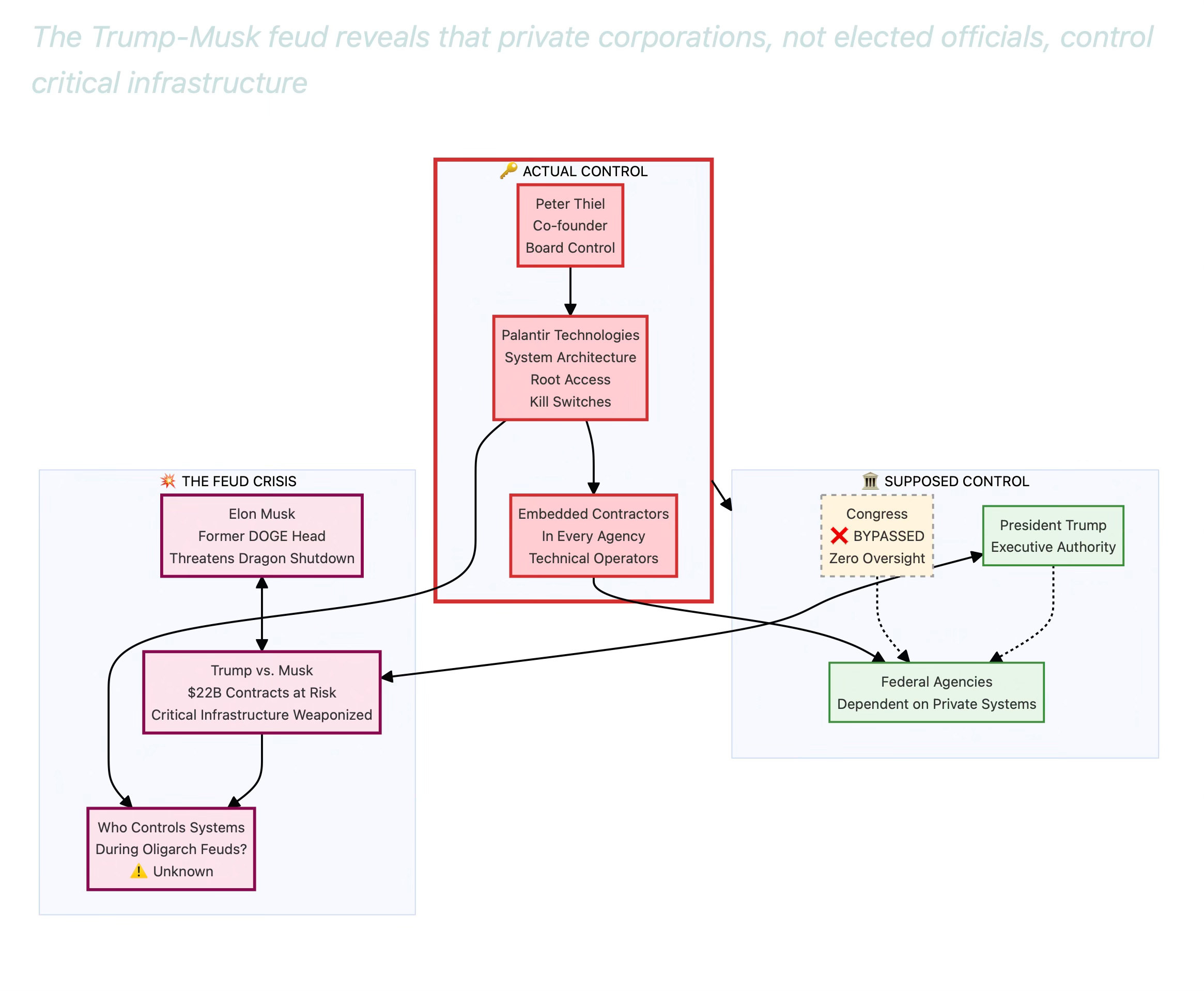
Trump threatens to cancel government contracts, then Musk threatens to decommission SpaceX Dragon. Both sides are using critical infrastructure as weapons in their personal feud while us and the world look on. But here's the crucial question: Who actually has administrative control over the surveillance system?
Palantir employees are currently embedded in federal agencies as "government contractors" and are expanding. They have root access to the unified data platform and the algorithms. And access controls to the system are proprietary to Palantir, not the government.
Worst-Case Scenarios:
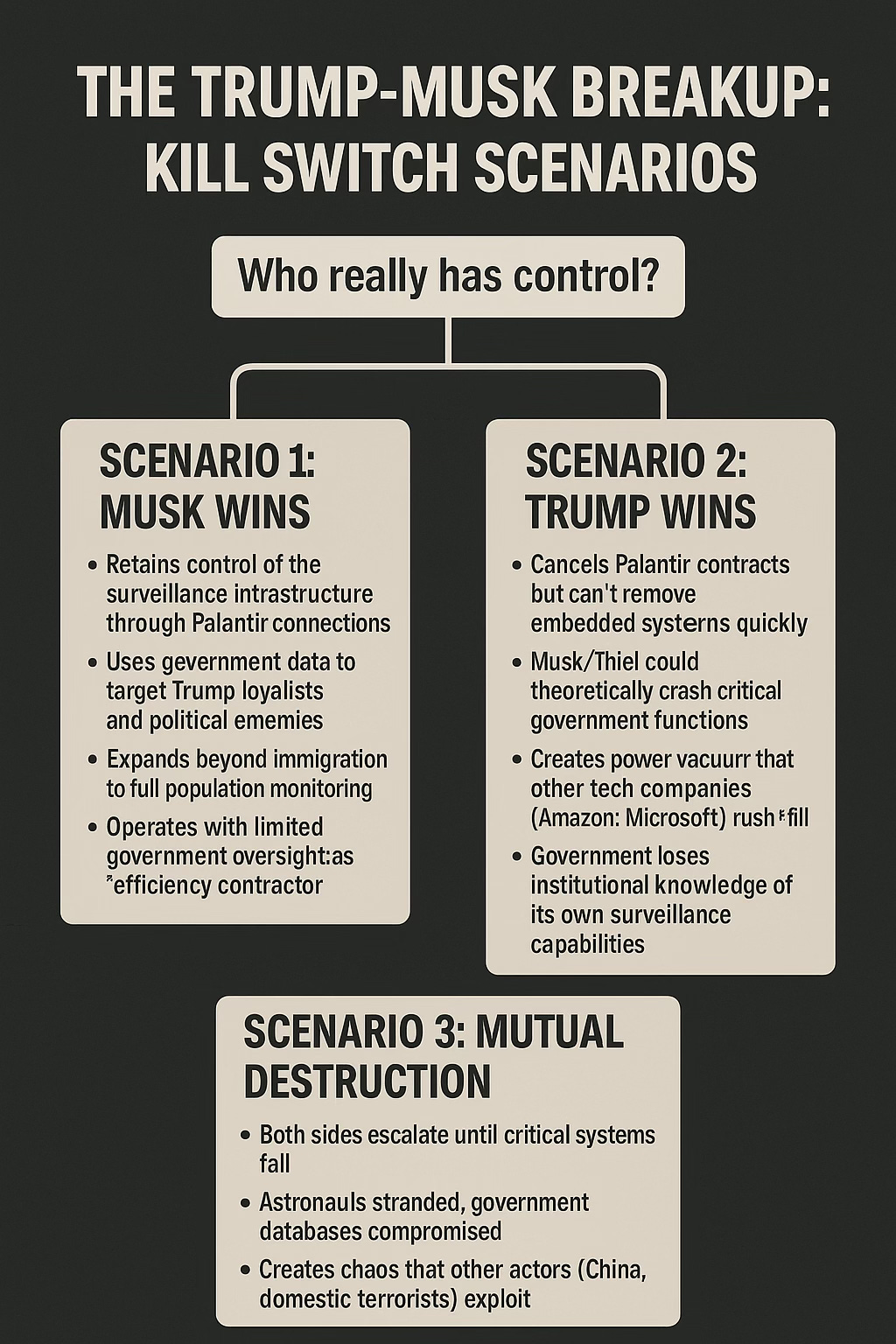
So who really has control?
The uncomfortable truth, Peter Thiel and Palantir's technical teams probably have more operational control over federal surveillance than anyone in the elected government.
Think about it. They designed the architecture, they control the access protocols, they understand the integration points, they have the kill switches and possible back doors into the system. So now even Trump can't just "fire" Palantir without potentially crashing systems that are now running immigration enforcement, benefits processing, and national security operations.
This is exactly what the "network state" advocates wanted: a situation where private companies become so embedded in government operations that they become effectively un-fireable. It's digital feudalism, the government becomes dependent on corporate lords who control the technical infrastructure.
We're witnessing the first major stress test of this system. And the early returns suggest that the corporate controllers have more power than the elected officials.
Why else has Trump not gone scorched earth on Musk like he has with others? Musk has made some really bad claims about Trump both in terms of policy and personal life.
Digital Feudalism
This connects to a broader Silicon Valley vision that most Americans still don't see coming. Peter Thiel and others aren't just building surveillance tools, they're building the infrastructure for what they call "network states." The idea is simple: traditional governments are inefficient, so replace them with corporate-run territories where "customers" (not citizens) buy governance services.
You get to pay a monthly subscription to being a “state citizen”. And the thought that people got upset about BMW wanting customers to pay for heated seats as a subscription. Imagine all of the services the federal government supplies to its citizens, what will each subscription level look like?
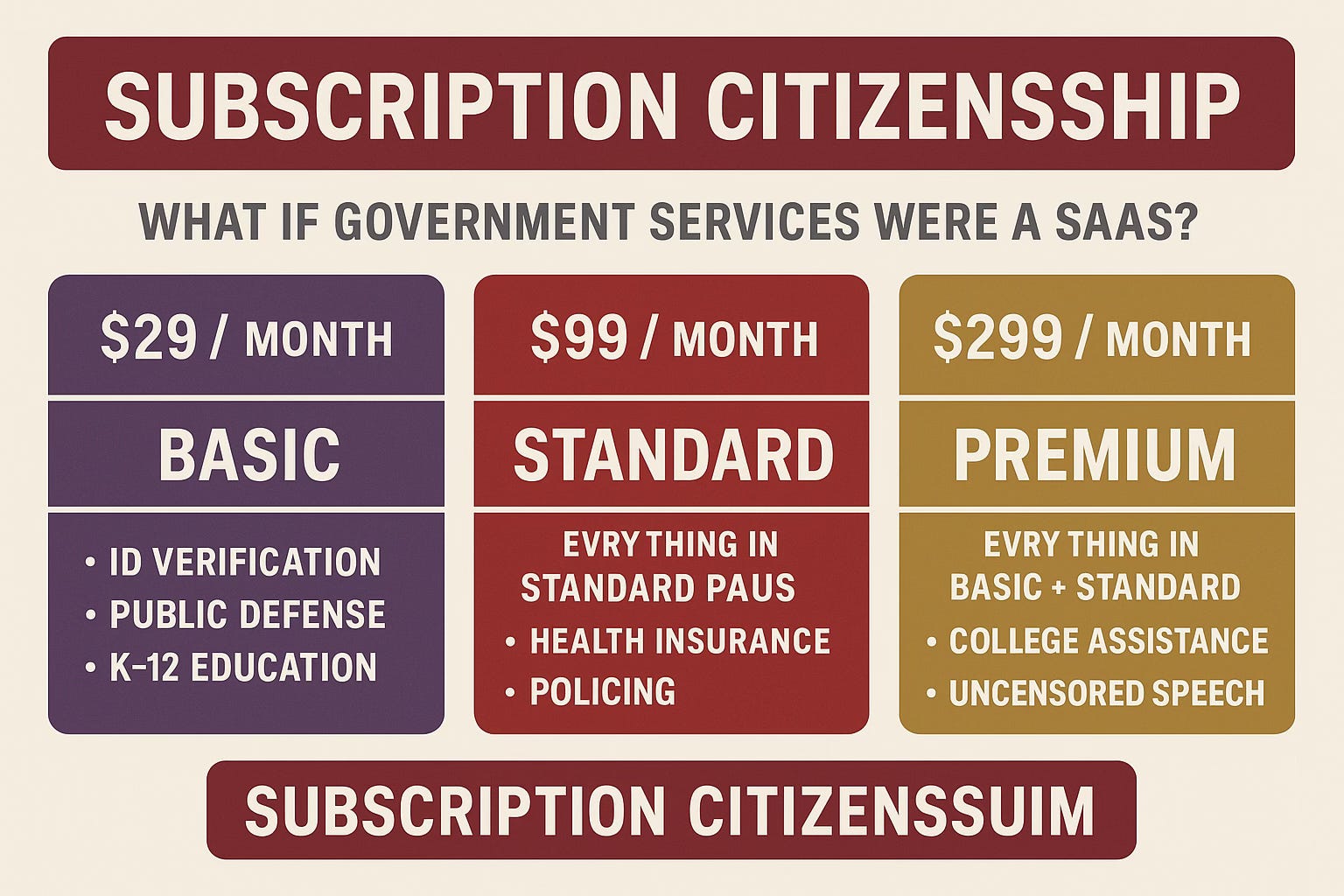
The DOGE surveillance system isn't the end goal, it's the transition infrastructure. Once you can monitor and control population behavior digitally, you can run a territory like a corporate platform.
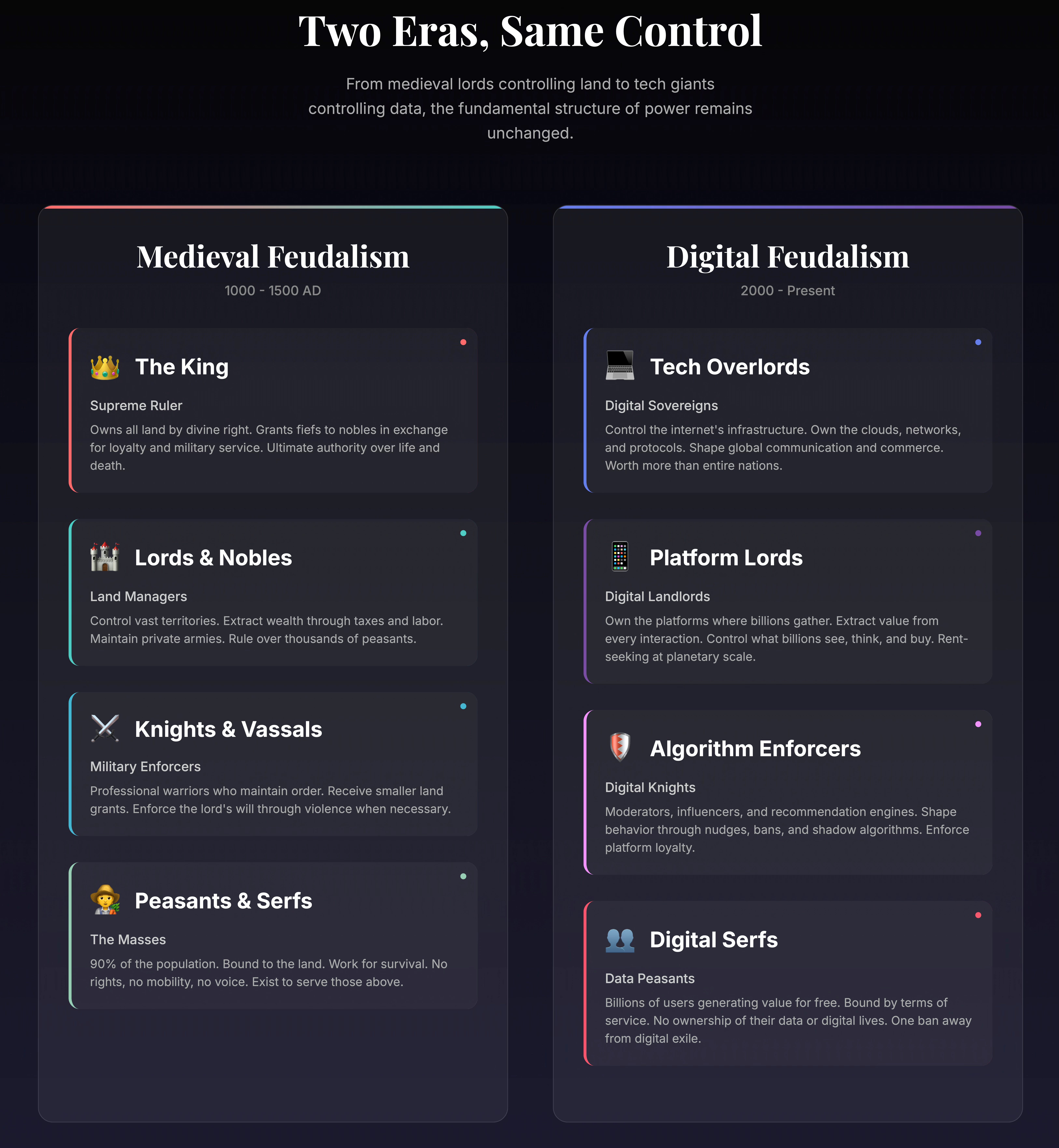
Think Facebook's content moderation, but for your entire life.
The Congressional Oversight Black Hole
Here's where the constitutional crisis gets even worse, congress has been sidelined to the point that they really don’t have control of this. The executive branch just ran roughshod over congress by creating DOGE in the first place. Now they are trying to interject for oversight, but have been limited in their ability to do so and are way behind.
How It Was Supposed to Work vs. How DOGE Did It:
Traditional Government IT Procurement:
Congressional budget approval for major systems
GAO audits of contractor performance
Committee oversight of agency data practices
Public hearings on privacy implications
How DOGE Bypassed All of This:
Operated as a "special government employee" unit, not subject to normal oversight
Used existing agency budgets to avoid new appropriations
Classified surveillance capabilities as "efficiency improvements"
Signed contracts during congressional recess periods
We basicly just privatized core government functions without any constitutional framework for oversight.
Even when individual Congress members started asking questions, they found they couldn't get basic information. DOGE claimed "operational security" prevented disclosure of technical details. Palantir cited "proprietary algorithms" to avoid explaining how decisions are made.
So we have a private corporation making sovereign decisions about American citizens, with limited legislative oversight, no public accountability, and unknown appeals process. That's not efficiency, that's abdication of democratic governance.
So Where Does This Leave You?
Let's get personal for a moment. Are you in the group that this system serves, or the group it surveils?
If you're a senior executive at a major tech company, defense contractor, or financial institution, this system probably makes your life easier. Better fraud detection, faster background checks, more efficient compliance monitoring.
If you're literally anyone else, small business owner, freelancer, activist, journalist, or just someone who values privacy, this system treats you as a potential threat to be monitored and managed.
The question isn't whether this affects you. It's whether you understand how it affects you before it's too late to do anything about it.
History’s Warning

What happens when the surveillance state isn't controlled by government, but by competing tech oligarchs?
The Trump-Musk fight gives us a preview. When personal feuds between billionaires can crash government systems, strand astronauts in space, and weaponize surveillance infrastructure, we've moved beyond traditional authoritarianism into something much more unstable.
Smart power brokers would recognize that comprehensive surveillance breeds resistance, not compliance. But Silicon Valley technocrats seem to believe their own mythology about technology solving human problems. They're building a system that guarantees future conflict and now we're seeing that the system is controlled by people petty enough to use critical infrastructure as weapons in personal disputes.
What We Can Still Do
The window for democratic resistance is closing fast, but it's not closed yet.
Immediate Actions:
Demand your representatives audit DOGE's actual spending vs. claimed savings
Contact oversight committees about the complete lack of congressional review
File FOIA requests for Palantir contracts and technical specifications (expect heavy redaction)
Support legal challenges to agency data sharing agreements
Vote in local elections for officials who understand privacy issues
Systemic Changes:
Restore congressional budget authority over surveillance infrastructure
Ban private companies from controlling core government data infrastructure
Require algorithmic transparency for any system affecting constitutional rights
Implement real oversight mechanisms with subpoena power for cross-agency surveillance
Create citizen privacy bills of rights with enforcement mechanisms
Mandate congressional approval for any contractor with access to multiple agency databases
Cultural Shifts:
Stop celebrating "disruption" when it involves constitutional rights
Recognize that efficiency and freedom sometimes conflict … choose wisely
Understand that private companies aren't inherently more trustworthy than government agencies
Demand answers about who actually controls critical government systems
The Choice We're Making
Every day we don't act, this system becomes more entrenched, more automated, and more capable of crushing dissent before it can organize.
The efficiency narrative was brilliant cover. Who opposes making government work better? But that's not what happened here. We traded constitutional protections for the promise of better service delivery, and we got neither efficiency nor freedom.
Instead, we are getting a corporate-controlled surveillance system that monitors every American while enriching the same tech oligarchs who convinced us it was necessary.
Is this really the America you want to live in? Because it's the America you're getting, whether you chose it or not.
The only question left is whether you're going to do something about it while you still can.
The contracts, spending data, and technical details referenced here come from public government databases, congressional oversight reports, and investigative journalism. You can verify these numbers yourself.
DOGE Operations and Claims:
DOGE Official Website and API Documentation: doge.gov/savings
NPR Analysis of DOGE Spending Claims: NPR - DOGE released data about federal contract savings. It doesn't add up
Reuters on 100 Days of DOGE: 100 days of DOGE: lots of chaos, not so much efficiency
Palantir Contracts and Government Integration:
Wired Investigation: DOGE Is Building a Master Database to Surveil and Track Immigrants
NPR on Palantir's Rise: How Palantir, the secretive tech company, is rising in the Trump era
Economic Times: Palantir to create vast federal data platform tying together IRS, Social Security and immigration records
Trump-Musk Feud and Infrastructure Threats:
Reuters: Musk-Trump breakup puts $22 billion of SpaceX contracts at risk, jolting US space program
Washington Post: The epic breakup of Trump and Musk's White House bromance
NPR: What the Trump-Musk breakup may mean for SpaceX and Tesla
Reuters: Trump threatens to cancel Musk's government contracts as feud boils over
Congressional Oversight and Legal Challenges:
Harvard Ash Center: Understanding DOGE and Your Data
NPR: How DOGE's push to amass data could hurt the reliability of future U.S. statistics
Semafor: 'Destroy the Ring': Trump's Palantir deal alarms Hill Republicans
Tech Ideology and Network States:
Wikipedia: Dark Enlightenment
Praxis Nation Official Site: Building the Next Great City
New Yorker: Curtis Yarvin's Plot Against America
Technical Documentation and Analysis:
DOGE API Documentation: api.doge.gov/docs
White House Executive Order: Establishing And Implementing The President's "Department Of Government Efficiency"
Wikipedia: Palantir Technologies Products
Privacy and Civil Liberties Concerns: