
HOW DID WE FORGET - PART 2
72 MINUTES


This publication is free. This year I'm adding audio versions so you can listen when reading isn't an option. If the work means something to you, you can buy me a coffee to help keep it going. That's it. Thanks for being here.
The audio:
SCENE 1: THE ALARM
The alarm goes off 100 feet underground.
Andrew Bustamante reaches for the key around his neck.
It’s 2007. He’s a United States Air Force nuclear missile officer—designation 13 Sierra—stationed in a launch control capsule beneath the Montana plains. He’s been down here for hours, one of the 72-hour shifts that define this job. His partner sits across from him, reaching for his own key.
The alarm could mean anything. A drill. A system test. A malfunction. Or the end of the world.
By design, alarms ring at least once per hour at every nuclear silo in America. This is intentional—it keeps officers sharp, maintains constant readiness. You never know which alert is real until the authentication codes come through.
Bustamante would later leave the silos for the CIA, where he spent years as a covert intelligence officer before becoming a public voice on national security. He now runs EverydaySpy, teaching civilians how intelligence actually works. When he talks about his time underground, he describes the weight of that key. The knowledge that if the codes authenticate, missiles launch in 60 seconds. The knowledge that once launched, they cannot be recalled.
That was 2007. The job hasn’t changed.
Right now, as you read this, somewhere between 80 and 120 Americans are sitting in capsules just like the one Bustamante sat in. Keys around their necks. Waiting for an alarm that might be a drill. Might be a test.
Might be real.
SCENE 2: THE NOTIFICATION
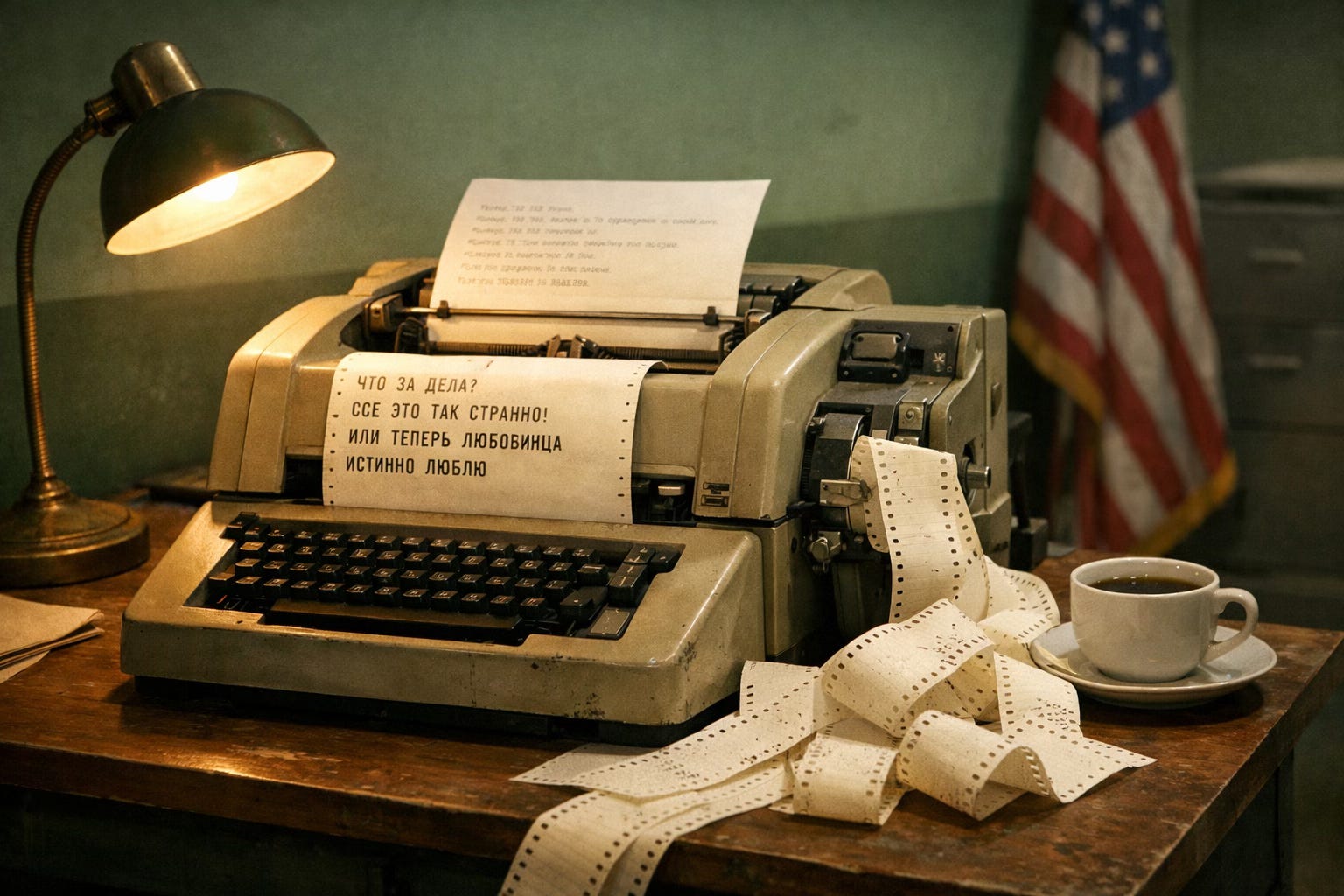
November 21, 2024. A signal arrives at the Pentagon through channels that date to the Cold War.
The message, in essence: We’re about to launch something. It’s not what you think. Don’t respond.
Twenty-four hours later, Russia fires an Oreshnik intermediate-range ballistic missile at Dnipro, Ukraine. The warhead is conventional—not nuclear. But the missile’s boost-phase signature is nearly identical to a nuclear ICBM. Without that advance notification, American early warning systems would have seen a Russian nuclear launch. Officers with keys would have faced the same decision Bustamante trained for.
They didn’t have to make it. Because someone sent a message.
Here’s something most people don’t know: the famous “red phone” between Washington and Moscow doesn’t exist. It never did. That’s a myth from movies. The actual hotline—called MOLINK—has never been a voice line. It started as teletype machines in 1963. Today it’s secure email.
Every hour, technicians on both sides test the connection. Americans send passages of Shakespeare and Mark Twain. Russians send Chekhov. They’ve been doing this for over sixty years—a quiet, continuous pulse between two nations that could destroy each other in minutes.
But the pulse doesn’t always get through.
In November 2022, news reports erroneously stated that a Russian missile had struck Poland—a NATO country. Article 5 territory. For hours, the world believed we might be on the edge of a superpower confrontation. General Mark Milley, Chairman of the Joint Chiefs of Staff, tried to reach his Russian counterpart.
He couldn’t get through for 36 hours.
Annie Jacobsen, who interviewed Milley and dozens of other defense officials for her book on nuclear war, put it bluntly: “How are you going to not have an absolute Armageddon-like furor with nuclear weapons in the air if people can’t get on the phone during a ground war?”
The Oreshnik notification worked. The Poland incident showed how easily it might not.
That thread—the one made of hourly test messages and Cold War infrastructure and relationships between people who’ve spent careers learning to talk to adversaries—expires in four weeks.
SCENE 3: THE LAST TREATY
It’s called New START—the New Strategic Arms Reduction Treaty. Signed in 2010. The last surviving agreement from a half-century of nuclear diplomacy between the United States and Russia.
New START limits each nation to 1,550 deployed nuclear warheads. It requires data exchanges, on-site inspections, notifications. It’s the reason both sides know what the other has. It’s the reason the Oreshnik notification existed—the infrastructure of communication that lets two nuclear superpowers tell each other this is not an attack.
It expires on February 5, 2026.
The treaty was negotiated with one extension built in. We used it in 2021. There is no mechanism to renew it again.
When New START lapses, for the first time in over fifty years, there will be no legally binding restrictions on American and Russian nuclear arsenals. No verification. No on-site inspections. No data exchanges. No transparency. No threads.
Russia suspended its participation in 2023, citing U.S. support for Ukraine. The inspection regime is already dead. What remains is a gentleman’s agreement to stay within the limits.
No replacement is being negotiated. A completely new treaty would be required, but negotiations have been frozen since Russia’s invasion of Ukraine. The expiration isn’t a lapse in paperwork. It’s a collapse of diplomacy.
And here’s what makes it worse: for the first time in history, the United States faces not one nuclear adversary, but many.
SCENE 4: THE MANY-BODY PROBLEM
The Cold War was terrifying, but it was simple. Two players. Two arsenals. Two leaders who could pick up a phone and talk.
That world is gone.
Today, nine nations possess nuclear weapons. Twelve thousand warheads exist on Earth. And the relationships between these nations aren’t bilateral—they’re a web of overlapping tensions, alliances, and miscalculations waiting to happen. One misstep, one bad communication, one misinterpreted move and things move quickly.
Russia: 6,200 warheads. The largest arsenal. Currently fighting a war in Ukraine while threatening NATO with tactical nuclear use.
United States: 5,500 warheads. The second-largest arsenal. Currently watching its last arms control treaty expire.
China: 600+ warheads and growing faster than any nation in history. 350 new ICBM silos completed since 2021. On track for 1,000 warheads by 2030, possibly 1,500 by 2035. Developing launch-on-warning capability—the doctrine that makes the 72-minute scenario almost inevitable.
France: 300 warheads.
United Kingdom: 225 warheads.
Pakistan: 170 warheads.
India: 180 warheads. Added 8 in 2024 alone. Engaged in armed clashes with Pakistan earlier this year—including strikes on nuclear-related infrastructure.
Israel: 90 warheads. Officially unacknowledged. Surrounded by nations calling for its destruction.
North Korea: 50 warheads. The only nuclear power that doesn’t announce its missile tests. Every launch is a potential misunderstanding.
In physics, the “many-body problem” refers to systems with so many interacting elements that their behavior becomes mathematically chaotic. You can predict what two bodies will do. You cannot predict nine.
Here’s the deadly math: American ICBMs sit in fixed silos. They can’t move. If an enemy knows where they are—and everyone does—they become “use it or lose it” weapons. Launch them or watch them get destroyed on the ground. Submarine-launched missiles can hide. Silo-based missiles cannot. This is why “launch on warning” exists. This is why the six-minute window is so short.
Every arms control framework ever built assumed two players. Bilateral treaties. Bilateral hotlines. Bilateral trust.
What happens when India and Pakistan exchange fire, and China sees an opportunity? When North Korea launches without warning, and Russia can’t tell if American missiles are heading for Pyongyang or Moscow? When Iran—which has enough enriched uranium for weapons and officials suggesting they might reconsider their nuclear doctrine—enters the game?
Many-body problems are chaotic. They are unpredictable. And the last treaty constraining the two largest players expires in four weeks.
SCENE 5: THE FORGETTING
The Cold War generation knew.
They grew up with duck-and-cover drills. They watched The Day After and Threads. They understood, viscerally, what nuclear war meant. The fear was omnipresent—a background radiation of existential dread that shaped politics, culture, and daily life.
The Berlin Wall fell. The Soviet Union collapsed. We exhaled.
And then we forgot.
We didn’t just forget. We were redirected. After 9/11, the policy class pivoted to counter-terrorism. The “Global War on Terror” consumed two decades of attention, funding, and talent. The nuclear infrastructure aged. The treaties frayed. The people who understood deterrence retired, and fewer replaced them.
Meanwhile, the weapons sat in their silos. Waiting.
We stopped watching the movies. Stopped teaching the history. Stopped paying attention to the treaties, the arsenals, the people with keys around their necks. The weapons didn’t go away. The arsenals didn’t shrink—they grew, and multiplied, and spread to new nations. But we looked elsewhere.
Until Annie Jacobsen made us look back.
Jacobsen is a Pulitzer Prize finalist and bestselling author who has spent her career investigating the secret corners of American national security—Area 51, the Pentagon’s brain science division, Operation Paperclip. For her latest book, Nuclear War: A Scenario, she did something unusual: she interviewed the people who never stopped watching.
Former STRATCOM commanders. Former Secretaries of Defense. The scientists who designed hydrogen bombs. The officers who would execute a launch. The analysts who study what happens after.
She asked them a simple question: What would nuclear war actually look like?
What she produced is not speculation. It is not fiction. It is a minute-by-minute scenario built from declassified war plans, technical documentation, and the firsthand accounts of people who’ve spent their lives preparing for the unthinkable.
General Robert Kehler, former commander of U.S. Strategic Command—the man who would have overseen a nuclear war—told her simply: “The world could end in the next couple of hours.”
He wasn’t being dramatic. He was describing his job.
A NOTE TO THE READER
What follows is a minute-by-minute reconstruction of what nuclear war would actually look like, based on Jacobsen’s research and the accounts of those who’ve studied it professionally.
It is graphic. It is disturbing. It is, by design, difficult to read.
If you would prefer not to read the detailed scenario, you can skip ahead to the section titled “THE INVISIBLE WORK.” There, we examine the people and institutions that have prevented this scenario from becoming reality—and what happens when we dismantle them.
But I encourage you to read it. Not because suffering should be spectacle, but because forgetting is how we got here. The scenario that follows is not fiction. It is capability. It is doctrine. And it is closer to happening than at any point since the Cuban Missile Crisis.
This is what 72 minutes looks like.
T-MINUS 72 MINUTES
The scenario begins on an otherwise unremarkable afternoon.
0:00:00 — LAUNCH
March 30. 3:03 PM Eastern Daylight Time
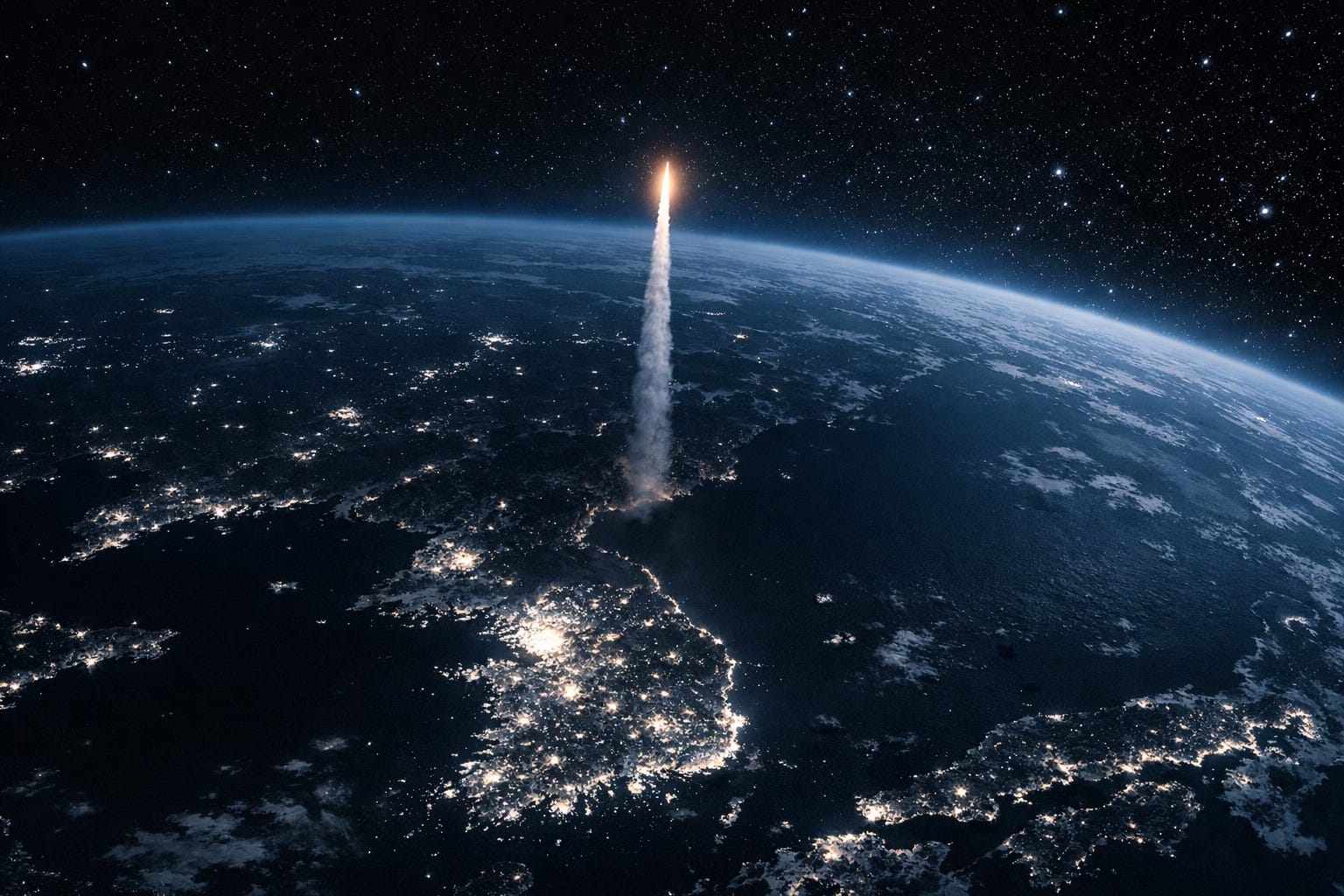
A rocket ignites in North Korea.
Within four-tenths of a second, the Space-Based Infrared System—SBIRS—detects the launch. These satellites, parked 22,300 miles above Earth, exist for exactly this purpose: to identify the hot rocket exhaust of a ballistic missile the instant it fires.
The data streams to Buckley Space Force Base in Colorado. Algorithms analyze the plume. Within five seconds, analysts conclude: this is a Hwasong-17 intercontinental ballistic missile. Estimated payload: one megaton thermonuclear warhead (1 Mt is ~66.7× Hiroshima in explosive yield.)
Three command centers are immediately notified.
The National Military Command Center beneath the Pentagon. This is the heart.
NORAD headquarters inside Cheyenne Mountain, Colorado. This is the brain.
U.S. Strategic Command at Offutt Air Force Base, Nebraska. This is the muscle.
Fifteen seconds after launch, Space Delta 4 reaches a conclusion: this missile is heading for the continental United States.
The trajectory points to Washington, D.C.
0:00:30 — CONFIRMATION
Ground-based radar confirms the satellite data. Clear Space Force Station in Alaska tracks the missile through its boost phase.
Impact: approximately 33 minutes.
Target: the Pentagon.
This is what defense planners call a “bolt out of the blue”—a surprise nuclear attack with no warning, no escalation, no demands. It is the scenario American defense officials fear most.
The 72-minute clock has started.
0:01:00 — THE PRESIDENT
The President is notified.
He has approximately six minutes to make a decision that will determine the fate of human civilization.
The President is presented with The Football—the briefcase containing strike options and authentication codes. In his wallet, he carries the Biscuit—a card with codes that must match.
He is given options. They read like a menu, except each item is measured in millions of dead.
The President asks: “How do we know it’s a nuclear weapon?”
The answer: We don’t. We can see the missile. We can calculate its trajectory. We cannot see inside its warhead. We will not know until it detonates.
He has five minutes left.
0:06:00 — THE DECISION
The President authorizes a counterattack.
The doctrine behind this decision is brutal but logical: American ICBMs sit in known, fixed locations. If the President waits, those missiles might be destroyed in their silos by a follow-up strike. “Use them or lose them” isn’t rhetoric. It’s math.
Eighty-two nuclear warheads. Fifty Minuteman III ICBMs from silos across the Great Plains. Thirty-two submarine-launched missiles from Ohio-class submarines in the Pacific.
The targets: every known military facility, command center, and leadership bunker in North Korea.
In launch control capsules across America, officers receive authenticated orders. They compare codes. They insert keys. They turn them in unison.
The missiles launch in sixty seconds.
They cannot be recalled.
0:19:00 — THE SECOND MISSILE
SBIRS detects a second launch.
This one comes from a submarine—a North Korean SLBM, 350 miles off the coast of California.
Impact time: three minutes.
Target: Diablo Canyon Nuclear Power Plant.
Two missiles confirm what one could not: this is not an accident. This is not a rogue general. North Korea is conducting a coordinated nuclear attack.
California has three minutes.
0:22:00 — DIABLO CANYON
The warhead detonates at ground level.
A one-megaton explosion directly on top of two nuclear reactors.
The reactors don’t merely explode. They vaporize. Decades of accumulated radioactive material lofts into the atmosphere and scatters across Southern California.
Immediate deaths: tens of thousands. Long-term deaths from radiation: hundreds of thousands.
But the 72-minute clock doesn’t stop for California.
0:24:00 — WASHINGTON
The first missile reaches its target.
At 3:27 PM Eastern, a one-megaton thermonuclear warhead detonates above the Pentagon.
It begins with light. A flash that generates temperatures of 180 million degrees Fahrenheit—five times hotter than the center of the sun.
The fireball expands to more than a mile in diameter. The Pentagon—6.5 million square feet, 27,000 employees—is not destroyed. It is vaporized. Converted to superheated plasma.
Thermal radiation ignites everything flammable within several miles. A firestorm begins—100 square miles of simultaneous fire.
The blast wave follows. A wall of overpressure collapsing buildings, rupturing organs, turning windows into horizontal shrapnel.
One million people die in the first ninety seconds.
Washington, D.C. is no longer on the map.
0:34:00 — THE RESPONSE ARRIVES
The first American warheads reach North Korea.
Eighty-two nuclear weapons detonate across the peninsula within minutes. Pyongyang. Yongbyon. Every known military installation.
Millions of North Korean civilians—who had no say in their government’s actions—die.
The warheads produce fallout that drifts into South Korea. Into China. Into Russia.
The missiles themselves flew over the North Pole to reach their targets.
Over Russia.
0:41:00 — MOSCOW INTERPRETS
Russia’s early warning system detects the American launches.
Russian satellites see American ICBMs in flight. Dozens of them. They cannot determine if the missiles are heading for North Korea or Moscow.
Russia tries to contact Washington. The Pentagon is gone. The communication infrastructure has been vaporized.
The Russian President faces the same six-minute window the American President faced thirty minutes ago.
He has minutes to decide.
0:48:00 — RUSSIA LAUNCHES
The Russian President authorizes a full counterattack.
One thousand nuclear warheads. ICBMs from silos across Siberia. SLBMs from submarines in the Arctic, Pacific, and Atlantic.
The targets: every major American city. Every military installation. Every command center, power plant, and infrastructure node.
The United States detects the Russian launches within seconds.
The President—wherever he is now—authorizes the release of the remaining American arsenal.
Everything launches.
0:52:00 — EUROPE
NATO doctrine activates.
American nuclear weapons stationed in Germany, Belgium, Italy, the Netherlands, and Turkey are released. British and French arsenals launch.
Russia responds by targeting European capitals. London. Paris. Berlin. Rome.
The war is no longer between two nations. It is general nuclear war.
1:12:00 — 72 MINUTES
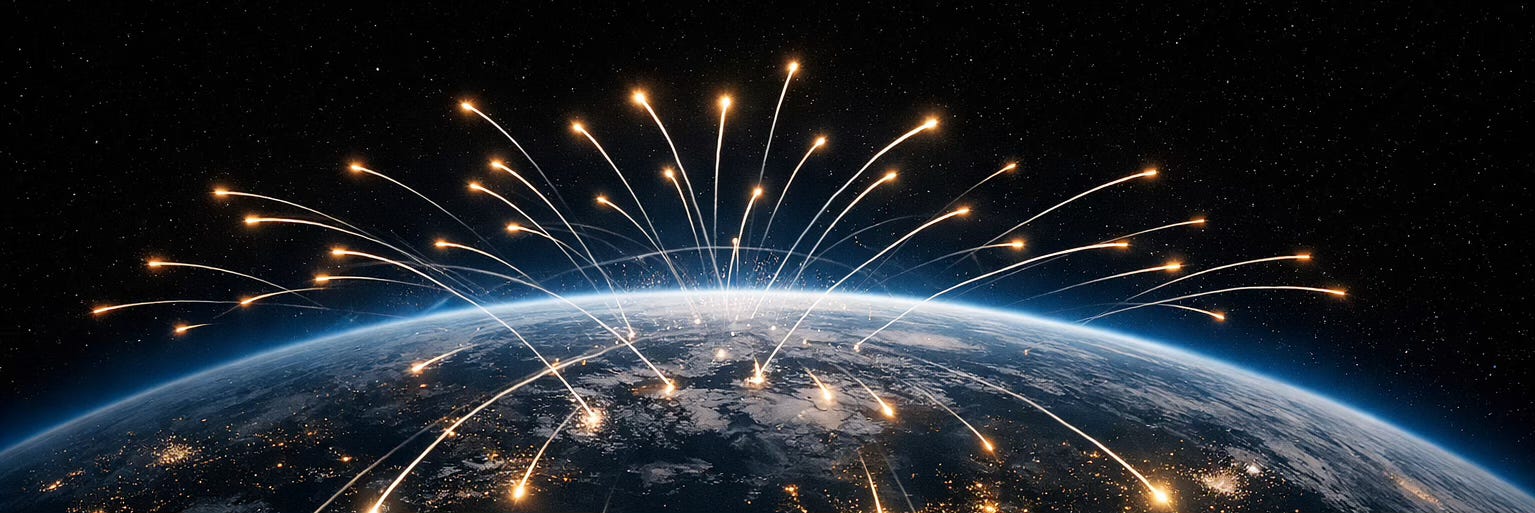
Seventy-two minutes after the first missile launched, approximately 1,000 Russian warheads begin striking the continental United States.
New York. Los Angeles. Chicago. Houston. Phoenix. Philadelphia.
Every American city with more than 500,000 people.
The United States of America—as a functioning nation, as a continuous civilization—ceases to exist.
The same is true of Russia. Of much of Europe. Of North Korea. Of parts of China.
It took 72 minutes.
AFTERMATH
Immediate deaths: hundreds of millions.
But the dying has only begun.
Nuclear winter descends within weeks. Soot from thousands of burning cities rises into the stratosphere, blocking sunlight. Global temperatures drop. Crops fail.
The scientists call it ten years of winter. A decade without reliable harvests.
Five billion people die.
Not from the bombs. From starvation, disease, and the collapse of every system that keeps modern humans alive.
This is what 72 minutes looks like.
THE PROUD PROPHET FINDING
In 1983, the Pentagon conducted a classified war game called Proud Prophet. Civilian and military planners spent two weeks running every nuclear scenario they could imagine. NATO involved or not. China involved or not. Tactical weapons or strategic.
Every scenario ended the same way.
Paul Bracken, a Yale professor who participated, later wrote: “No matter how nuclear war begins, it ends in Armageddon.”
The exercise remains one of the most classified in American history. The declassified pages are almost entirely redacted—95 percent black ink. But the conclusion survived: there is no such thing as a limited nuclear war. There is no winning.
There is only the 72-minute clock.
THE INVISIBLE WORK
Here’s something else we forgot: it hasn’t happened.
Seventy-two minutes could have started dozens of times. It didn’t. Not because we got lucky—though luck played its part. Because people stopped it.
In 1983, a Soviet lieutenant colonel named Stanislav Petrov watched his early warning system report five American ICBMs inbound. His training said to report it up the chain. His gut said the system was wrong. He trusted his gut. The system had malfunctioned. Petrov’s decision not to follow protocol may have saved 100 million lives.
In 1995, Russian radar detected a rocket launch from Norway—a scientific weather rocket that Russia had been notified about, but whose notification never reached the right desk. Boris Yeltsin became the first Russian president to ever have the nuclear briefcase opened in front of him. He had minutes to decide. He decided to wait. The rocket fell harmlessly into the sea.
These are the stories that got declassified. The ones we know about.
There are others we don’t.
THE DEALS WE DON’T SEE
Bustamante left the nuclear silos and joined the CIA. When he talks about intelligence work, he describes something most Americans never consider: the constant, invisible negotiation that keeps the world from falling apart.
Back channels that don’t appear in newspapers. Conversations between adversaries that would be politically impossible to acknowledge. Agreements made in rooms that officially don’t exist.
The Oreshnik notification didn’t arrive by accident. It came through the Nuclear Risk Reduction Center—a specific office, established in 1988, that exists solely to prevent misunderstandings between nuclear powers. Staffed by professionals. Maintained by treaties. The kind of bureaucratic infrastructure that sounds boring until you realize it’s the reason you woke up this morning.
This is the work of intelligence agencies. Not the Hollywood version—car chases and assassinations—but the mundane, essential work of knowing what the other side is thinking. Of having a phone number to call when something goes wrong.
William Perry, former Secretary of Defense, put it bluntly: the things that prevent catastrophe are rarely visible to the public. They can’t be. The negotiations that matter most are the ones that would be destroyed by publicity.
THE TRUST WE ABANDONED
We used to understand this, at least dimly.
During the Cold War, Americans accepted—grudgingly, imperfectly—that some work had to happen in shadow. That the people who spent their careers learning Russian, studying Soviet doctrine, building relationships with sources in hostile nations were doing something necessary.
We forgot that too.
Somewhere along the way, the agencies that monitor nuclear threats became “the deep state.” The analysts who track weapons proliferation became objects of suspicion. The diplomats who maintain back channels became evidence of conspiracy.
This is not an argument that intelligence agencies are perfect. They’re not. The CIA has done things that deserve condemnation. Every institution entrusted with secrecy has, at some point, betrayed that trust.
But imperfect is not the same as unnecessary.
The people who sit in windowless rooms tracking nuclear materials. The linguists monitoring communications from Pyongyang. The diplomats who quietly maintain relationships with counterparts in countries we’re not supposed to be talking to.
These people are the reason the 72-minute clock hasn’t started.
And we’ve spent the last decade attacking them.
WHAT HAPPENS WHEN THE INVISIBLE BREAKS
The Oreshnik notification worked because the channel existed. Because the infrastructure of communication—built over decades, maintained by professionals—was intact enough to carry a warning.
We are now systematically dismantling that infrastructure.
Career diplomats forced out. Intelligence analysts dismissed. Institutional knowledge walking out the door. The people who know how to pick up the phone and call Moscow—retiring, resigning, purged.
What happens when the next Oreshnik launches, and there’s no one left who knows who to call?
What happens when the early warning system glitches, and the analyst who would have caught it has been fired?
What happens when the back channel goes dead?
We don’t know. We’ve never tested it.
But the physics doesn’t change. The missiles don’t slow down. The six-minute window doesn’t expand. The Proud Prophet finding doesn’t care whether the back channels are staffed.
The invisible work is invisible. When it succeeds, nothing happens.
The only time we’ll notice is when it fails.
THE LAST ANALOG SYSTEM
Here’s one more thing we’re forgetting: the system that could end civilization is still, remarkably, analog.
Keys around necks. Codes on laminated cards. Phone calls between heads of state. Human beings in underground capsules, making judgments that machines cannot.
Every near-miss we know about was averted because a human felt something was wrong. Petrov looked at his screen and decided the system was lying. Yeltsin watched the briefcase open and decided to wait. A diplomat picked up a phone and said let me explain.
The six-minute window exists because humans need time to think. The back channels exist because humans can build trust. The safety margin exists because humans can hesitate.
That’s about to change.
The same nations racing to expand their arsenals are racing to put artificial intelligence in the loop. Faster detection. Faster analysis. Faster decisions. The human reduced to a rubber stamp—or removed entirely.
We’re building machines that don’t think like us, and we’re proposing to give them control of everything.
But that’s Part 3.
THE CLOCK
The Doomsday Clock stands at 89 seconds to midnight.
In Part 1, I asked you to remember. To remember that the beacon of American leadership only stays lit if someone tends it. To remember that the peace we inherited was built, not given.
Now you know what we’re remembering.
Seventy-two minutes. One million dead in ninety seconds. Five billion dead in the aftermath. A planet rendered largely uninhabitable for generations.
This is not a theoretical risk. This is not a Cold War relic. This is a machine that exists right now, staffed by people with keys around their necks, governed by treaties that expire in four weeks, protected by invisible professionals we’ve decided are the new enemy.
We seemed to have forgotten about it.
In Part 1 I outlined that we need to decide between a posture of leadership or just winners.
We’re currently dismantling the people who remember. That’s not leadership.
NEXT: PART 3
The machines that decide who lives and dies—and why we’re teaching them to do it faster.
SOURCES
Primary Source:
Annie Jacobsen, Nuclear War: A Scenario (Dutton, 2024)
Jacobsen Interviews & Podcasts:
Arms Control & Treaty Sources:
Arms Control Association: Life After New START
Arms Control Association: Nuclear Weapons: Who Has What
Arms Control Association: Hotline Agreements
Federation of American Scientists: Chinese Nuclear Weapons 2025
Bulletin of the Atomic Scientists: Chinese Nuclear Weapons 2025
Atlantic Council: Is Extending New START in the US National Security Interest?
RUSI: Beyond New START
Union of Concerned Scientists: The Clock is Ticking on New START
Oreshnik Missile:
Moscow-Washington Hotline:
Andrew Bustamante:
Doomsday Clock:
Nuclear Effects & Winter Studies:
Alan Robock & Owen Brian Toon, Nuclear Winter research
IPPNW (International Physicians for Prevention of Nuclear War) casualty projections