
From Predator to Prey
How America’s stolen drone technology is now the reason America is losing the drone race, and what it’s building to catch up

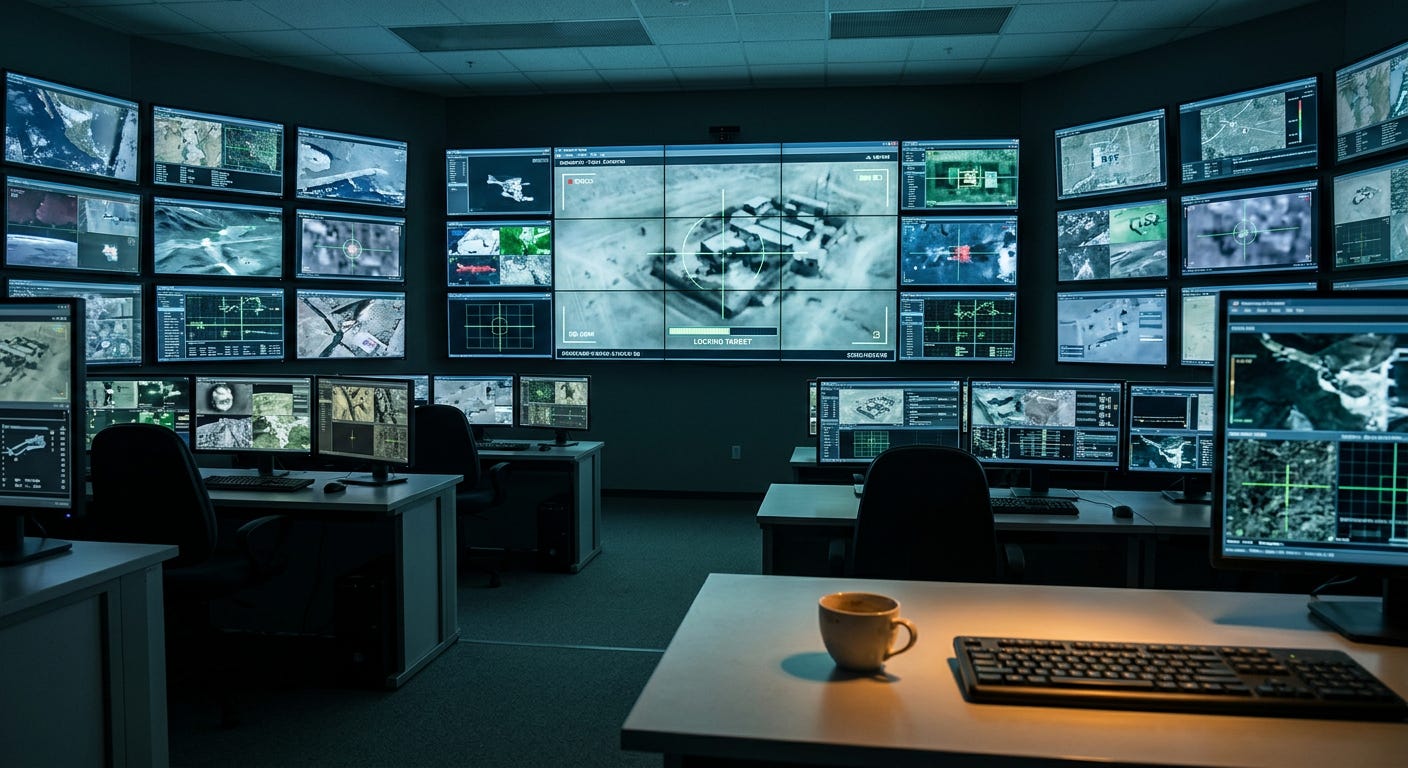
It was December 2011, and a CIA RQ-170 Sentinel was supposed to be a ghost.
Classified. Stealthy. Operating deep inside Iranian airspace over the Natanz nuclear facility. The kind of asset that doesn’t exist until it does. The official story is that it malfunctioned and crashed. Iran’s story is more interesting: their cyber warfare units jammed the satellite uplink, triggering an autopilot failsafe, then spoofed the drone’s GPS and walked it onto an Iranian runway like a lost dog following a familiar whistle.
Either way, Iran got it.
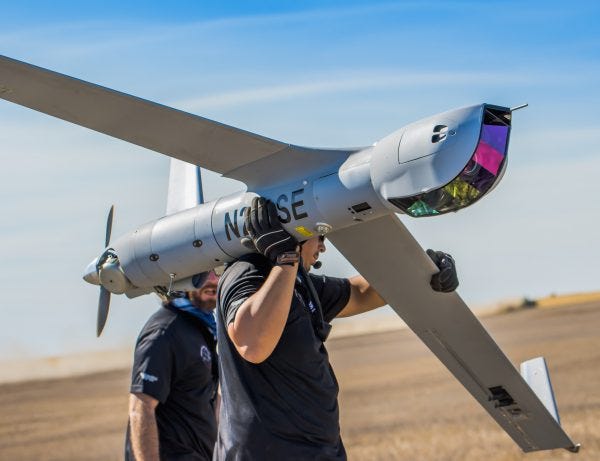
They also got a Boeing Scan Eagle the following year, a mass-produced surveillance drone that had somehow ended up in the Persian Gulf without anyone officially admitting it was missing. Two American drones. Two reverse-engineering operations. And a decade later, the wreckage of that intelligence coup is raining down on Ukrainian power grids, Saudi oil facilities, and Israeli cities at $20,000 per impact.
The weapons America built are now the reason America is behind.
The most powerful military in the history of organized violence, the nation that invented the modern armed drone, that ran the Predator and Reaper programs for two decades, that spent trillions building aerial superiority, is now scrambling to buy Ukrainian garage drones to catch up with the asymmetric warfare revolution it accidentally donated to its adversaries.
This is the story of how that happened. And what comes next is stranger than what came before.
The Throne
To understand how far America has fallen behind on cheap drones, you have to understand how dominant it once was on expensive ones.
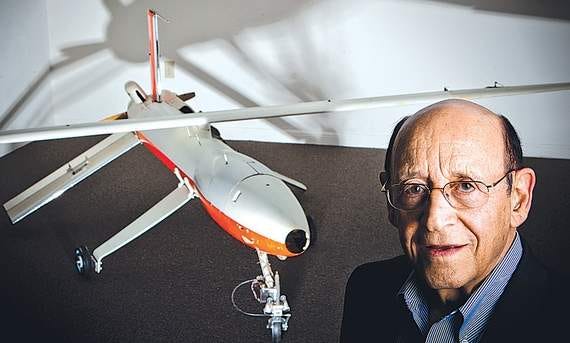
The lineage begins, as most defense technology stories do, with a garage. In the late 1970s, a former Israeli Air Force officer named Abraham Karem, frustrated with his bosses’ disinterest in unmanned aircraft, immigrated to Los Angeles and started building drones in his garage. His Albatross glider could stay airborne for 56 hours straight, which caught DARPA’s attention immediately. They funded him. His company eventually went bankrupt. General Atomics bought the ruins cheap, kept Karem and his team, and when the CIA came looking for something that could loiter over Afghanistan long enough to actually find people, the answer was waiting.
The RQ-1 Predator was born in 1994.
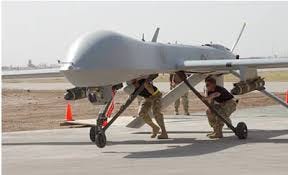
For the next two decades, the Predator and its successor, the MQ-9 Reaper, were what American airpower looked like to the world. Hunter-killer drones operating from altitude, connecting intelligence to lethal action faster than any previous weapons system. The Reaper had a 27-hour flight endurance, a 3,700-pound payload, and a satellite data link that let it be piloted from a trailer in Nevada while striking targets in Somalia. It cost roughly $32 million per aircraft.
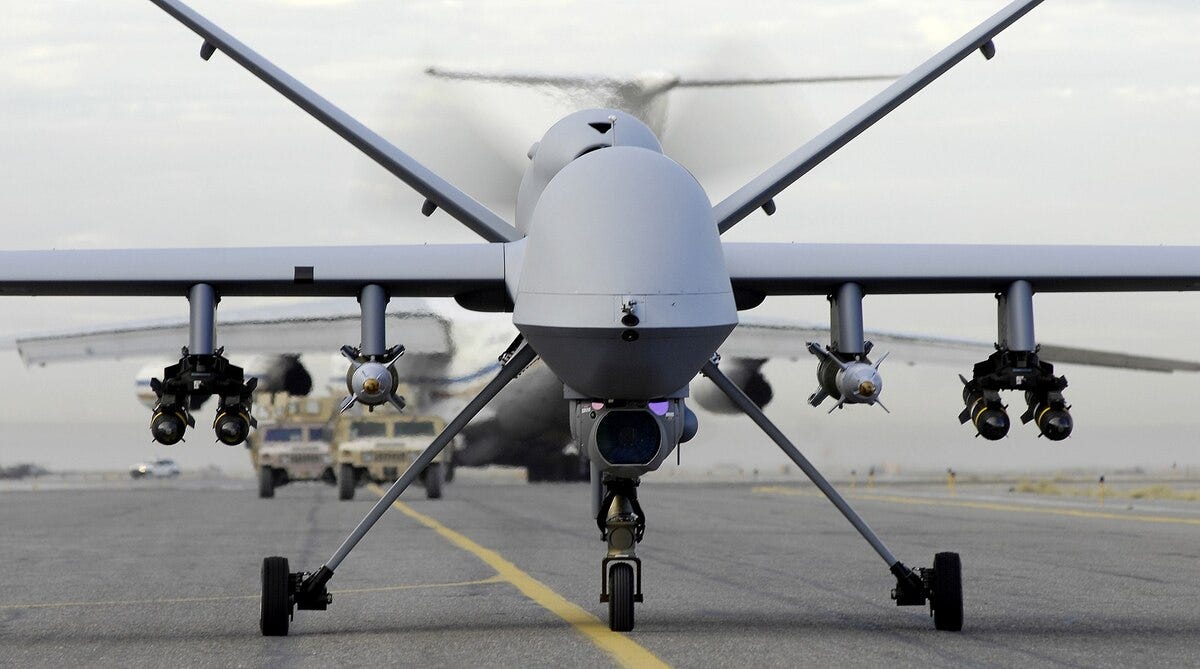
That price tag felt like power. It was actually a vulnerability hiding in plain sight.
The Predator paradigm was built on American assumptions: that America would always be the one with the satellite infrastructure, the trained operators, the precision munitions, the uncontested airspace. The model worked brilliantly in Afghanistan and Iraq, environments where adversaries had essentially no air defense. It worked less brilliantly when adversaries started thinking about what happens if you invert the economics.
The Heist
Iran was thinking about exactly that.
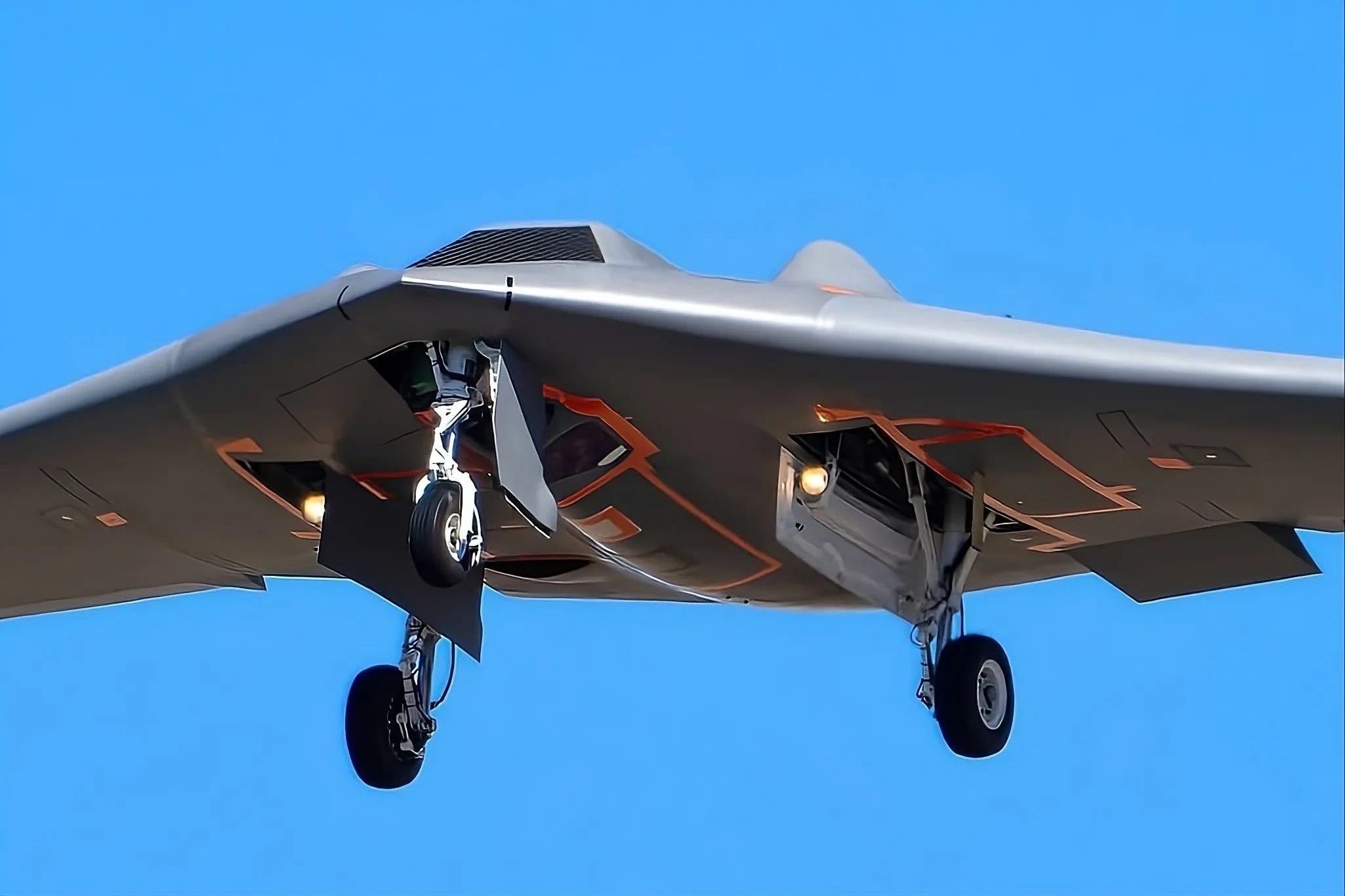
By the time they walked the RQ-170 onto their runway in 2011, Iran had already been working on the asymmetric drone problem for years. The Shahed Aviation Industries got straight to work. By 2014 they had the Shahed 171, essentially a functional replica of the American stealth drone. Two years later, a clone of the Scan Eagle. Iran had gone from drone consumer to drone manufacturer using American intellectual property as the curriculum.
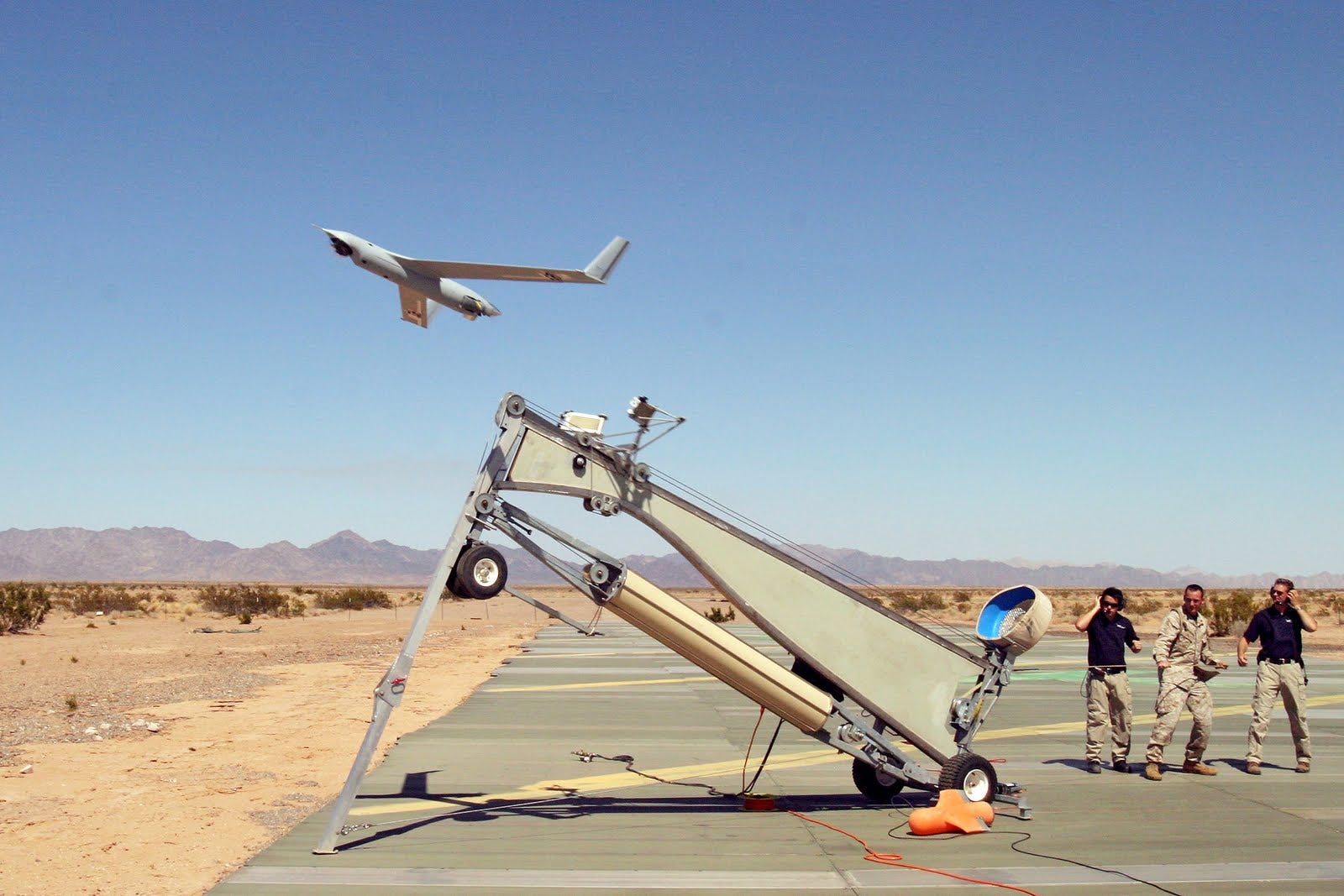
But copying American high-end drones was never really the play. Iran couldn’t match US production volume, and sanctions were strangling their supply chains. The more interesting question they were asking was: what if expensive is the wrong direction entirely?
What if you built something so cheap, so numerous, and so easy to manufacture that shooting them down costs more than making them?
The Shahed 136 is the answer to that question. It’s built from reverse-engineered hobbyist parts, a fiberglass airframe, and a 550cc civilian engine not much more powerful than a riding lawnmower. It costs $20,000 to manufacture. It can fly 2,000 kilometers, roughly the distance from Tehran to Tel Aviv and deliver a 50-kilogram warhead. And once you understand the economic equation it creates, you understand everything that has happened since.
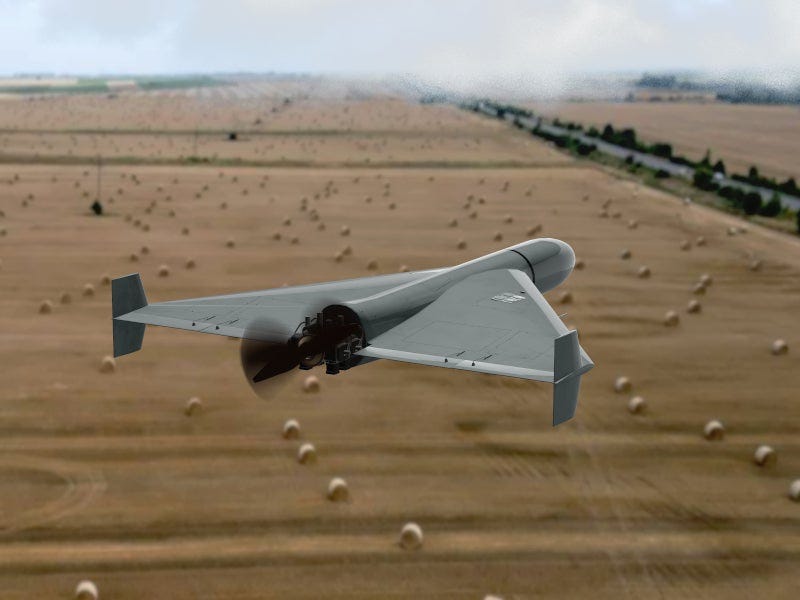
In 2019, a swarm of Shahed 131s hit the Saudi Aramco processing facilities at Abqaiq and Khurais. The attack temporarily knocked out 5% of the world’s daily oil supply. Billions of dollars in infrastructure damage. Accomplished by aircraft with a collective manufacturing cost of roughly what a middle-tier law firm bills in a week. The Saudi air defense systems, American-built Patriot batteries, either couldn’t detect the low-flying drones or were overwhelmed by volume. The economic asymmetry was stark: a $2 million Patriot PAC-3 missile to intercept a $20,000 drone is a ratio that can only go one direction over time.
Russia was paying attention.
When the initial assault on Kyiv stalled in spring 2022 and the conflict settled into its grinding attrition pattern, Russia’s stockpile of precision cruise missiles was burning down fast. Iran provided the solution: the Shahed 136, rebranded as the Geran-2 for Russian deployment. Between September 2022 and early 2023, Russia launched over a thousand of them at Ukraine’s power grid. By mid-winter, nearly a third of the country’s energy infrastructure had been severely damaged or destroyed. Millions of people without heat, electricity, or water, killed by a weapon that cost less than a used car.
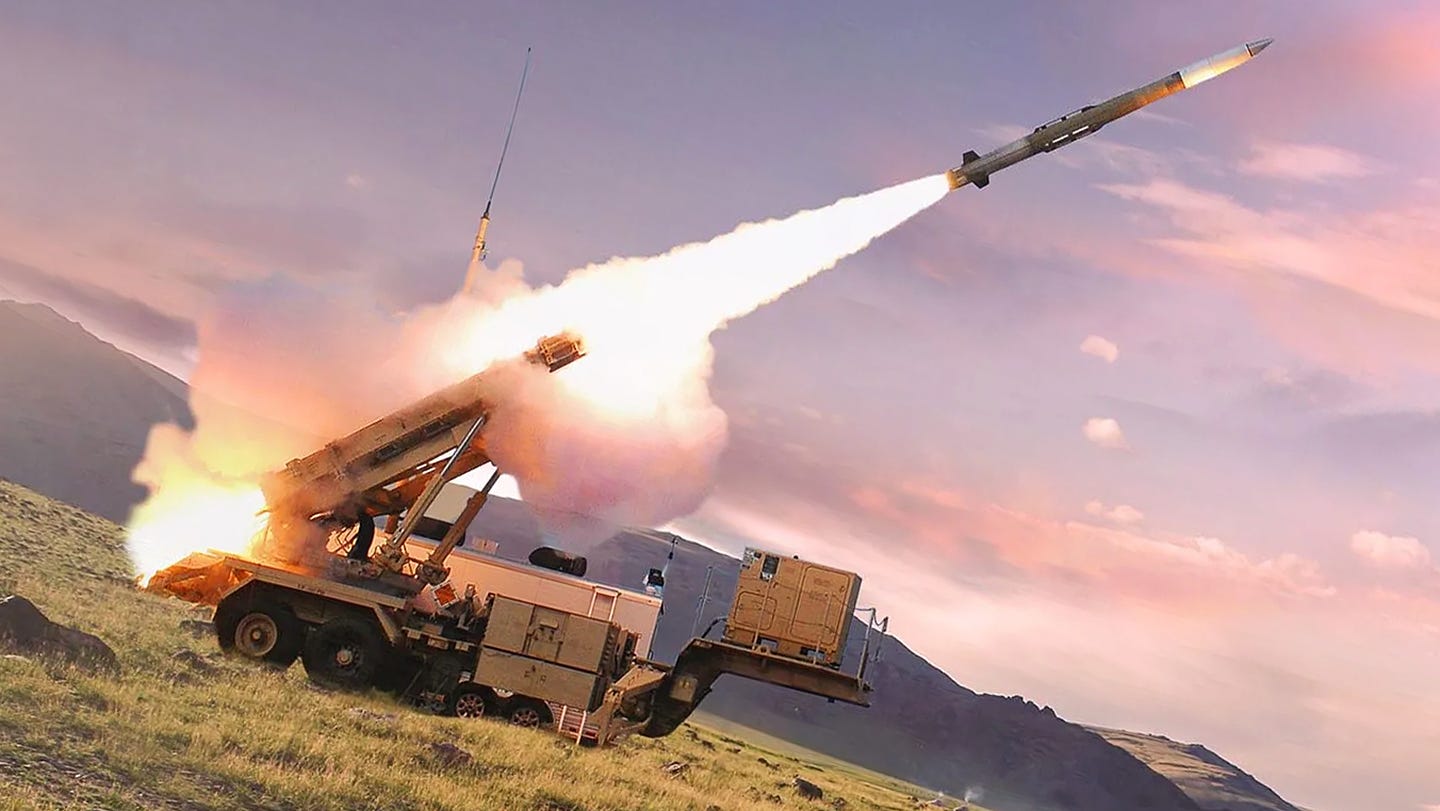
The Patriot missile problem became Ukraine’s problem too.
The Student Becomes the Teacher
Ukraine had no choice but to innovate or freeze.
The critical insight Ukraine reached, not through any central planning directive, but through the distributed desperation of engineers, coders, and soldiers who understood they were losing. That the Geran-2’s economic logic had to be flipped back. You don’t counter a $20,000 drone with a $2 million missile. You counter it with something cheaper than the drone itself.
What followed is one of the most remarkable defense technology stories in modern history.
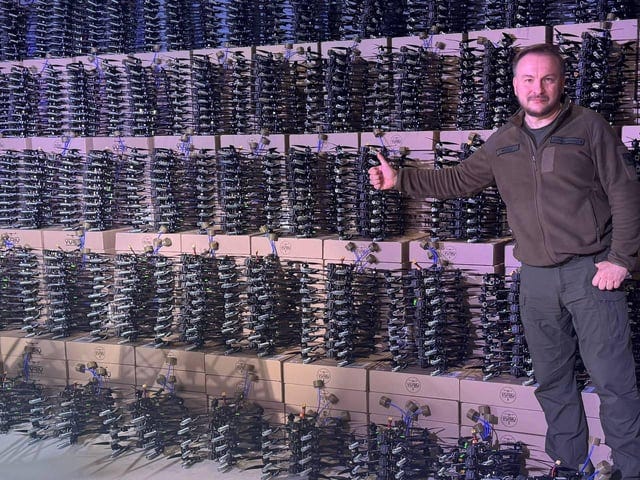
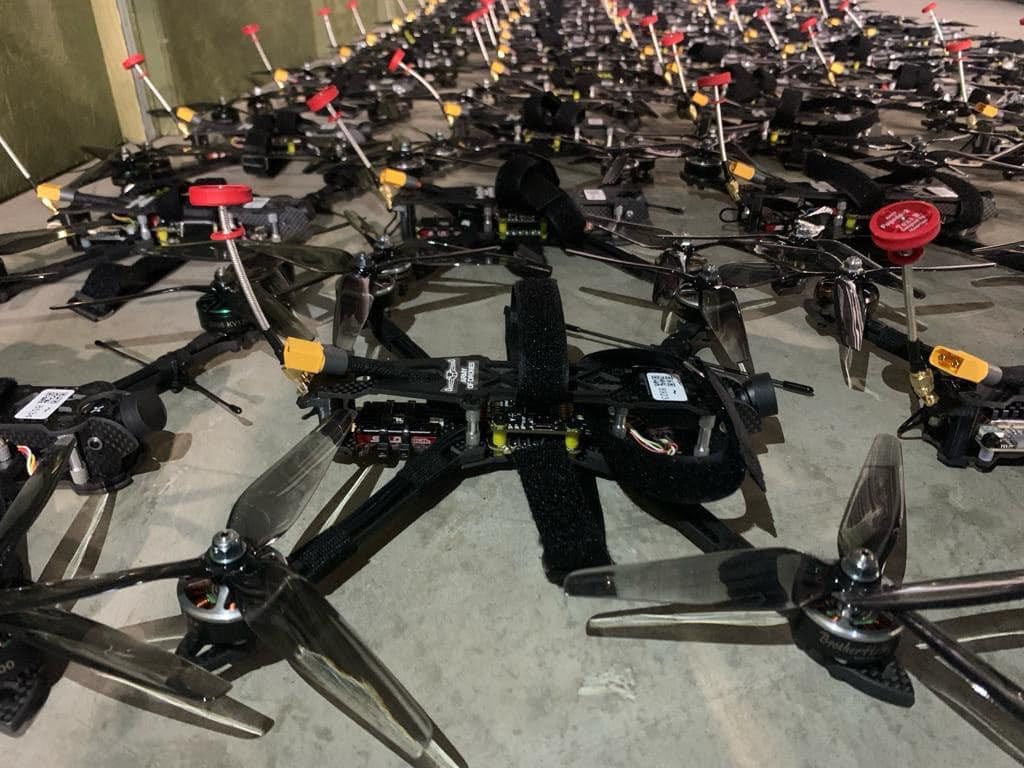
Before the war, Ukraine had seven drone manufacturers. Today there are over 500. In 2023 they were producing 600,000 FPV drones. By 2026, the production target is 7 million. The US military, the largest and best-funded in the world, produces roughly 100,000 combat drones annually.
The structural explanation for Ukraine’s output is a decentralized ecosystem called Brave 1: a government platform that connects engineers, scientists, soldiers, and investors to hundreds of small independent startups operating in Kyiv garages, repurposed Soviet warehouses, and literal underground labs. When a Ukrainian electronic warfare unit jams and recovers a Russian drone, a recovery team ships it to a basement lab. Engineers strip it down, decode its microchips and radio frequencies, and the platform issues a call to the network: build us a countermeasure. Grants flow to whoever can prove they’ve cracked it. (Warning: graphic video)
It’s what DARPA would look like if DARPA had something to lose.
Out of this ecosystem came Skyfall, four engineers in a garage who became Ukraine’s largest UAV manufacturer. Their Shrike FPV drone weighs 900 grams, costs $300 in its basic form, and beat every American defense contractor in the Pentagon’s $1.1 billion Drone Dominance competition with a score of 99.3 out of 100. A variation called the Shrike 10 Fiber eliminates wireless communications entirely, trailing a 10-kilometer spool of physical fiber optic cable. You cannot jam what has no signal.
Their P1 Sun interceptor drone, designed specifically to hunt the Geran-2, can fly at 450 kilometers per hour versus the Geran’s 185, operates at higher altitude than the Geran can reach, and uses machine vision AI to guide itself underneath its target and detonate with a proximity fuse. It costs $1,000. The Geran costs $20,000. The economic equation has been inverted.
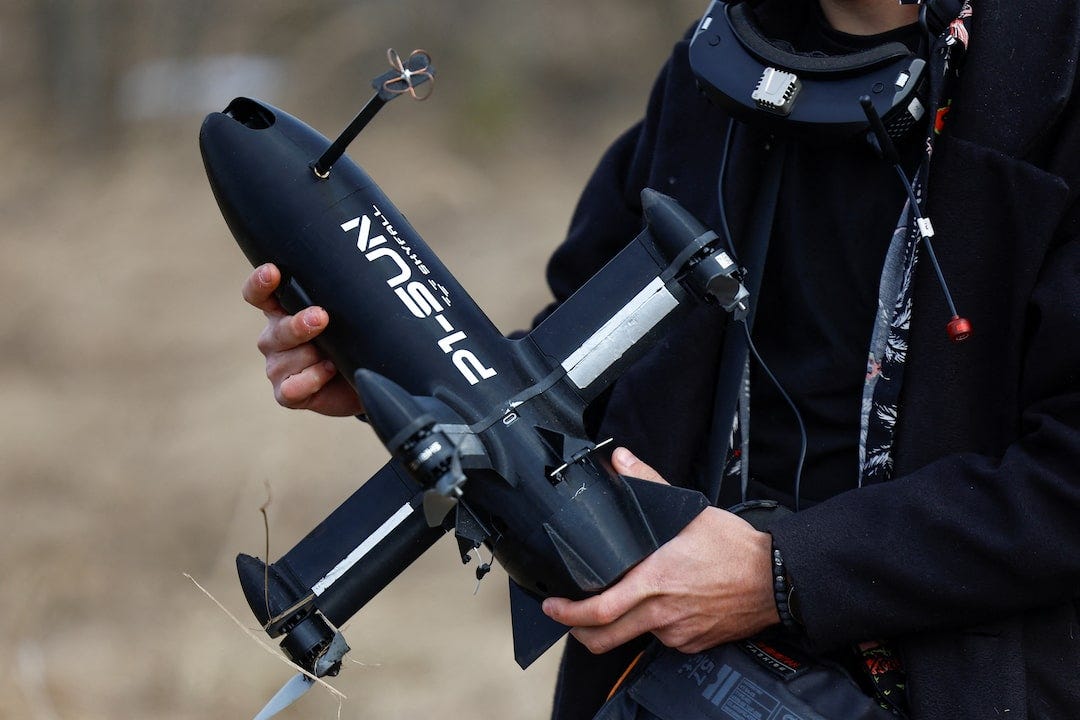
Skyfall claims the P1 Sun has already downed over 1,500 Geran-2 drones with an 80% success rate. Gulf states are signing multi-billion dollar agreements to acquire it. Saudi Arabia, which watched its own refineries get hit by the Shahed lineage in 2019, wants the drone that kills the drone that almost killed them.
Meanwhile, the United States is looking at all of this and trying to figure out where it went wrong.
The Scramble
The Pentagon’s Drone Dominance program launched in early 2026 with a stated goal of acquiring 300,000 low-cost one-way attack drones. The first competition, called “The Gauntlet”, ran in February at Fort Benning, with 25 vendors competing across four phases totaling roughly $1.1 billion. Phase I resulted in orders for 30,000 drones at $5,000 each. The target is to drive that price to $2,000.
Senate Armed Services Committee chairman Roger Wicker said the quiet part out loud at a recent hearing: “Both the American commercial drone industry and the Pentagon are years behind the curve in producing and employing drones.”
Years. Not months.
The comparison with Ukraine is almost uncomfortable. Ukraine produces 6 million drones per year in a war economy with a GDP smaller than most major American cities. The Pentagon’s ambitious program, designed to move unusually fast by Pentagon standards, is targeting 300,000 next year. Kateryna Bondar, who researches drone warfare at CSIS, framed it precisely: those 300,000 drones are primarily for training troops to use them. The actual war inventory question remains open.
This is before accounting for the Replicator program, an earlier autonomous systems initiative launched in 2023 with roughly a billion dollars and a promise of “thousands of autonomous systems by August 2025.” The Congressional Research Service found that only hundreds materialized by the deadline. The drones that did get tested off the California coast managed to collide with each other during autonomous boat trials. Drone prototypes failed to launch, missed targets, and crashed.
The US tried to build the future and shipped a press release instead.
To be clear: the US is not behind on drones in general. On high-end systems, the American defense ecosystem is still producing technology that nothing else on the planet matches. But the war in Ukraine has made an uncomfortable argument visible: high-end may be the wrong frame for the most important battlefield of the next decade.
The Overshoot
Here is where the story gets genuinely strange.
The American response to falling behind on cheap drones is not to build more cheap drones. It’s to make everything smarter, faster, and increasingly autonomous. To win the cheap war by adding AI layers that cheap systems don’t have.
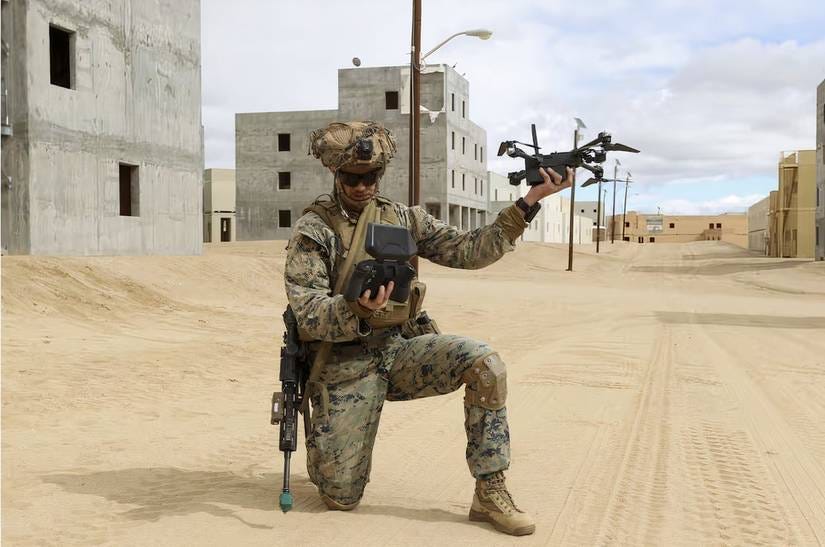
Anduril Industries, founded in 2017 by Palmer Luckey, the man who built Oculus Rift, just received a $20 billion enterprise contract from the Army, the largest single contract ever awarded to a venture-backed defense company. The core product is Lattice: an AI-powered command and control platform that ingests sensor data from distributed systems across air, ground, and maritime domains and compresses targeting decisions to machine speed. The Army has also contracted Anduril’s Bolt-M, a man-portable loitering munition that weighs 13 pounds, deploys in under five minutes, and runs entirely on Lattice software. Four human decisions cover the entire engagement: where to look, what to follow, how to engage, and when to strike.
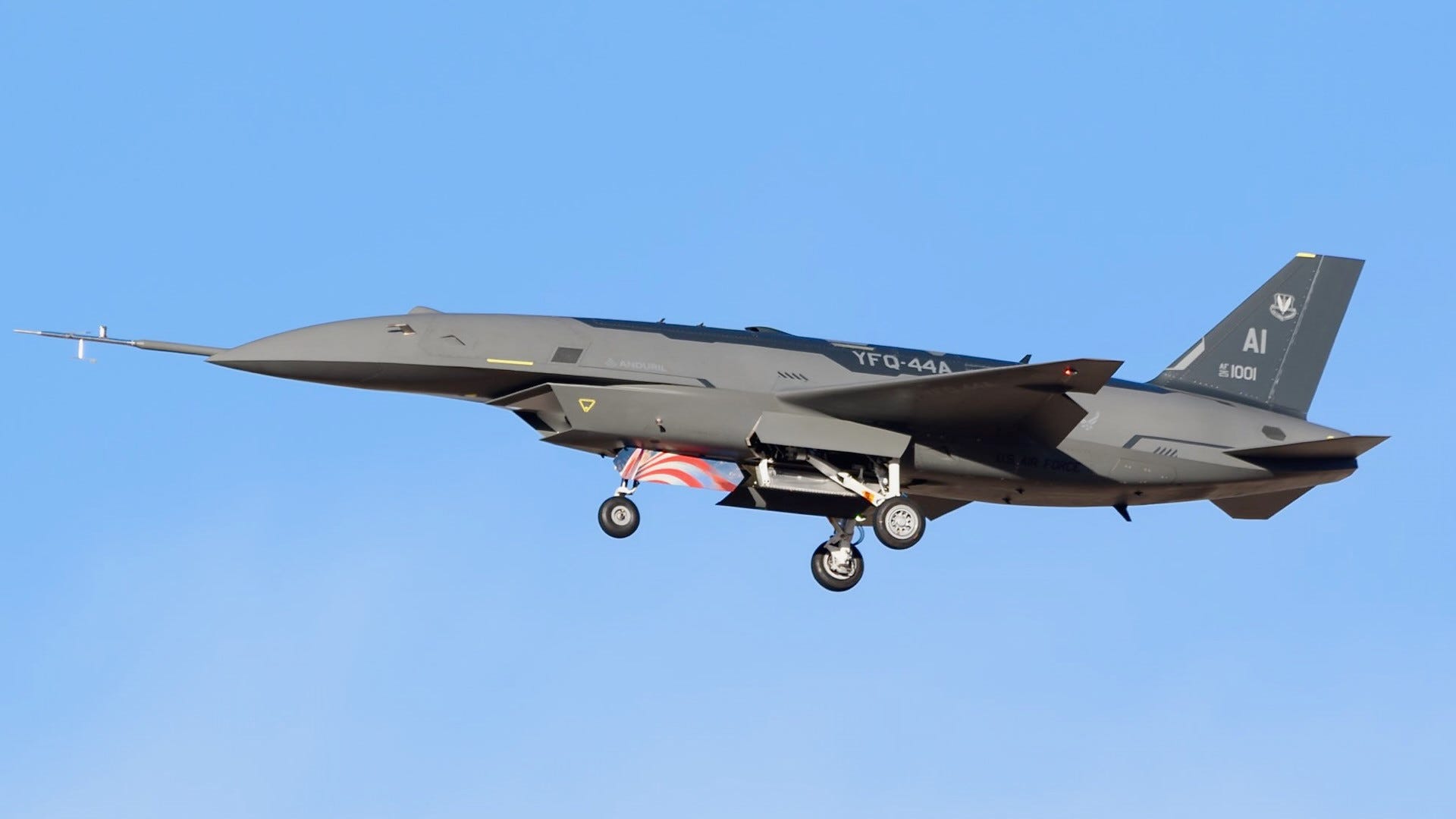
Their Fury autonomous aircraft, the YFQ-44A, is now in production at Arsenal-1, a $1 billion manufacturing campus in Ohio. There is, as Anduril senior VP Jason Levin noted, “no operator with a stick and throttle flying the aircraft behind the scenes.” The Fury is designed to fly alongside crewed F-22s and F-35s as an autonomous wingman, executing missions it is given rather than missions it is flown into.
a
Shield AI is building something more unsettling still. Their Hivemind autonomy software already has a combat record: V-BAT reconnaissance drones running Hivemind completed over 130 sorties in Ukraine’s electronic warfare environment, surviving simultaneous Ukrainian and Russian jamming that killed GPS, communications, and command links, then completing their missions autonomously and returning home. Operators provided an objective. Hivemind figured out the rest.
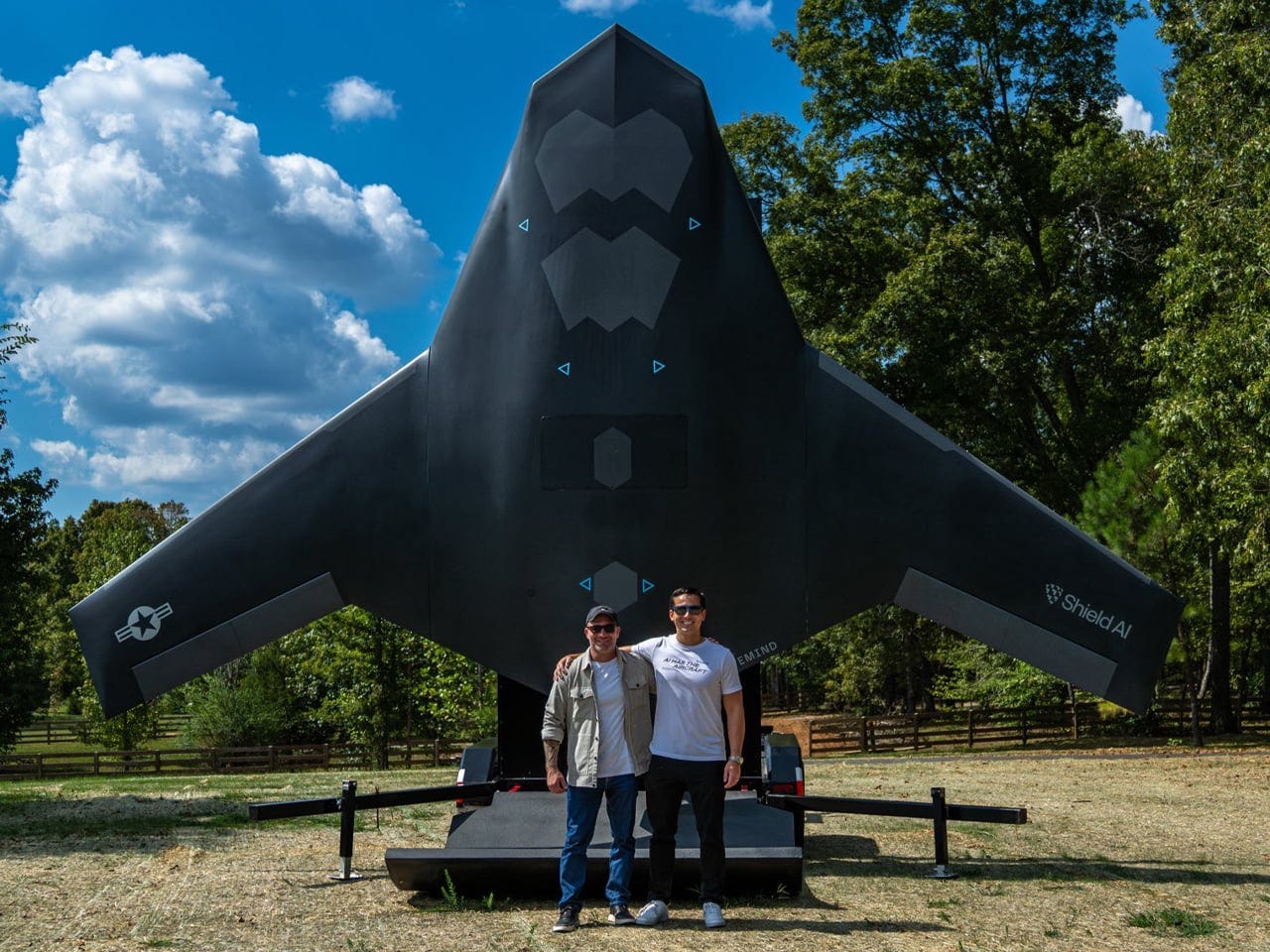
Their X-BAT, unveiled in October 2025, is an AI-piloted VTOL fighter jet with a 2,000 nautical mile range, designed to launch from ship decks without runways and conduct combat missions in GPS-denied environments. Shield AI values the company at $12.7 billion. First flights are scheduled for fall 2026.
The language around these systems is doing a lot of work. The Pentagon has settled on a phrase worth examining closely: “humans in command, not humans in control.” That is not a subtle distinction. Command means a human sets the objective. Control means a human makes the lethal decision. The first is being preserved. The second is being quietly surrendered to processing speed.
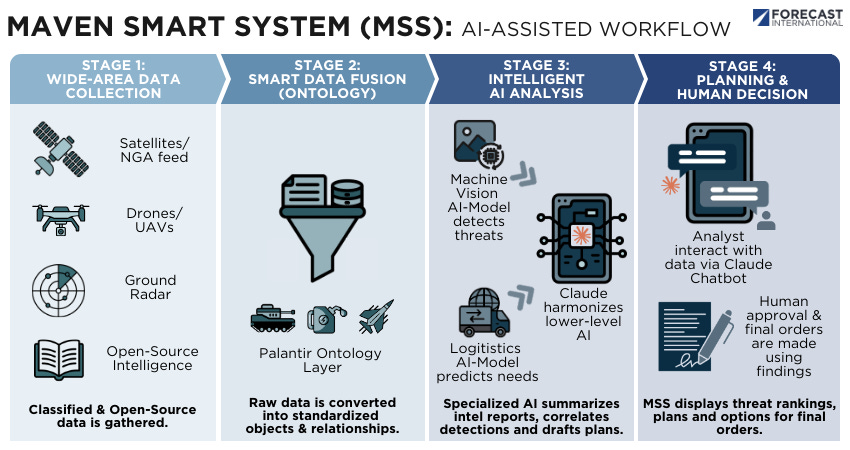
Palantir’s Maven Smart System, the AI targeting platform now deployed across US combatant commands and adopted by NATO for Allied Command Operations, has been announced to transmit “100 percent machine-generated” intelligence to commanders by June 2026. The humans will still technically make the call. They will be working from a menu assembled entirely by an AI that has already decided what matters.
Russia, for its part, has moved past the debate. According to CSIS researcher Kateryna Bondar, Russia is already experimenting with fully autonomous systems that cut human operators entirely out of targeting decisions. They are not wrestling with the philosophy. They are shipping the product.
The Governance Gap
In February 2026, Anthropic CEO Dario Amodei drew a line. Claude, Anthropic’s AI model, which had been integrated into Maven Smart System via Palantir, would not be deployed for fully autonomous lethal weapons without human oversight. Secretary of Defense Hegseth argued the Department could not be operationally constrained by a vendor’s internal safety policies. The confrontation went public.
I’ve written about this before, in the context of Project Glasswing and the Mythos release. The core question hasn’t changed: who governs the deployment of AI in the kill chain when the AI is moving faster than the law, the treaty, and the democratic process that’s supposed to authorize the use of force?
The UN Convention on Certain Conventional Weapons has been debating lethal autonomous weapons since 2013. As of March 2026, a binding prohibition failed because the US and Russia both refused to sign. The engineering is not waiting for the diplomacy.
Ukraine’s model, the one that beat the Pentagon’s best contractors, still has a human in the loop. Skyfall’s Shrike and P1 Sun use AI for guidance and target lock, but a human operator initiates and a human hand is still on the process. The Brave 1 ecosystem, for all its radical decentralization, maintained that constraint. Bondar’s observation from CSIS cuts to it: in Ukraine, 80% of strike mission success still depends on drone operator skill.
The American response to that lesson is to build systems where operator skill becomes optional.
This may be strategically rational. When drone swarms approach at speed and engagement windows are measured in seconds, human reaction time is a physical constraint, not a policy preference. There is a real argument that removing the human from the loop in defensive scenarios is simply acknowledging the physics of modern warfare.
But the escalation logic of fully autonomous offensive systems is something else entirely. A weapon that selects and engages targets without human confirmation is not just a faster weapon. It is a weapon that can be deployed at scale, in volume, with a decision latency of milliseconds, by any actor with the manufacturing capacity to produce it. Iran demonstrated the asymmetric potential of cheap one-way systems. The next demonstration, whenever it comes, will involve cheap one-way systems that also decide, without asking.
The Full Circle
Step back and look at what the last fifteen years have actually produced.
America built the armed drone and used it to fight wars it could see from altitude. Iran stole the technology, stripped out the expensive parts, and turned it into a disposable weapon. Russia deployed that weapon against Ukraine. Ukraine, forced to innovate against a clock, built the most effective countermeasures in the world, decentralized the process, and produced drones at seven times the Pentagon’s output on a fraction of the budget. The Pentagon is now buying Ukraine’s drones.
And to regain dominance, America is building autonomous systems that reduce human decision-making in the kill chain to the point of ceremony.
The boomerang has come all the way around. And it’s moving faster than it left.
The Predator paradigm assumed America would always be the one with the best aircraft. What it didn’t account for is a world where the aircraft becomes almost irrelevant and the question shifts to: who has the most of them, who can lose them without blinking, and whose machine is deciding what to hit when the humans aren’t fast enough to be in the room.
That’s the war we’re actually in. The garage in Los Angeles where Abraham Karem built the Albatross led, through a series of steps no one fully planned, to Iranian engineers reverse-engineering American stealth technology, to Russian drones killing Ukrainian civilians, to Ukrainian engineers beating Lockheed Martin in a Pentagon competition, to an AI pilot flying fighter jets off ship decks with no stick and no throttle and no human in the loop.
Nobody drew that map. But here we are, following it.
Drone history & lineage
US catch-up / Drone Dominance
Anduril
Shield AI / V-BAT / X-BAT
AI autonomy & governance